“We can’t create new law every time we have new case, but a strong leadership, a strong determination, a strong teamwork and a joint effort,” said Dr. Khieu Kanharith, minister of information, Cambodia. He was giving his keynote address at the Media Dialogue on ‘Disinformation, Legislation, and Freedom of Expression’, organised by Asia-Pacific Institute for Broadcasting Development (AIBD), in collaboration with the Ministry of Information, Cambodia.

Referring to the current pandemic the minister said some groups and countries, instead of promoting joint effort to solve the problem, were creating more confusion and chaos for their own interests and benefits. “Cambodia is no exception to this sad event,” he said.
When asked about whether a legislation or a law can help control ‘fake news’, Dr. Lim, Ming-Kuok, Advisor for Communication, UNESCO, Indonesia, said ‘NO’. He added that it is a complex issue and needed multi-faceted approach to the address it.
Making his presentation on ‘International Laws vis-a-viz Freedom of Expression’, Dr Ming-Kuok said there is still a lot one can do before even thinking of restricting freedom of expression by bringing in legislation to address the issue. “We haven’t even done our due diligence, of providing all the alternatives,” he said, adding that freedom of expression is an important individual right, and also an important component for a democratic society.
Dr Ming-Kuok underscored three-part test for permissible restrictions of freedom of expression under the international laws. They are, according to him; legality test, legitimacy test and necessity test.

Speaking on ‘Regulatory options for disinformation’, Dr. Ahmad Helmi Azhar, a public policy analyst from Malaysia, provided four regulatory options. The first one, he said, was engagement and collaborations with platforms and new media. The other three, according to him, are: Digital literacy and awareness campaigns; Fact-Checker and technical standards; and Legislation.
Referring to case studies from other countries, Dr Helmi said, Singapore’s ‘Protection of Online Falsehoods and Manipulation Act’ (POFMA) is a good example of state-legislative approach while European Commission’s, a good example of co-regulation approach (see diagram below).

Dr. Masato Kajimoto, Associate Professor with the University of Hong Kong said media literacy education is the answer but there are lot of limitations. “The results are not immediate and it is not a good tool to fight something like the current pandemic, because you need the actions and reactions immediately,” he said.

The other limitations, he highlighted, were diverse competencies (IT and communication skills), few teachers who can teach media literacy, sensitivity and lack of coordination among multiple stakeholders.
Dr Masato made some proposals; that all teachers must be trained and there should be daily myth busting in classroom. For instance, he said, science teachers can de-bunk COVID-19 rumours, likewise geography teachers about flat earth theory and history teachers about alternative conspiracies.

Dr. Sara Chinnasamy, Associate Professor & Political and Social Media Analyst based in Malaysia spoke on misinformation/disinformation in the Asia-Pacific Region and its implications. Dr. Antoon De Rycker Associate Professor of Berjaya University College in Malaysia and Dr. Ramachandran Ponan presented preliminary findings of AIBD Angkor Anti-Fake News Research.
More than 70 participants from 12 different countries took part in the webinar on 2nd July, 2020.
]]>Ms Philomena Gnanapragasam, Director, AIBD discusses the recent initiatives & achievements of AIBD during COVID19 crisis, and how institute is helping regional media orgnaisations. This interview was broadcasted by Bernama TV Malaysia on 6th May 2020.
In what was the first ever virtual COVID Response Session for media, more than 150 journalists and experts from 24 countries came together virtually to share and learn from each other. The Asia-Pacific Institute for Broadcasting Development (AIBD), as a regional international intergovernmental body, and India’s National Academy of Broadcasting and Multimedia (NABM) organised the Session.

In her opening remarks, the Director of AIBD, Ms Philomena Gnanapragasam, said ‘no one expected that it (pandemic) will last this long’. More than one-third of the world is under lockdown and a Session like this was needed to discuss and share experiences and new ideas. “Along with the health workers, media too are at the frontline of this pandemic,” she said, adding that timely information can not only save lives but also prevent from getting the disease.
The Chief Executive Officer of India’ Public Service Broadcaster, Prasar Bharati, Mr. Shashi Shekhar Vempati, said the responsibilities of the media, especially that of Public Service Broadcasters, have significantly gone up, not only in providing news and information, but also to keep the citizens engaged at home so that the social distancing and lockdown remain effective.
One of the main speakers, Dr. Liviu Vedrasco, WHO COVID-10 Asia-Pacific Liaison based in Thailand, said humanity has not faced such a crisis in the last 100 years. The closest one, he said, was the 1918 influenza pandemic. In this crisis, the ‘whole of society’ must respond, and without that it would be difficult to contain the pandemic, Dr Vedrasco opined.
He highlighted ‘Five Principles’ as the foundation of a United COVID-19 response system. The first one he said was the ‘Whole-of-Society’, in which all governments, businesses, and civil societies must communicate and come together. The second one; there should be ‘Readiness at all levels’. The third one, according to Dr. Vedrasco is an important one; Critical Interdependencies. He said attention must be given to nine critical sectors (Food, Water, Health, Energy, Transport, Finance, Telecom, Law and Order, and Defence), regardless of the level and size of a country. “Failure of one or more of these services can have major economic, health and social consequences”.
The last two ones, equally important, he added, were ‘severity-based response’ and ‘respect ethical norms’ by protecting the vulnerable and disadvantaged sections of the population.
On the role of media during a crisis like this he suggested three distinct areas; to simplify public health authorities’ messages, report on government response and communities reactions, and bring into public consciousness the positive stories of extraordinary solidarity, passion and generosity.
The risk is real, said Dr. Ming-Kuok Lim, Advisor for Communication and Information, UNESCO Office in Jakarta. “The potential of getting infection and infecting others must be considered when reporting from locations,” he highlighted. In a crisis like this the journalists, he added, must familiarise themselves with all the recommendations provided by health officials. The emotional and psychological health while on assignments can emotionally draining, and therefore, the journalists should be aware of their own mental health, he said.
Speaking from the disaster management perspective, Dr. Surya Prakash, Head of Geo-meteorological Risk Management Division of India’s National Institute for Disaster Management (NIDM), said there is a need for international and national collaborations, command and control systems for effective response and recovery. Since there is a lack of international frameworks to manage this criss, he suggested taking advantage of the SENDAI Framework for Disaster Risk Reduction 2015-2030, where 190 countries are signatory to it.
The Assistant Professor at National of Mental Health and Neurosceinces in India, Dr. Jaya Kumar, stressed on the need to incorporate psychosocial counselling and support in a crisis like this where people are forced to stay indoors with minimum interactions. “There should be psychosocial monitoring and helplines created at centre, state and district level,” he suggested.
The Experience Sharing Session
Media experts from Hong Kong, Korea, India, and France shared their experiences on how their Channels and Countries are doing in its fight against the pandemic.
Showing the visuals of how his reporters reported from the where the virus first surfaced, the City of Wuhan, Mr Haibo Huang said it took two days to prepare his team to be sent to Wuhan when China announced the lockdown. He is the Deputy Head of Phoenix Chinese Channel based in Hong Kong. He said during a disaster like this media outlets must take calculated risk, and prepare for almost everything. He said his Channel sent 2 teams to Wuhan and did comprehensive reporting from various locations.
At Korean Broadcasting System (KBS), Dr. Kim Youngyiil, Project Manager of EBU and AIBD, said they have established a ‘Integrated Newsroom’ to respond to COVID outbreak. He said it is an initiative to fight against ‘infodemic’ with special kinds of programming. “There is special live programming called ‘Let’s Fight the Corona Virus, where it goes beyond numbers and statistics”. He added that behind these numbers and statistics are actual people. “We show real people, real faces and deliver strong, powerful and positive messages”.
In India, as Bollywood actors and Cricketers are very popular, the national broadcasters have used them to deliver important messages. The Director General of Doordarshan News, Mr. Mayank Agarwal, said they also instituted daily call-in programmes with medical experts to answer people’s queries and a special COVID-19 tracking shows. The Additional Director General of Doordarshan, Mr P.K Subhash, besides airing information and education campaign materials they have re-introduced some of the very popular TV serials of some 20-30 years back. “We have got huge positive response and our viewership has reached 50 to 60 million,” he added.
In France too, more than 75 percent of the airtime is dedicated to corona virus through information, education and entertainment, said Mr Frederic Alliod, who is a regional attache’ for Film, TV, Radio and New Media in Cambodia, Laos, Myanmar, Thailand, and Vietnam.
In New Zealand, the Prime Minister herself along with relevant officials give press conference every day at a given time, leaving not much room for misinformation, said Dr. Amal Punchihewa, a media consultant (engineer) and an adjunct professor.
The Session was also live streamed on Facebook for those who could not register on time. In some organisations it was projected on a large screen so that more people could follow the Session.
AIBD will continue to play an active role in SDG advocacy for Asia-Pacific media with the help of U.N bodies, Ms Philomena Gnanapragasam, Director, AIBD.

AIBD Director gave a presentation at United Nations University in Kuala Lumpur on 6 March 2020 to U.N officials representing different bodies i.e. UNICEF, UNHCR, UNFPA, UNU etc. She highlighted AIBD’s collaborated achievements and its long-term partnership with U.N bodies for advocating human developmental issues through Asia-Pacific broadcasting organisations. She emphasized that the institute is well determined to partner with U.N bodies to create various capacity building programmes for regional broadcasters. She also mentioned that recent initiatives regarding training programmes on combating fake news and especially Reporting on Health crisis was well recognized and appreciated by institute’s members.


This year, AIBD engaged its members and partners to send us their pictures and their reports regarding the Radio Day observances, which will be reported in the upcoming issue of ‘Broadcaster’.
Some of the regional experts & broadcasters also sent us the video messages.
]]>Its Director General, Dr Wilasinee Phiphitkul disclosed that news, documentary and entertainment combined are the three key broadcast content since its inception 12 years ago.
As a public broadcaster adheres to self-governing philosophy and ethic, Thai PBS has built its brand by providing a “life-long learning experiences for all strata of the society”. It representing the people’s local issues through various social activities in three aspects – on air, on the ground and online programming segments.
Hence, Thai PBS has earned the “Trustworthy Media Broadcaster” with its tagline “Transformative Learning Space for All” which is unique and inclusive to serve all sectors of the society.
Dr Wilasinee was briefing AIBD team led by the Director, Ms Philomena Gnanapragasam during a goodwill visit to Thai PBS in Bangkok. 
On training requests, she hoped AIBD could help coordinate workshop on strategic management to change the mind-set and workflow of the station’s personnel bought about by digital convergence.
]]>History with UNESCO:
AIBD was established as a UNESCO project in 1977 to implement training related to sustainable development through electronic and new media as required by its members. Therefore, the Institute is responsible for all planning, coordination and implementation of the project. Over the years, AIBD has done frequent collaborations with UNESCO and other UN related bodies. Some of the recent workshops and projects with UNESCO are mentioned below:
- AIBD/UNESCO Research journal on combating disinformation, a 2-year long project launched in 2019.
- AIBD/UNESCO Regional Workshop on ‘Addressing Gender Bias in Media’ held on 27 -29 March 2019 in Kuala Lumpur, Malaysia.
- AIBD/UNESCO Regional Workshop on Combating Disinformation / Fake News organised on 11 June 2019 in Siem Reap, Cambodia.
- IPDC talks @ Kuala Lumpur, Benefits and Challenges of Access to Information in Malaysia held on 24 September 2018 in Kuala Lumpur, Malaysia.
- AIBD/UNESCO Regional Workshop ‘Connecting in a Crisis’ Radio, Social Media, Natural Disasters & Climate Change held in Kuala Lumpur on November 6 – 9 2017.
- AIBD/IPDC/UNESCO Sub-Regional Workshop on Capacity Building on Safety of Journalists in Central Asian Republics organised on 13 – 15 October 2014 in Almaty, Kazakhstan.
- AIBD/FES/UNESCO Pre-summit workshop on Media Ethics in the Age of Social Media held in Bangkok, Thailand on 28 May 2012.
- AIBD/CBA/UNESCO Seminar on Public Service Broadcasting was organised on 28 May 2012 in Bangkok, Thailand.
- AIBD/UNESCO-Hanoi project – Gender Sensitive Broadcasting executed from 28 – 29 September 2011 in Hanoi, Vietnam.
- AIBD/IPDC/UNESCO/CFI Sub-Regional Workshop on Media and Good Governance organised on 31 October – 4 November 2011 in Almaty, Kazakhstan.
- AIBD/IPDC/UNESCO/CFI Sub-Regional Workshop on Media and Good Governance held on 8 – 12 November 2011 in Dushanbe, Tajikistan.

The Asia-Pacific Institute for Broadcasting Development (AIBD) wishes to work with the Malaysia Digital Economy Corporation Sdn Bhd or MDEC on several feasible projects in 2020.
Director, Ms Philomena Gnanapragasam said as an international inter-governmental organisation, AIBD is duty bound to help realise the aspirations of its members.
AIBD hopes to partner MEDC to conduct the following activities for the enhancement of the members’ knowledge in tandem with the Fourth Industrial Revolution:
a. AI Data Week in early October;
b. Conduct AI basic course online;
c. Cross-Border Data Sharing among Government to Government (G2G);
d. Feasible training workshop on AI and related areas on Data Management.
This is the outcome of the discussion with MDEC’s Director of Data Economy, Ir. Dr. Karl Ng during a courtesy call by the Director, Ms Philomena Gnanapragasam.
]]>
The officials from POFMA, Ministry of Communications and Information, and Infocomm Media Development Authority (IMDA) were present during the meeting.
Ms Philomena said that AIBD, as an independent inter-governmental organisation, has a mandate to advice and educate its member governments and organisations on issues and trends shaping the media industry.
Speaking on ‘fake news’ the Director said a lot of the governments are considering introducing a legislation to deal with ‘fake news’. “A hastily made law could be detrimental in a democratic society. It is important to provide different perspectives to our members who are considering such a legislation to be put in place,” she said, adding that since Singapore has already passed a law it would be better to learn its best practices.
The officials from POFMA said that it wasn’t easy to come up with such a law. Various meetings and discussions with stakeholders at all levels were held before the enactment. It was also put up on public domain for feedback and suggestions, they said.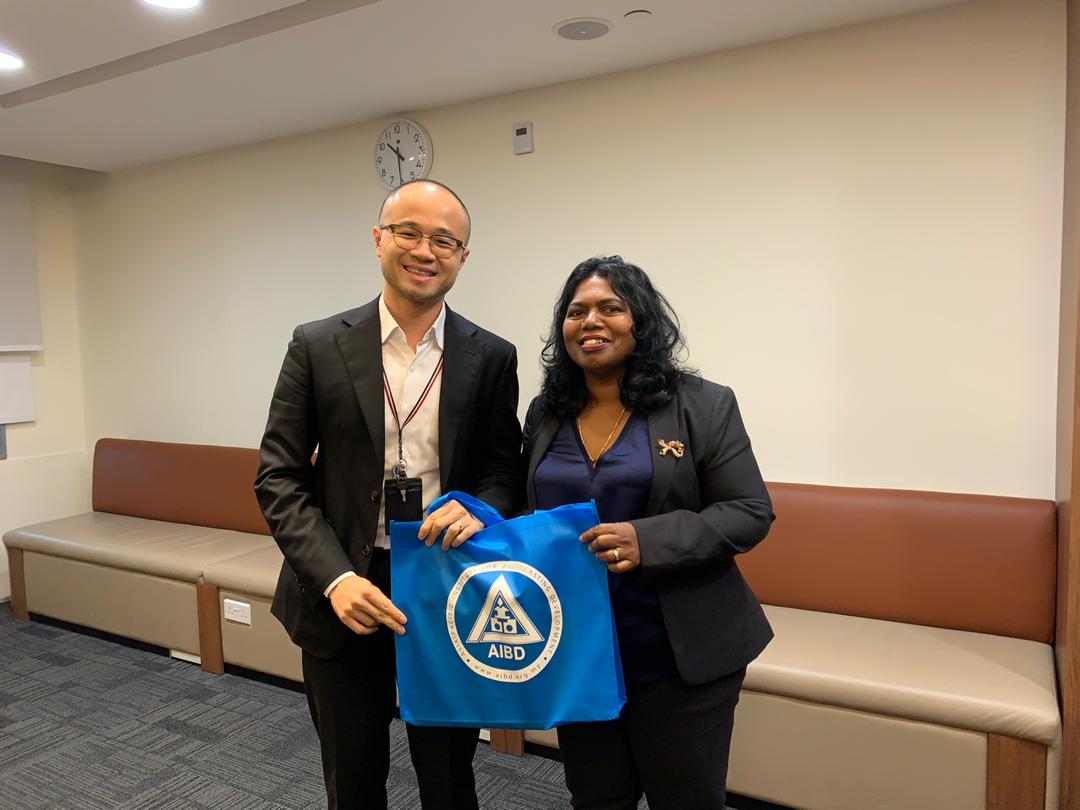
Ms Philomena said that AIBD is organising various activities on the issue in Kuala Lumpur, Malaysia and during the Asia Media Summit (AMS) in Kathmandu, Nepal next year. “As Singapore is a member of AIBD I would like to invite you all to come aboard this mission to share your best practices and experiences to other members”.
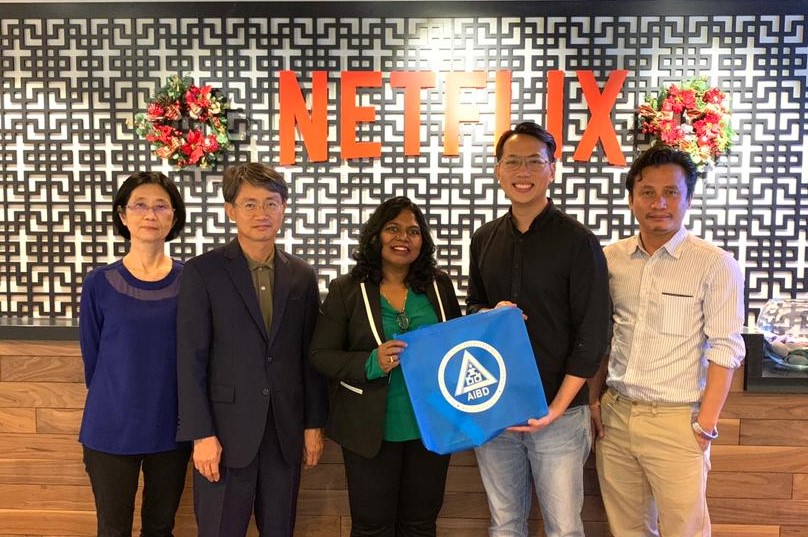
The AIBD officials also met with other members and partners during the two-day visit. At the Netflix, AIBD’s newest member, the two sides discussed about possible partnerships in 2020 and beyond. The Netflix agreed to support and be part of the Asia Media Summit in Kathmandu, Nepal next year.
At the Whiteways Systems Private Limited, an affiliate member of AIBD, the officials exchanged ideas on how technology is shaping the broadcasting industry. Ms Philomena said that the theme of AMS 2020- ‘Envisioning Tomorrow’ is to look at the concerns, challenges and way forward for the broadcasting industry in the next decade. “The Summit will cover both the content and technological aspects of the change taking place,” she added. Mr. Aale Raza, the Director of Whiteways said that change is overwhelming and if broadcasters cannot embrace it they would soon become irrelevant. He added that he will be looking forward to taking part in the AMS 2020.
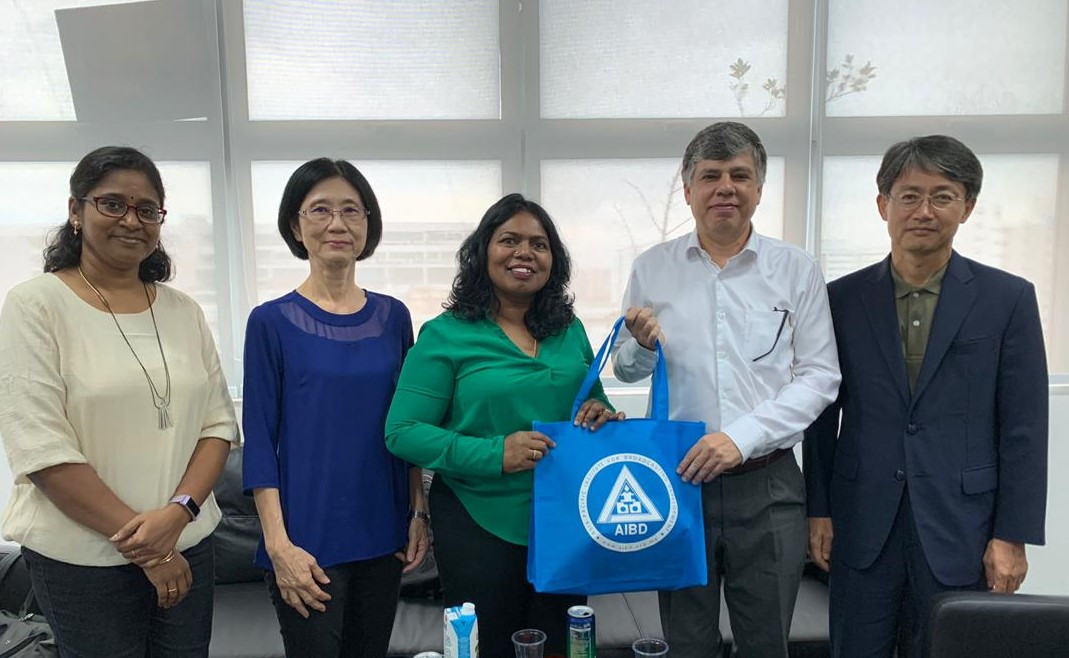
Meeting with the officials at the Channel News Asia, MediaCorp, the Director highlighted AIBD’s key activities and initiatives. Ms Philomena said that MediaCorp was once a very active member of AIBD. “We would like to renew and revive this partnership. CNA has received many of our AIBD awards. There is so much to learn from you and I have no doubt that it will be beneficial for both the parties”.
The team also met with the Broadcast Asia Group and discussed about AIBD’s participation in the BroadcastAsia 2020 in June.
]]>Director, Ms Philomena Gnanapragasam said as such, AIBD hopes to enhance bilateral relationships with all governments in the region by creating greater awareness on media information literacy among the peoples. The move is to use the media responsibly and to promote a better media literacy for all populace in the Asia-Pacific Region.
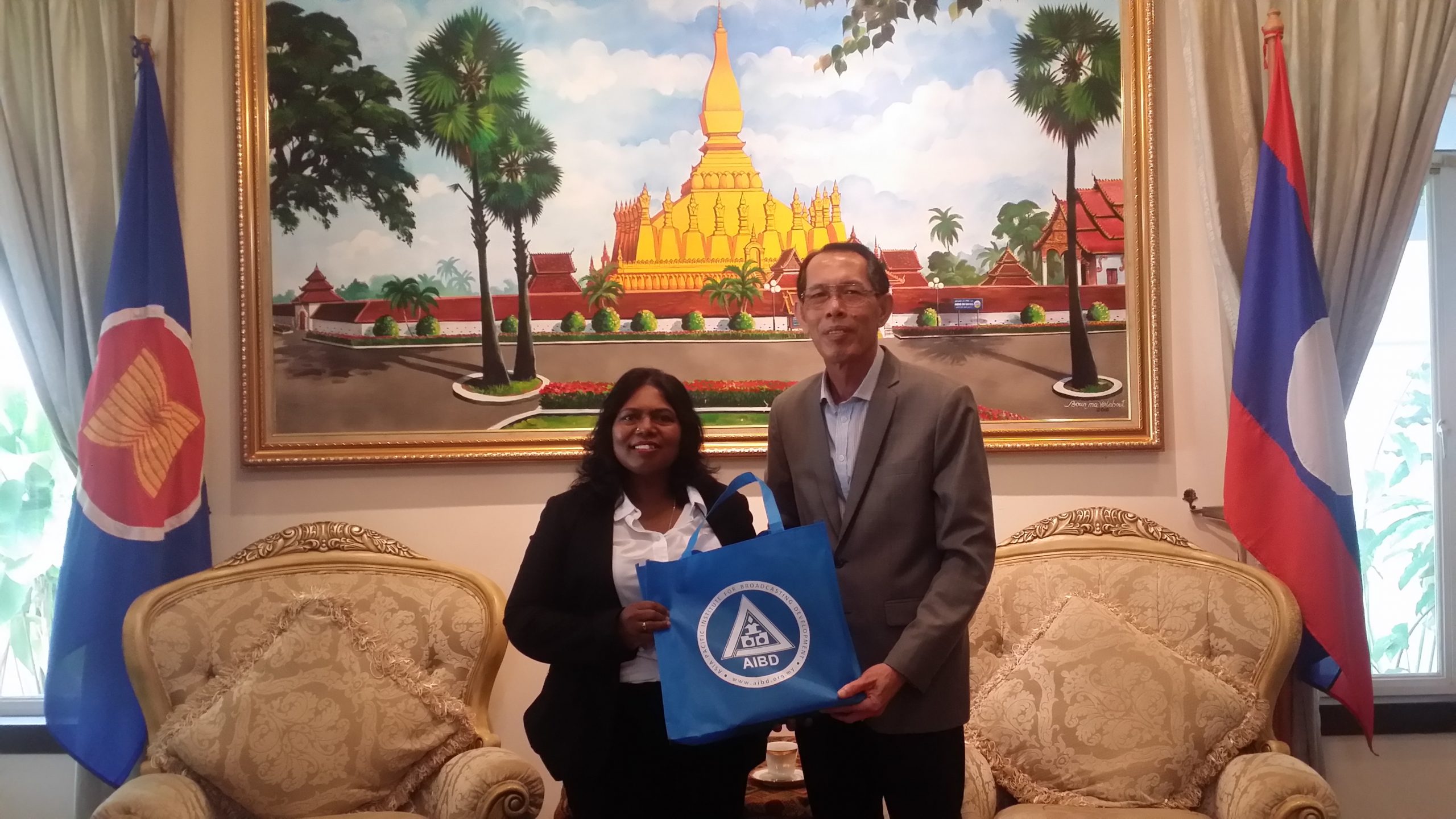
She expressed her views during a courtesy call on the Ambassador of the Lao People’s Democratic Republic to Malaysia, His Excellency Houmdaophone Soukhaseum at Laos’ Embassy in Kuala Lumpur.
In his reciprocal remarks, the Envoy has assured to render whatever assistance needed to AIBD in executing these meaningful activities for the betterment of the society at large.
 ]]>