“We can’t create new law every time we have new case, but a strong leadership, a strong determination, a strong teamwork and a joint effort,” said Dr. Khieu Kanharith, minister of information, Cambodia. He was giving his keynote address at the Media Dialogue on ‘Disinformation, Legislation, and Freedom of Expression’, organised by Asia-Pacific Institute for Broadcasting Development (AIBD), in collaboration with the Ministry of Information, Cambodia.

Referring to the current pandemic the minister said some groups and countries, instead of promoting joint effort to solve the problem, were creating more confusion and chaos for their own interests and benefits. “Cambodia is no exception to this sad event,” he said.
When asked about whether a legislation or a law can help control ‘fake news’, Dr. Lim, Ming-Kuok, Advisor for Communication, UNESCO, Indonesia, said ‘NO’. He added that it is a complex issue and needed multi-faceted approach to the address it.
Making his presentation on ‘International Laws vis-a-viz Freedom of Expression’, Dr Ming-Kuok said there is still a lot one can do before even thinking of restricting freedom of expression by bringing in legislation to address the issue. “We haven’t even done our due diligence, of providing all the alternatives,” he said, adding that freedom of expression is an important individual right, and also an important component for a democratic society.
Dr Ming-Kuok underscored three-part test for permissible restrictions of freedom of expression under the international laws. They are, according to him; legality test, legitimacy test and necessity test.

Speaking on ‘Regulatory options for disinformation’, Dr. Ahmad Helmi Azhar, a public policy analyst from Malaysia, provided four regulatory options. The first one, he said, was engagement and collaborations with platforms and new media. The other three, according to him, are: Digital literacy and awareness campaigns; Fact-Checker and technical standards; and Legislation.
Referring to case studies from other countries, Dr Helmi said, Singapore’s ‘Protection of Online Falsehoods and Manipulation Act’ (POFMA) is a good example of state-legislative approach while European Commission’s, a good example of co-regulation approach (see diagram below).

Dr. Masato Kajimoto, Associate Professor with the University of Hong Kong said media literacy education is the answer but there are lot of limitations. “The results are not immediate and it is not a good tool to fight something like the current pandemic, because you need the actions and reactions immediately,” he said.

The other limitations, he highlighted, were diverse competencies (IT and communication skills), few teachers who can teach media literacy, sensitivity and lack of coordination among multiple stakeholders.
Dr Masato made some proposals; that all teachers must be trained and there should be daily myth busting in classroom. For instance, he said, science teachers can de-bunk COVID-19 rumours, likewise geography teachers about flat earth theory and history teachers about alternative conspiracies.

Dr. Sara Chinnasamy, Associate Professor & Political and Social Media Analyst based in Malaysia spoke on misinformation/disinformation in the Asia-Pacific Region and its implications. Dr. Antoon De Rycker Associate Professor of Berjaya University College in Malaysia and Dr. Ramachandran Ponan presented preliminary findings of AIBD Angkor Anti-Fake News Research.
More than 70 participants from 12 different countries took part in the webinar on 2nd July, 2020.
]]>Journalists need to anticipate various kind of potential risks that they would encounter while covering events. The Managing Director of Lazarus Training Ltd, United Kingdom, Mr Alistair Hollington said media organisations should plan and outline the basic of risk assessment before deploying their personnel to cover any events in the field. Sharing his expertise at a webinar on Safety for Journalists, he pointed out that ‘journalists should report the news, don’t be the news’.
He gave real-life examples of road accidents by stressing the importance of risk planning and assessment such as communication plans, transport plans, emergency plans and evacuation plans. “All these should become the standard operating procedures (SOPs) as a culture of safety”, he added.
This is to ensure the resilience of media personnel from various perspectives including physical, mental, practical aspects, equipment, food, clothing and even first aids should also be looked into.
“Delay, but don’t abandon”
Another speaker, Mr Nadim Majeed from the Capital Maharaja Organisation Ltd, Sri Lanka spoke on safety precautions that investigative journalists and editors must take to ensure their safety while exposing corruption cases.
He said, “no story is worth your life, if there are serious safety risks or probability of violent reprisals, take a step back and re-evaluate the situation”. Mr Majeed suggested to delay the publication to re-assess the safety risks and come back to the story at a later date with the strategy ‘delay, but don’t abandon’.
“Some of the precautions that the editors can take would be assessing the risks early, plan early, monitor continuously, and handling threats responsibly,” he said, adding that one should be ‘MEAN’ when it comes to following safety guidelines.
Journalists – covered by OSHA 1994
The Resident Trainer of National Institute of Occupational Safety and Health (NIOSH) in Malaysia, Ms Ruzita Mohd Shariff, said journalists must identify the 5 types of hazards they will be facing while discharging their duties.
She categorised these hazards as Physical, Chemical, Biological, Ergonomical and Psychosocial. Physical such as slip, trip and fall from electrical cables or wires; Chemical like chemical spill; Biological such as the current COVID-19; Ergonomical like awkward posture during coverage or manual handling of heavy load and Psychosocial such as threat, bully and sexual harassment.
She said once the types of hazards are identified, journalists can then assess the risk of exposure and how to control, prevent and protect themselves under any circumstances. “Therefore, journalists must know how to balance between the requirement of work and the need to take care and protect themselves and their family members.”
Invest in the resilience of journalists through MHPSS & PFA
Senior Public Health Specialist of the Asian Disaster Preparedness Center (ADPC), based in Bangkok, Thailand, Dr Yvonette Serrano Duquo said Mental Health and Psychosocial Support (MHPSS) and Psychological First Aid (PFA) for journalists during emergencies, disasters and disease outbreaks is important.
“Most of the countries in this region do not have proper MHPSS guidelines for emotional and mental health care due to the lack of exposure,” she highlighted.
Dr Yvonette described journalists as ‘frontliners’. She said journalists need to gather ‘facts and figures’, thus it increases their vulnerability to infections and diseases while discharging their crucial role.
“Journalists need to have a “SELF HELP PLAN” and following some recommendations to booster their immune system is always essential at all times,” she advised. “It’s OK not to be OK. Don’t go beyond what you cannot do. Ask for help if you need to.”
Risk Communications: Media Interactions
The Head of Geo-Meteorological Risk Management Division (GMR), National Institute of Disaster Manager (NIDM) in India, Dr Surya Prakash, said there should be a chain of two-way communications involving the Citizens, Disaster Experts, Health Specialists, Officials, the Government, Media and Non-Governmental Organisations (NGOs).
Dr Surya suggested using digital communications or technological means to gather information rather than involving oneself physically. This, he said, will avoid getting infected or infecting others as asymptomatic carriers.
Journalists should be frank in discussing their mental health issue
The moderator of the session, Dr Ming-Kuok Lim, Advisor for Communication and Information for UNESCO Office Jakarta, said journalists should be frank in discussing their mental and physical health issues with their supervisors.
He said UNESCO and Reporters Without Borders have come up with a pocket-size guideline on safety for journalists, and urged all journalists, including freelance journalists to get themselves familiar with the guidelines.
He stressed that journalists, especially those going to dangerous parts of the world, must adhere to international norms and advices to protect themselves.
“The only constant thing in this world is ‘change’. If you remain unchanged, you might be lost and find yourself drowned in the sea of change,” he said.
In her concluding remarks, Director of AIBD, Ms Philomena Gnanapragasam, urged media organisations to play a crucial role in safeguarding the safety of their journalists.
More than 70 news reporters and journalists from across the Asia-Pacific region attend the 2 and half hours’ webinar, the 7th addition by AIBD since the Movement Control Order (MOC) was imposed on 18th March 2020.
]]>
Article by Qishin Tariq published in Star.my in reference to AIBD’s recent webinar on Cybersecurity.
As the conditional movement control order (CMCO) continues to keep families at home, away from the Covid-19 pandemic, another threat is on the rise: crimes targeting children.
“The global pandemic saw a surge in children joining the online world for the first time to support their studies and maintain social interaction,” said International Telecommunication Union (ITU) Asia Pacific senior advisor Sameer Sharma.
“The constraints also meant that many younger children began interacting online much earlier than their parents might have planned.”
Quoting Europol, he said there is an increase in postings in disreputable forums about how it’s easier to target children now, as they are more vulnerable due to isolation, are being supervised less, and exposed to online more, as well as an increase in those seeking child abuse material.

The Australian eSafety commissioner stated in March that one in four young people in Australia have been contacted by a stranger online, adding that while it could be harmless, it could also be inappropriate or unsafe.
In a report in April, eSafety said there is an increased risk of children being sexually abused during the Covid-19 pandemic, often when they are tricked or coerced into sharing intimate images or videos of themselves.
Its online investigations also found paedophiles discussing about how isolation measures have increased opportunities to contact children via platforms like YouTube, Instagram and various chat services.
Speaking during a web conference organised by the Asia-Pacific Institute for Broadcasting Development (AIBD), Prasar Bharati(India) and Malaysia Digital Economy Corporation (MDEC), Sameer said children are also generating more content of themselves, which could be used as child sexual abuse material.
Explaining the ITU’s Child Online Protection initiative, he said the tech sector has an important role to play in preventing violence online against children.
He urged for more proactive measures in developing age-verification systems; detecting, blocking and removing illegal and harmful material from online platforms; and for organisations to report and collaborate with law enforcement.
“Children and young people will no doubt face a different reality after the crisis and their future seems uncertain, therefore they will also have to be part of the solution,” Sameer said, suggesting that governments take in children’s views when developing policy on the pandemic.
Cybersecurity firm Welchman Keen managing director Phillip Victor warned that children are also contributing to online crimes against each other by cyberbullying and sending or requesting for explicit images.

Social media networks have to be moderated to prevent cyberbullying, says Victor, adding that some don’t do enough. — PHILLIP VICTOR
He said unlike predators who were usually strangers, cyberbullying often involved those in the child’s own social groups, with peers of a similar age.
Child rights advocate Shaney Cheng said unlike bullying, cyberbullying never stops.
“When children in school are bullied, it happens just in school. But if they’re on a social media platform or chat group, they can’t run away without leaving social media, which is not likely for most kids,” she said.
The problem is compounded as kids tend to not ask for help, and, worse, think it’s their fault, as bullies often blame their victims.
According to Cheng, bullying is usually not performed by an individual but a group, and this is exacerbated by the social nature of online platforms and chat groups which make it easier to gang up on a kid.
“Online is an escape for children, away from stress of family life, which can be worse during this period at home,” she said.
Platforms have to be moderated to prevent bullying, said Victor, citing TikTok as an example, as it often courted controversy, because it employed less moderation compared to Facebook.
“Kids like being important, so they chase followers and likes, they care about the numbers but don’t worry about who is following them. This prompts them to not keep their account private, which can expose their personal information,” he said.
Predators tend to stalk platforms which are widely used by youths, said Cheng, adding that they try to blend into the victim’s community.
They are also likely to pretend to be young, and use a child’s personal info such as the games he or she plays to make it easier to get to know the child.
“This could be a prelude of what’s coming. Predators are grooming kids now, even if they can’t meet. They start conditioning the kids online, and capitalise on it after the lockdown period,” said Victor.
Easy targets
Cheng said the at-risk age group is getting younger, now starting with kids from seven to 10 years old according to child rights non-governmental organisation (NGO) Operation Underground Railroad.
This is because parents are letting their kids use smart devices even before preschool, including allowing children on social media, and even making accounts for them.
“Some children have their own phones, while others share their parents’ phones. Even then they can still get in trouble. It’s not about who sets up the account, but the education needs to be on what to do when there is danger and what to do next,” she said.
Parents have to treat their children with more respect so their kids would be willing to turn to them for help and support, says Cheng. — SHANEY CHENG
Children tend to be curious and are taught to be polite, Cheng said, which makes them easy to target, as some don’t know how to say no.
According to Victor, children are also more open to talking to strangers due to having more free time during the pandemic.
“They don’t have face-to-face interaction with their friends, but they feel the need to communicate with somebody, be close to somebody. This can expose them to predators who act friendly,” he said.
It all comes down to the sheer amount of time spent online. While they could be chatting with friends for several hours a day as usual, they still have a whole day away from school to be on the Internet.
“They can only chat with friends for so long before looking for other things to do. An idle mind is the devil’s workshop,” he said.
No shortcuts
Like their children, many parents are also homebound due to CMCO, especially those with the option to work from home.
Though parents are home, they would likely be too busy with meetings and work duties.
“Kids are under the same roof, but also alone. They see them on the computer and occupied, but what the kids are actually doing is the concern,” said Victor.
He suggested having the child use a computer or smart device in an open space rather than allowed to be holed up in their rooms. He also recommended parents to keep channels open for communication rather than just policing the kids.
“Parents must tell their kids there is help, and that they are there for them. Be observant if your child’s behaviour is changing and look out for depression or anxiety,” he said.
Even though he works in the cybersecurity field, Victor said he does not monitor his children, because if he did and they found out, they would shut him out in the future.
“It’s like how people are nervous around cops even if they aren’t in the wrong,” he explained.
Cheng agreed that it was important to treat children with respect to show there’s no difference in power dynamics.
“Parents tend to instruct children even though kids are more tech savvy than them. Instead they should create a safe space where kids can talk about things they’re uncomfortable about,” she suggested.
She revealed that a predator typically tends to tell children that their parents would confiscate their phone if they are made aware of the existence of the predator.
“Adults usually take the shortcut, they just take away the phone or Internet access. But they have to accept that a child’s life is connected to the Internet, as now even preschoolers are taking classes online,” she said.
Asked what parents could do to taper children’s time online, Cheng said it comes down to creating alternatives to fill their time.
“It’s quite sad really, I’ve talked to kids about time spent on screen and they asked what else they can do,” she recalled.
She suggested rather than telling kids to just put away their phones, it is more effective to create activities for them to do offline, like doing chores or hobbies and reading in exchange for screen time.
She reminded parents that just being physically present at home wasn’t enough, as they still needed to set aside time to pay attention to their kids.
“Look around at a restaurant and the whole family is on their screen, sometimes they are even texting each other. Parents have come to realise the screen is the fastest way to keep them quiet,” she said.
Parents should take advantage of what time they have at home to open lines of communication with their children, even if that meant letting them stay online on their phones.
“It’s not about putting aside the gadgets, but about communication,” she summed up.
AIBD webinar on Crisis Communication was organised on 14 May 2020.

The session was moderated by Dr Kim Youngyill, Communication Officer at Korean Broadcasting Services (KBS) Korea and the main speaker, Mr Ravindaran Raman Kutty, a crisis communication and corporate communication expert and consultant, highlighted three critical steps in managing a crisis:
Pre- Crisis Readiness
During a Crisis
Post Crisis

He emphasised on the significant threat and potential damage a crisis can inflict on an organisation, if handled poorly. He presented case studies from different industries as well as the current pandemic – COVID19. Mr Kutty explored how various countries around the region is handling the pandemic, from early prevention plans in Taiwan, Hong Kong and Vietnam to Japan’s example of initial managing the crisis without lockdown, which was changed after the Hokkaido incident, where an early outbreak of the coronavirus was contained with a 3-week lockdown. But, when the governor lifted restrictions, a second wave of infections hit even harder and after twenty-six days the island was forced back into lockdown.

Dr. Nik Norma Nik Hasan, Senior Lecturer at School of Communication, Universiti Sains Malaysia (USM) Adjunct Fellow, United Nations University- International Institute for Global Health (UNU-IIGH), presented on the significance of public risk perception and how it can change behavior to assume new normal. Dr Nik presented from her on-going social media research on Twitter and Instagram users and how they react to authority and trust level in official channels. With real time analysis, she was able to get the data to quantify the risk perception in organisation and individuals, although she stressed that it was an ongoing research, and no conclusion could be drawn at this stage.

Although planned for one and half hour, the session had to be extended to accommodate questions from as many participants as possible. It was attended by 65 participants from 19 countries and was streamed live on Facebook. It is available on AIBD Facebook page: @MYAIBD
Link: https://bit.ly/3cdDqx9

In collaboration with Prasar Bharati (India) and MDEC (Malaysia), AIBD organized a webinar on “Managing Cybersecurity during COVID-19” on 5 May 2020, in which top regional shared their experiences and gave awareness on recent cybersecurity challenges observed during the time of COVID19. Over 200 broadcasters from 30 countries attended the webinar.
Mr Sameer Sharma, Senior Advisor, ITU delivered his keynote on “Building trust in digital world @COVID19” in which he discussed the recent initiatives and achievements of ITU.
Renowned Cybersecurity expert Mr Philip Victor highlighted the importance of saving Child netizens and how to make the internet a safer place for them. Mr Victor Lo and Dr Roshaliza Rosli discussed the Malaysian cybersecurity threat landscape in regards to the recent pandemic situation and how MDEC is trying to cope with the situation to minimize the impact.
Mr Prinya Hom-Aek, President and founder of ACIS Professional centre, delivered his presentation on effective BYOD (Bring your own device) mobile security policy.
Dr Pavan Duggal, Founder and chairman of the International Commission on Cyber Security Law discussed various case studies related to IoT security and how different governments are devising laws and policies to cope up with various challenges.
Mr Manu Zacharia, CEO & Chief Mentor, HackIT Technology and Advisory Services delivered his presentation on the rise of Ransomware and how different strategies can help cybersecurity officers to minimize the threat level.
Dr Amal Punchihewa, a broadcasting consultant from New Zealand, moderated the event.
The event was highly appreciated by the members and cybersecurity experts terming it to be relevant and timely due to current lockdown situation in most of the countries and where many broadcasters and journalists are working from home to broadcast their stories. At the end of the event, Ms Philomena, Director, AIBD mentioned that this is the beginning of this series and various regional workshops will follow it to raise the awareness of cybersecurity in Asia-Pacific region among broadcasters.

In collaboration with Prasar Bharti (India) and MDEC (Malaysia), AIBD organized a webinar on “Managing Cybersecurity during COVID-19” on 5 May 2020, in which top regional shared their experiences and gave awareness on recent cybersecurity challenges observed during the time of COVID19. Over 200 broadcasters from 30 countries attended the webinar.
Mr Sameer Sharma, Senior Advisor, ITU delivered his keynote on “Building trust in digital world @COVID19” in which he discussed the recent initiatives and achievements of ITU.
Renowned Cybersecurity expert Mr Philip Victor highlighted the importance of saving Child netizens and how to make the internet a safer place for them. Mr Victor Lo and Dr Roshaliza Rosli discussed the Malaysian cybersecurity threat landscape in regards to the recent pandemic situation and how MDEC is trying to cope with the situation to minimize the impact.
Mr Prinya Hom-Aek, President and founder of ACIS Professional centre, delivered his presentation on effective BYOD (Bring your own device) mobile security policy.
Dr Pavan Duggal, Founder and chairman of the International Commission on Cyber Security Law discussed various case studies related to IoT security and how different governments are devising laws and policies to cope up with various challenges.
Mr Manu Zacharia, CEO & Chief Mentor, HackIT Technology and Advisory Services delivered his presentation on the rise of Ransomware and how different strategies can help cybersecurity officers to minimize the threat level.
Dr Amal Punchihewa, a broadcasting consultant from New Zealand, moderated the event.
The event was highly appreciated by the members and cybersecurity experts terming it to be relevant and timely due to current lockdown situation in most of the countries and where many broadcasters and journalists are working from home to broadcast their stories. At the end of the event, Ms Philomena, Director, AIBD mentioned that this is the beginning of this series and various regional workshops will follow it to raise the awareness of cybersecurity in Asia-Pacific region among broadcasters.
In what was the first ever virtual COVID Response Session for media, more than 150 journalists and experts from 24 countries came together virtually to share and learn from each other. The Asia-Pacific Institute for Broadcasting Development (AIBD), as a regional international intergovernmental body, and India’s National Academy of Broadcasting and Multimedia (NABM) organised the Session.

In her opening remarks, the Director of AIBD, Ms Philomena Gnanapragasam, said ‘no one expected that it (pandemic) will last this long’. More than one-third of the world is under lockdown and a Session like this was needed to discuss and share experiences and new ideas. “Along with the health workers, media too are at the frontline of this pandemic,” she said, adding that timely information can not only save lives but also prevent from getting the disease.
The Chief Executive Officer of India’ Public Service Broadcaster, Prasar Bharati, Mr. Shashi Shekhar Vempati, said the responsibilities of the media, especially that of Public Service Broadcasters, have significantly gone up, not only in providing news and information, but also to keep the citizens engaged at home so that the social distancing and lockdown remain effective.
One of the main speakers, Dr. Liviu Vedrasco, WHO COVID-10 Asia-Pacific Liaison based in Thailand, said humanity has not faced such a crisis in the last 100 years. The closest one, he said, was the 1918 influenza pandemic. In this crisis, the ‘whole of society’ must respond, and without that it would be difficult to contain the pandemic, Dr Vedrasco opined.
He highlighted ‘Five Principles’ as the foundation of a United COVID-19 response system. The first one he said was the ‘Whole-of-Society’, in which all governments, businesses, and civil societies must communicate and come together. The second one; there should be ‘Readiness at all levels’. The third one, according to Dr. Vedrasco is an important one; Critical Interdependencies. He said attention must be given to nine critical sectors (Food, Water, Health, Energy, Transport, Finance, Telecom, Law and Order, and Defence), regardless of the level and size of a country. “Failure of one or more of these services can have major economic, health and social consequences”.
The last two ones, equally important, he added, were ‘severity-based response’ and ‘respect ethical norms’ by protecting the vulnerable and disadvantaged sections of the population.
On the role of media during a crisis like this he suggested three distinct areas; to simplify public health authorities’ messages, report on government response and communities reactions, and bring into public consciousness the positive stories of extraordinary solidarity, passion and generosity.
The risk is real, said Dr. Ming-Kuok Lim, Advisor for Communication and Information, UNESCO Office in Jakarta. “The potential of getting infection and infecting others must be considered when reporting from locations,” he highlighted. In a crisis like this the journalists, he added, must familiarise themselves with all the recommendations provided by health officials. The emotional and psychological health while on assignments can emotionally draining, and therefore, the journalists should be aware of their own mental health, he said.
Speaking from the disaster management perspective, Dr. Surya Prakash, Head of Geo-meteorological Risk Management Division of India’s National Institute for Disaster Management (NIDM), said there is a need for international and national collaborations, command and control systems for effective response and recovery. Since there is a lack of international frameworks to manage this criss, he suggested taking advantage of the SENDAI Framework for Disaster Risk Reduction 2015-2030, where 190 countries are signatory to it.
The Assistant Professor at National of Mental Health and Neurosceinces in India, Dr. Jaya Kumar, stressed on the need to incorporate psychosocial counselling and support in a crisis like this where people are forced to stay indoors with minimum interactions. “There should be psychosocial monitoring and helplines created at centre, state and district level,” he suggested.
The Experience Sharing Session
Media experts from Hong Kong, Korea, India, and France shared their experiences on how their Channels and Countries are doing in its fight against the pandemic.
Showing the visuals of how his reporters reported from the where the virus first surfaced, the City of Wuhan, Mr Haibo Huang said it took two days to prepare his team to be sent to Wuhan when China announced the lockdown. He is the Deputy Head of Phoenix Chinese Channel based in Hong Kong. He said during a disaster like this media outlets must take calculated risk, and prepare for almost everything. He said his Channel sent 2 teams to Wuhan and did comprehensive reporting from various locations.
At Korean Broadcasting System (KBS), Dr. Kim Youngyiil, Project Manager of EBU and AIBD, said they have established a ‘Integrated Newsroom’ to respond to COVID outbreak. He said it is an initiative to fight against ‘infodemic’ with special kinds of programming. “There is special live programming called ‘Let’s Fight the Corona Virus, where it goes beyond numbers and statistics”. He added that behind these numbers and statistics are actual people. “We show real people, real faces and deliver strong, powerful and positive messages”.
In India, as Bollywood actors and Cricketers are very popular, the national broadcasters have used them to deliver important messages. The Director General of Doordarshan News, Mr. Mayank Agarwal, said they also instituted daily call-in programmes with medical experts to answer people’s queries and a special COVID-19 tracking shows. The Additional Director General of Doordarshan, Mr P.K Subhash, besides airing information and education campaign materials they have re-introduced some of the very popular TV serials of some 20-30 years back. “We have got huge positive response and our viewership has reached 50 to 60 million,” he added.
In France too, more than 75 percent of the airtime is dedicated to corona virus through information, education and entertainment, said Mr Frederic Alliod, who is a regional attache’ for Film, TV, Radio and New Media in Cambodia, Laos, Myanmar, Thailand, and Vietnam.
In New Zealand, the Prime Minister herself along with relevant officials give press conference every day at a given time, leaving not much room for misinformation, said Dr. Amal Punchihewa, a media consultant (engineer) and an adjunct professor.
The Session was also live streamed on Facebook for those who could not register on time. In some organisations it was projected on a large screen so that more people could follow the Session.

AIBD COVID sharing session 2: Heads of Organisations & Representatives

The Asia-Pacific Institute for Broadcasting Development (AIBD) organized a series of COVID response and sharing sessions with the member organisations. The first ever virtual COVID Response Session held on 9th April 2020, joined by for more than 150 journalists and experts from 24 countries, was an overwhelmingly successful experience that generated positive responses from the attendees and requests for similar activities.
In response to the requests AIBD, as a regional international intergovernmental body, is organizing series of exclusive sessions for the Heads of Organisations to bring together the top-level management to learn and share best practices of crisis management, content sharing and how to manage COVID related risks in organisations.
In this session, titled COVID Response Session 2: For Top Management, 53 Heads of Organisations and Representatives from 18 countries joined the Virtual Session on 23rd April 2020.
In her opening remarks, the Director of AIBD, Ms Philomena Gnanapragasam, said ‘this was a very apt meeting’ as more than one-third of the world is and still under lockdown and a session like this was needed to discuss and share experiences and content. She welcomed the delegates and gave a special note of thanks to H. E. Dr. Khieu Kanharith, Minister of Information, Ministry of Information Cambodia, who has been supporting and observing all AIBD sessions throughout the
pandemic.

Mr Rajeev Singh, CFO of Prasar Bharti and current President of AIBD, remarked that it was the broadcasters’ responsibility to control fake news and it was equally important that the people and the leaders were given the right information, while keeping the people engaged at home so that the social distancing and lockdown remain effective. He added that by repeating information, messages, old stories and iconic programmes by broadcaster it will leave less space for gossips, wrong news from social media and at the same time, bring responsibilities to the public who was previously not serious about the Corona virus prevention.

Presentation Sessions:

China Global Television Network (CGTN)
The session started with presentation from Ms Tian Wei, Anchor at CGTN, with visuals of how reporters on CGTN reported from Chaoyang District, the epicenter of the virus transmission in China and highlighted CGTN’s series ‘Frontline- World Insight’, which brings doctors, medical practitioners and scientists from China, Europe and America for global discussion. She underlined the importance of avoiding politicization of science issues to prevent racial discrimination and stigmatization during reporting, and letting scientist and experts advise on the situation. She further added, `every country is feeling fatigue and needed one world together to fight this pandemic`.
Korea- Korean Broadcasting System (KBS)
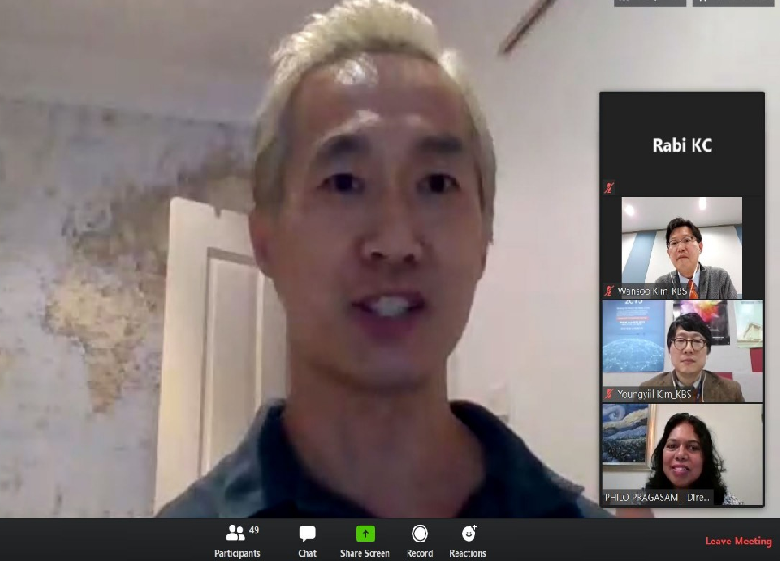
Mr Kim Wan-soo, Director of International Relations and Dr. Kim Youngyiil, Project Manager of EBU and AIBD, KBS, did a joint presentation which focused on KBS’s establishment of an ‘Integrated Newsroom’ to respond to COVID outbreak. Dr Kim outlined KBS’s initiative to fight against ‘infodemic’ and misinformation with special kinds of programming. He stressed at KBS, facts are checked twice to avoid misinformation, and KBS broadcast encouraged cooperation among community so as to have one effective voice and not to stir groundless news. New measures for the safety of staff working on site and rules for work from home were strictly enforced. Mr Kim Wan-soo reiterated the importance of securing transparency, listening and taking on `over-reactions`, and ensuring safety of the staff was sure way to gain audience trust.
Australia-Australian Broadcasting Corporation (ABC)
Mr David Hua, Head of ABC International, spoke of how ABC has extensive experience with emergency broadcasting for cyclones, floods and bush fire disasters but had never handled pandemic before. He explained the journalists, exhausted from the coverage of months of bushfire during the Black Summer, got immersed into COVID-19 cases and how they were not prepared and did not know to identify what level of frequencies to trigger alerts. Nevertheless, he said, ` we have paced ourselves and work from home, even our radio programmes are hosted from home now and sport events cancelled`. As the result, he said, ABC is facing the problem of filling their broadcast schedule.
Russia-Russia Today (RT)
Mr Alexey Nikolov, Managing Editor, RT said Russia was successful and lucky to have low mortality rate. He stressed it was important to let people know of the COVID situation and what the doctors were doing to combat COVID. He shared two video clips which RT produced to show how doctors were working in the dire condition to save lives and how humour was used to produce PSA to educate people to stay home. He added it was important to use social network to check information and to make sure not to incite what is dangerous.
The last presenter of the session was Mr Ravindran Raman Kutty, Communications Practitioner and Consultant, Malaysia. His presentation tackled the 3 approaches to crisis management. He outlined the importance of prevention and readiness as the keys for pre-crisis, where policies and SOP are established, right operational and spoke-person appointed, and having a legal man and a crisis management team ready on hand as essentials. During the crisis it is important to prioritise the threats posed and have best practices rolled out fast, while it is critical to evaluate, review, reports, advise and monitor during post crisis.
During the Q&A session many countries voiced their concerns regarding the challenges broadcasters are facing during these times. Mr Riyaz Sayed-Khaiyum, Chief Executive Officer, Fiji Broadcasting Corporation (FBC) stated that while traditional broadcasters like radio are making a come back, the lack of equipments and decrease in revenue has created tough environment. “We need to keep people employed and sane but revenue is dropping more than 90%. People are watching us but nobody is paying us’ He concluded with a plea “With no money and backing, we are willing to share content in return for anything”.
Mr Ismail Miakhail, General Director, National Radio and Television of Afghanistan (RTA) said that Afghanistan being a war-torn country has more challenges than normal especially creating awareness programme, with conflicting information between the mosque, religious teachers and health facts about COVID. “We are stuck in stage 1 of giving 100% awareness on washing hands, stay at home. Presently, we are just moving onto stage 50% awareness and 50% services where people do not know where to go”. He supported the idea of creating a media hub and sharing of content.
Mr AHM Bazlur Rahman, Chief Executive Officer, Bangladesh NGOs Network for Radio and Communication (BNNRC) shared that BNNRC had started their corona virus prevention and education programmes since 1st March 2020 through their community radio. To date, there are 200 community radio broadcasters producing 165 programmes for broadcast including via FB and Youtube platform. He underlined the importance of mobilising community radio as effective tool in reaching out to the community in Bangladesh especially in this unprecedented time of COIVID pandemic.
Mr Alan Allanigue, Chief of Production, Philippine Broadcasting Service (PBS) shared that the whole island is under enhanced quarantine and PBS has to inspire the people with good news and news of people helping each other, on the other hand Mr Fualau Talatalaga Mata’u Matafeo, Chief Executive Officer, Ministry of Communications and Information Technology stated that although Samoa is one of 16 countries not infected by the COVID virus as yet, they are already working with ABC in sharing some programmes which they have translated in their local language.
Gobind Roka & Suresh from Nepal TV outlined their effective guidelines for ensuring safety of their journalists and daily programmes on corona virus.
E. Dr. Khieu Kanharith, Minister of Information, Ministry of Information Cambodia stressed that in Cambodia all information is verified and unified for dissemination, which was echoed by Mr Prasith Sok, who added it is important to follow government guidelines when disseminating information. This sentiment was further reinforce by Mr Abdulwarees Solanke, Deputy Director Training , Voice of Nigeria (VON)when he quoted his column “we need news and information to see us through as we strive for safety. We need credible news and empowering information to share with the community.
Outcome of the Session:
In an incredible act of solidarity, all attending members agreed to participate in the content sharing endevour proposed by AIBD. Although there are few limitations with the available languages, it was agreed that this offer will be extended to the rest of the AIBD members, and AIBD will facilitate this network to ensure success of the project. President AIBD suggested that AIBD be the platform for content sharing, laying focus on copyright and have rules installed for members to upload and broadcast the shared contents.
The session closed with assurance from Ms Gnanapragasam that content sharing is the best way out for members in this trying time and AIBD will mobilise a mechanism for content sharing.

AIBD has been conducting series of COVID Response Sessions for our member organisations. One of the main objectives of the Sessions is to bring together so that the best practices, experiences, knowledge and resources could be shared among the members. The Session is scheduled to be held on 30th April, at 2 PM Malaysian Time. Speakers from Australia, China, Latin America and Russia will be share their experiences as well. Besides sharing ideas on COVID crisis management, the Session, will also discuss about content sharing among others.
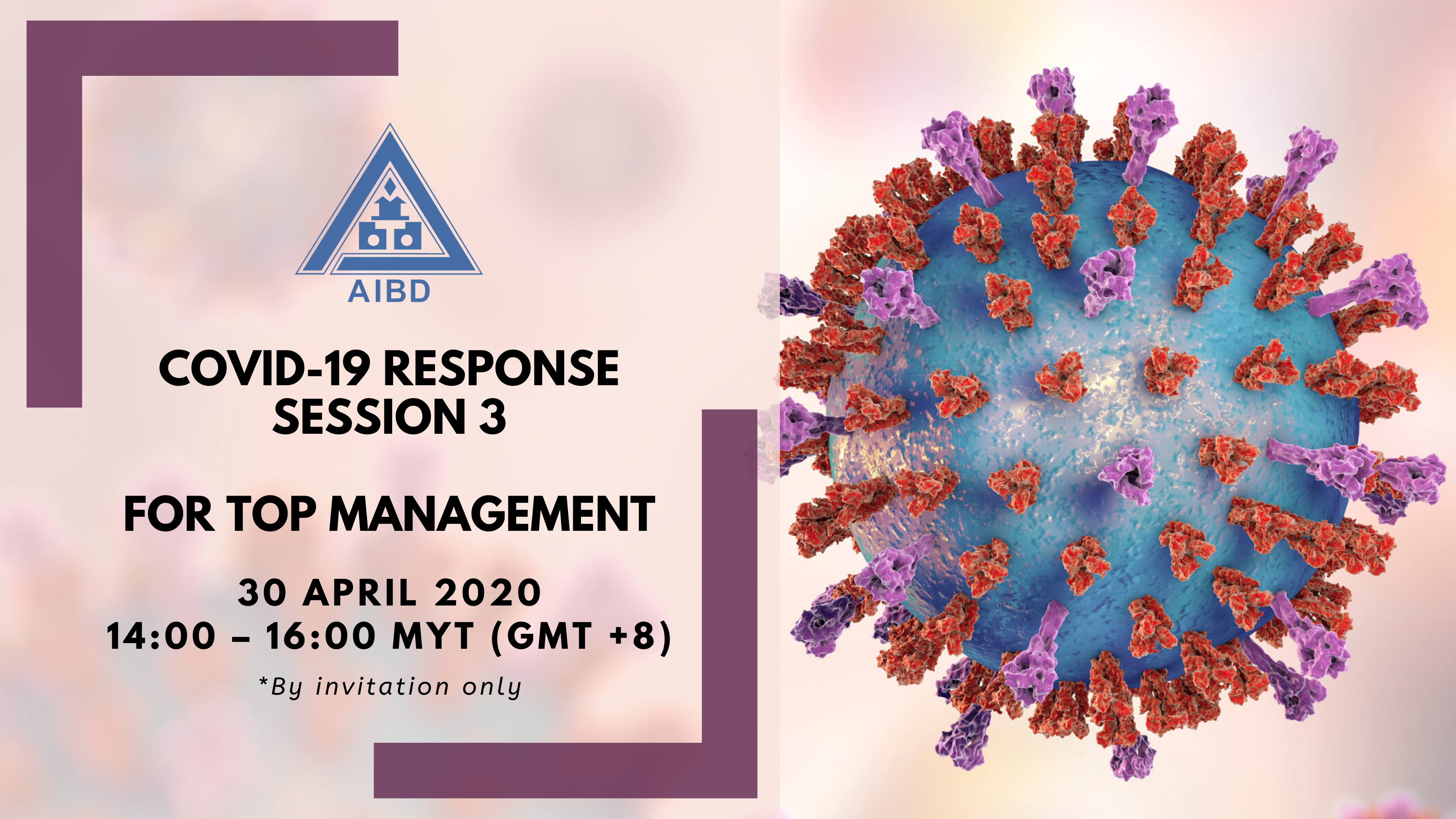

AIBD is organising an online COVID19 Response session for broadcasters on 9 April 2020. The event will start at GMT +8 2:00pm from Kuala Lumpur, Malaysia. Various speakers from Broadcasting fraternity and U.N Related bodies will deliver their presentaions on the topic. Interested individuals can register themselves at: https://bit.ly/3dKDOoN or mail at training@aibd.org.my
