Digitization of archives remains a key area of interest for broadcasters as many years of ‘heritage’ content are under threat of being completely lost due to adverse affects of long-term degradation of analogue formats and magnetic media. With new and advanced technologies currently available these important archives can now be converted to digital formats and stored in easily accessible digital libraries that are more robust. The process of digitisation also helps in easy management when organised around a Media Asset Management (MAM) system which improves efficiency in managing the growing content repository and provide better workflow capabilities. Also it helps in creating new revenue streams through content sharing.
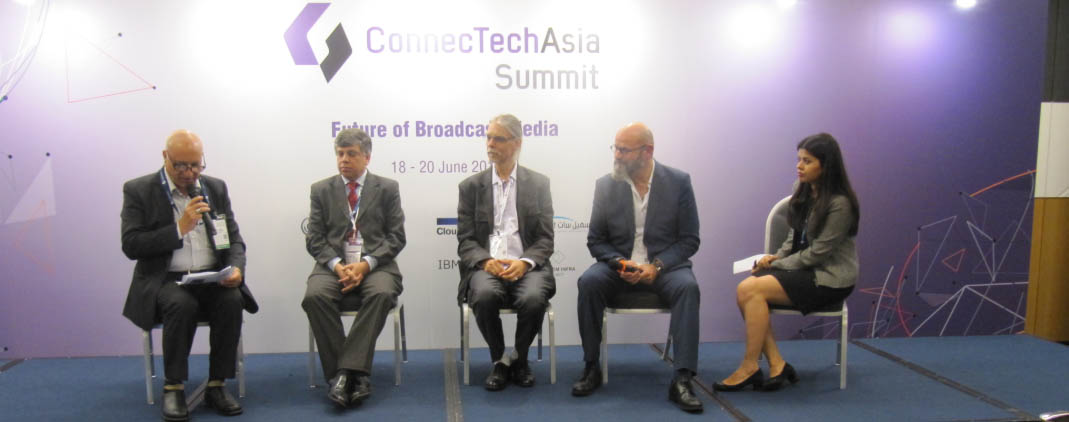
Asia Pacific Institute for Broadcasting Development (AIBD) & Asia Pacific Broadcasting Union (ABU) in collaboration organized a seminar on “Management and Digitisation of Audio Video Archives”. The event was supported by Informa/UBM Singapore and conducted during BroadcastAsia-2019 on 18 June 2019, at Suntec Singapore. The seminar addressed steps necessary towards digitalisation of audiovisual archives, beginning with ways to further extend the life of existing analogue tapes to choosing the appropriate technology, metadata schemas and storage requirements and options. It also looked into implementation of MAM systems, its benefits in content management and workflow. Several Industry leaders in the area of archiving from the region presented and shared their experiences in this challenging and mission critical process.
Moderator Mr. Sharad Sadhu, Media Specialist started the session by providing an overview on ecosystem of archival, need of archiving of content and related activity. Archives have always created descriptive tools to identify and locate documents, as well as to arrange and classify them according to their origin, their functions, their type or their thematic content. The first speaker Mr Aale Raza, Managing Director of Whiteways System presented on Preservation Techniques and management of existing archives. Whiteways design, supply, install, commission the system for restoration (physical & digital), digitisation, archiving and software management of video content owned by the customer. Mr Raza explained about current Whiteways project where an organisation wants to digitize large quantities of audio / video assets. He shared this case study as an example on the steps on how to set up an archival system and manage it. He explained all the steps in managing audio-video archives and also touched upon Digital Right Management (DRM).
Dr.Marc M. Batschkus, Business Development Manager, Archiware talked on topic of Digital Solutions for Preservation and Building a Modern Archiving Systems. He said archive needs support from the organisation, people and processes. The purpose of archive is to free up space on production storage, preserve media and productions for long-time enrich with METADATA. He told that the METADATA are the Key to the archive. He briefed about technical METADATA (e.g. camera, resolution, lens); descriptive METADATA (e.g. description, actors, location) and individual METADATA Schema.
Ms Punam Sharrma, Director of Mediaguru, Singapore presented two success stories her company accomplished in digitizing archives. First project was offered by Government Agency in Middle East in January 2014 which was completed by Mediaguru in five months. The project of Qatar Television: Digitizing Archives for State Broadcaster was one of the largest digitization facility spread across 100,000 square feet enabling ease of access to legacy content having 50+ 2” players, 1”players, U-Matic, DigiBeta, VHS, HDCam, film scanners, cleaners etc. It was digitizing over 100,000 hours of legacy content by providing on-site solution and management of digitizing archive content. On to the next success story of digitizing archives for Rwanda Broadcasting Agency (RBA), Ms Punam told that digital conversion, indexing, cataloguing and management of over 75 thousand hours of audio-visual content was done for RBA and the organisation is planning to establish their VOD platform to distribute all digitized and restored content to the audience.
The moderator conducted a panel discussion with all the speakers on floor and addressed large number of issues on the subject matter and also all the queries raised by the delegates were responded by the panelists satisfactorily. Preserving the string of bits is not the same thing as preserving the audiovisual content since, for the latter, it also requires the technology that allows the data to be interpreted i.e. a computer and software able to convert this string of bits into images and sound. Digital preservation also includes the preservation of the context information, i.e. all the information related to the circumstances of the document’s creation: its authorship, origin, date of creation, etc. Thus digitizing audio-visuals and managing them is very important for preserving our time. The seminar provided useful information to the participants who were in attendance in conjunction with Broadcast Asia.
]]>The development of digital radio has led to improved spectrum efficiency, more channel capacity, or a combination of these benefits. Digital compression techniques used in audio systems have improved sound quality at low bit rates to the extent that radio broadcasts can be made on location and then transmitted to the broadcaster’s production studios over telephone circuits in high quality. Ideally, to reach the widest range of listeners, a digital radio system should be capable of being transmitted via terrestrial, satellite and cable systems. The eventual transition from analogue to digital for all communications systems including radio is inevitable and will happen in time. The decision for managers today is to find the best balance in timescale for the public interest for their environment. The timescale for the analogue to digital transition for radio is not the only complex decision that needs to be made today. Unlike the situation for analogue radio, common worldwide standards for digital radio have not been possible in our more complex world. A number of different systems have emerged, each with their own environments and proponents. Broadcasters and regulators need to evaluate the alternative systems and decide which is the optimum system for their environment.
Asia Pacific Institute for Broadcasting Development (AIBD) conducted Seminar on Digital Radio Implementation and Transition Strategy in collaboration with Asia Pacific Broadcasting Union (ABU) and supported by Informa/UBM Singapore during BroadcastAsia-2019 on 18 June 2019, at Suntec Singapore. The primary objectives of the event was to understand technology of Digital Radio Standards; Trends and Strategies being adopted for transition to Digital Radio Broadcasting all over the world; Share case study and experiences on transition from analogue to digital broadcasting; Build skills on smooth transition from Analogue to Digital Radio broadcasting. For providing equal opportunities to two competing standards such as DAB+ Digital Radio and DRM Digital Radio, experts from both consortium were invited to discuss the respective digital radio systems and implementation. The first 90 minutes of the seminar was allocated for the DAB speakers where four experts in the technology talked on DAB/DAB+ Digital Radio. Another 90 minutes of the session was for DRM and three experts discussed the DRM digital radio.
The DAB/DAB+/DMB family of standards is the most globally widespread digital radio broadcasting platform, offering radio broadcasters significant cost advantages and offering regulators considerable spectrum efficiencies over analogue and other digital systems. It was originally planned for implementation in two spectrum bands: VHF Band III and L Band, although the use of L Band has now been deprecated.
DRM is a digital radio standard for the existing radio broadcast bands (as deployed for analogue AM and FM radio). It supports both local/regional coverage scenarios, as well as large-area and international transmissions. DRM focuses on digitizing and enhancing radio services and transmissions of individual broadcasters. The DRM system encompasses a high level of flexibility in its design. The DRM standard has two main configurations, depending on the frequency of transmission. “DRM30” is the term applied when the frequency is below 30 MHz (the traditional AM bands). “DRM+” is the term applied when the frequency is in the VHF bands, that is between 30 MHz and 300 MHz. DRM30 can be used in either 9 or 10 kHz channels, and also provides high capacity modes using double channel bandwidths. DRM+ is used in 100 kHz channels. Therefore DRM can operate in the existing channel assignments defined in the past for analogue transmissions.
The first speaker in DAB session Mr. Lindsay Cornell, Principal System Architect, BBC talked about Global DAB+ digital radio status. He said 41 countries with DAB services on-air, 500 million people receive DAB signal and over 75 million DAB receivers sold. He also touched upon DAB+ enhance metadata, data applications, emergency features of DAB, multiplexing, system design and coverage of DAB services.
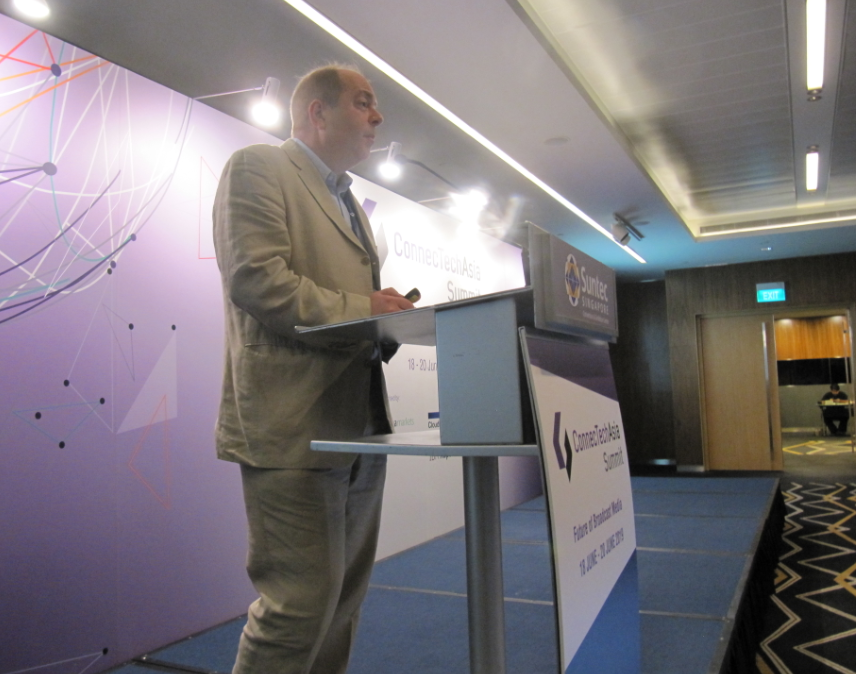
Mr. Rich Redmond, President-Managing Director-International of Gates Air in his presentation discussed Economic & Environmental Benefits of DAB+. He showed the differences between DAB+, DRM+ & FM transmission on various parameters like frequency, tranmit power, programme per channel, modulation schemes etc. Mr Redmond also elaborated on cost comparison of various radio network topologies and new advanced technology impacts on network deployment costs.
Dr.Pakdee Manaves, Asst. Professor & Deputy Secretary-General of Broadcasting of the Office of NBTC presented DAB+ Digital Radio Implementation in Thailand. He told that as per NBTC survey result on radio service accessibility and user behavior in 2016, 46% of Thai people still listen to the radio on terrestrial platform, and more that 50% listen to radio and kitchen radio. Listening time more than 600 min per week and 35% of Thai people listen to radio at home and in car. And most popular radio contents are song, information and news, and also traffic report. Regarding to Thailand broadcasting master plan and Digital Economy and Society Development plan Thailand have to deliver digital radio broadcasting services.
Ms. Kathryn S Brown, Head of Strategic Development, Commercial Radio Australia (CRA) presented WorldDAB Australian case Studies of DAB/DAB+ Digital Radio Implementation. She told that CRA coordinated various aspects of DAB+ roll out for industry such as Technology standards review and DAB+ development; Policy settings & legislation; Network design, procurement and implementation; Commercialisation – automotive, retail, receiver manufacturers; Marketing and PR; Regional roll out planning and channel allotments with regulator.
In the second 90 minutes session of the seminar, DRM experts representing Fraunhofer IIS, and DRM Consortium struck a balance in their presentations between the theoretical aspects of the standard and the practical experience and lessons learned in many countries of the globe and shared case studies and experiences in transition from analogue to digital radio from the region and beyond. Mr Alexander Zink Vice-Chair DRM Consortium; Senior Business Development Manager, Fraunhofer IIS presented Key Benefits and Features of DRM and its implementation steps for a successful DRM roll-out in both VHF and AM bands. He provided Technology Updates of DRM Digital Radio, DRM Digital Radio Specifications for AM and bands I, II (FM) and III, Features and Benefits, Network Design & Emergency Warning Functionality (EWF).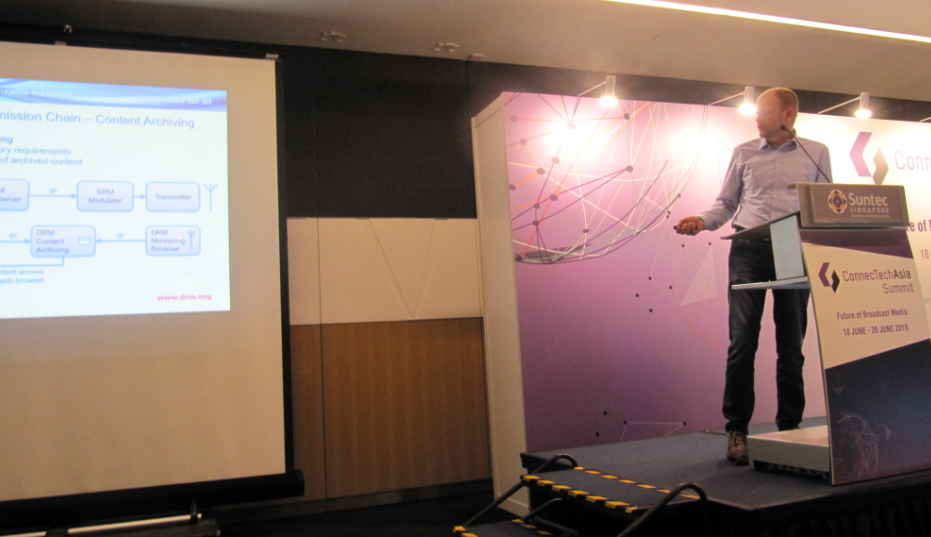
Dr. Albert Waal Head of Hardware Development, RFmondial DRM – Implementation Steps Financial Considerations. He discussed implementation of DRM in the FM band and upgradation of existing FM transmitter to DRM transmitter and detailed about the migration costs for doing so. Mr Albert DRM Field Trials & Case Studies for local DRM Services done in Johannesburg, South Africa; DRM Trial (in FM band) – Edinburgh, UK & DRM Local Coverage Trial by RRI, Indonesia in 2017 at Batam Indonesia – FM Transmitter Site.
Mr. Sharad Sadhu, Digital Radio Consultant presented DRM Digital Radio Implementation in general and Case study of India in particular besides speaking about DRM receivers. He mentioned that Public Service Broadcaster All India Radio (AIR) has got 675 Transmitters with break up of 138 MW, 48 SW and 489 FM transmitters,. Domestic coverage by pollution is 98.4% for MW, 52% for FM. He told that AIR DRM implementation is one of the largest digital radio deployment in the world having 39 DRM transmitters covering 0.5 billion people across the country.
Mr Sadhu also touched upon the RRI DRM trial in Bali Indonesia and mentioned that Radio Republik Indonesia announced in March 2019, at the DRM GA that it will acquire two DRM mediumwave transmitters for populated areas of Indonesia and two other transmitters to be used for emergency warning in west Sumatra and west Java. Sharad then discussed the status of DRM receivers and deployment as stand alone, in cars, desktop receivers and other receiver solutions. He mentioned that Over 1.5 million cars with DRM receivers are on the road in India and car manufacturers such as Mahindra, Hyhundai, Maruti, Suzuki are installing DRM receivers or have plans to install it in various models of car manufacturers.
]]>
The existing AM and FM analogue systems suffer from inherent short-comings and neither can offer uniform reception quality throughout the coverage area. AM radio reception is constrained by bandwidth limitations which restrict the audio quality, and by interference from other co-channel and adjacent channel transmissions. This is particularly troublesome during the hours of darkness. The start of FM services in the 1950s improved the audio bandwidth and overcame the night-time interference, but the broadcasts were designed to be received using fixed receivers with external antennas. When listened to in vehicles or on portables, reception suffered from the effects of reflected signals and other forms of interference, particularly in suburban and city areas. Digital technology has steadily transformed the way in which programmes are made in the last twenty years. The switch from analogue to digital is moving along the broadcasting chain into transmission and digital developments are drawing together the broadcasting, telecommunications and computer industries in a process of convergence.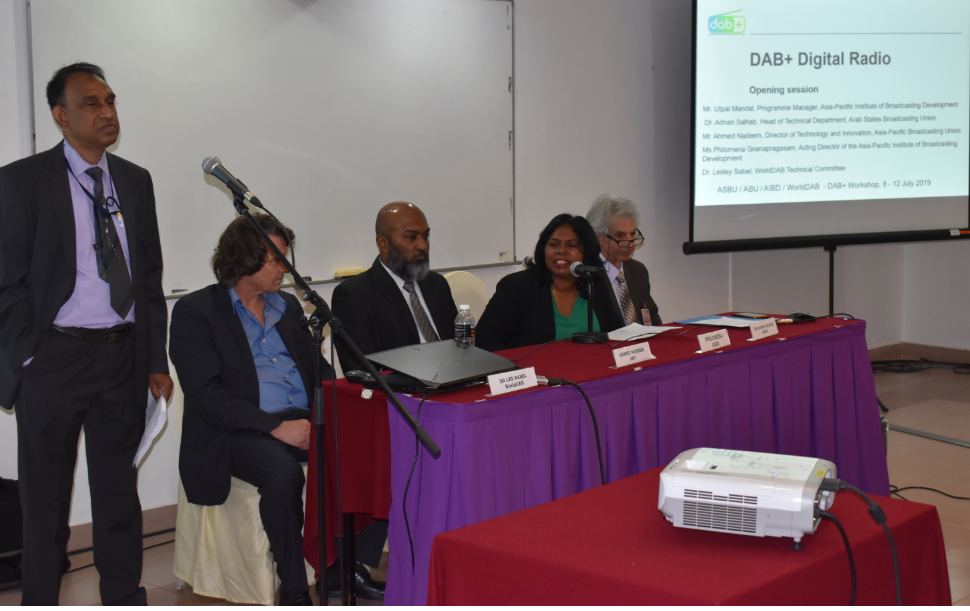
Asia-Pacific Institute for Broadcasting Development (AIBD) in collaboration with Asia- Pacific Broadcasting Union (ABU), Arab States Broadcasting Union (ASBU) and World DAB organised a Regional Workshop on DAB+ Digital Radio Broadcasting at Kuala Lumpur, Malaysia from 08-12 July 2019. The DAB/DAB+/DMB family of standards is a widespread digital radio broadcasting platform, offering radio broadcasters significant cost advantages and offering regulators considerable spectrum efficiencies over analogue and other digital systems. It was originally planned for implementation in two spectrum bands: VHF Band III and L Band, although the use of L Band has now been deprecated. The DAB family of standards includes DAB, DAB+ and T-DMB and is collectively referred as DAB, although DAB+ is the variant which is currently being deployed globally for the delivery of digital radio.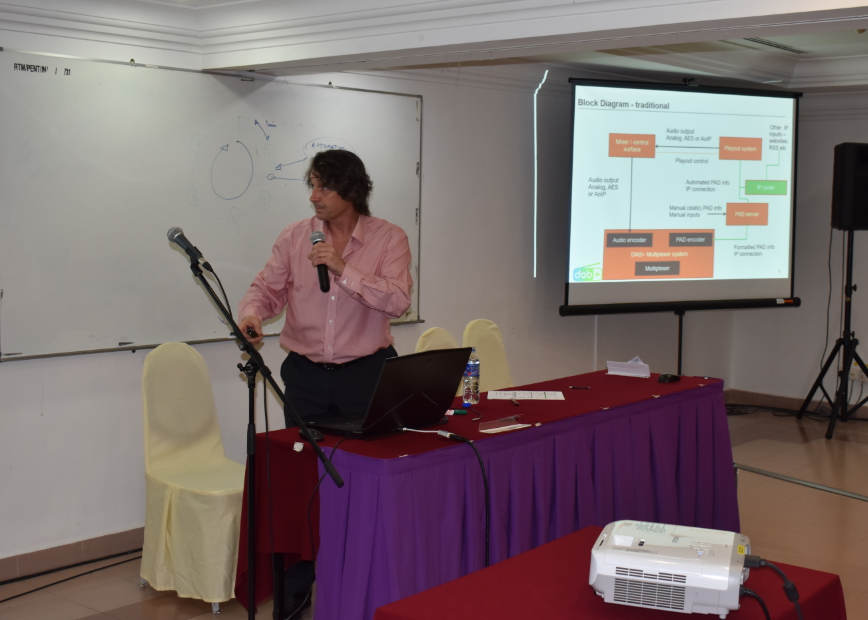
The five-day course covered most of the technical fundamentals and technology used on DAB+ Digital Radio. Sixteen participants from seven AIBD, ABU and ASBU member countries attended the workshop. There were a number of speakers during five days of the workshop. The structure of the DAB family of standards offers a wide range of architectures to allow optimisation and cost minimisation for all types of network combinations and requirements, from ensembles operated by a single network with multiple channels. Dr. Les Sabel from World DAB, the primary consultant for this workshop covered a large number of sessions over the period of training course. On first day he provided the background on digital radio and changes that has come into Radio Industry due to digitalisation. He talked about the DAB+ system structure, systems and networks, current transmitter technologies and architecture. In addition, he delivered on DAB+ policy and regulation, DAB network planning and discussed case study of Australia. He further explained about hybrid radio, the PAD delivery systems and different types of receivers. There were sessions for RF coverage, including spectrum and regulation overview, coverage planning, propagation, RF network design, single & multi-frequency networks and RF interference.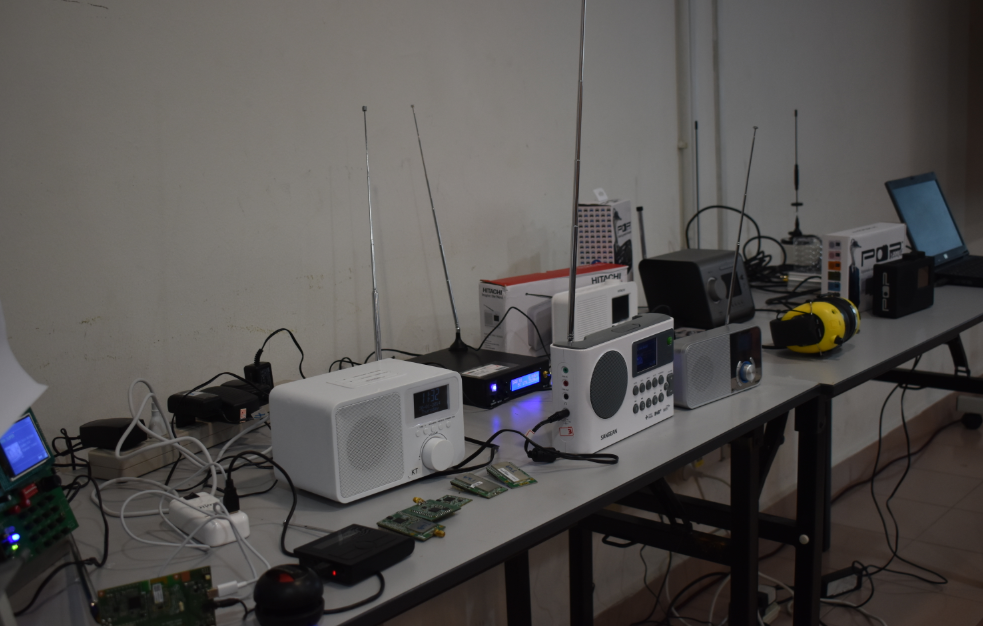
In today’s global market, over 75 million DAB, DAB+ and DMB devices have been sold to consumers, and this market continues to grow as the technology becomes more established. Digital radio receivers are available for domestic use and on-the-move, while an increasing number of receivers are being developed to satisfy the demand for in car listening. The manufacturing of digital radios has significantly developed over time both visually and functionally. On the second day Mr Sohan Karunaratne from Aqipa Australia Pte Ltd talked about Aqipa-Pure receivers. He mentioned that, as the pioneers of digital radio and the first to fully embrace the technology in 1999, Pure has become the world’s leading digital radio manufacturer, with over 5 million sold worldwide. Mr Sohan showed and described various models of Pure manufactured DAB receivers in the categories of portable,personal,bedside,in-car models. Michael Chen of Keystone Semiconductors, Taiwan took a session on digital Radio receivers as well, wherein he described about receiver construction, receiver modules and provided overview of the company products on receivers.
Mr Anupon Tajawanno, Regional Sales Manager, Paneda Tech AB, Thailand in his session spoke about DAB+ Field trial and DAB+ roll out in Thailand. He mentioned that the Paneda group is active in the area of Digital Radio (DAB+), with its main focus on applications for safety systems in tunnels and buildings. Paneda has developed a complete “break-in system”, where it is possible to interrupt the ongoing broadcast signal and replace this with an emergency message.
Mr Jason Mak from Gates Air explained what makes DAB+ environmentally friendly, where he discussed about power consumption and efficiency, space and environment, capital and operating cost and comparisons with FM and DRM+. He also talked about low power VHF radio products and components.
Mr Yahya Khaled, ATDI South Pacific Pt Ltd., Australia discussed on RF Planning software tool developed by the company. ATDI develops, supplies and supports a comprehensive set of software tools for the planning, modelling and regulation of radio communications services. Mr Khaled explained in details on ATDI’s network planning and modelling tools considering terrain and associated clutter, supported by the very latest propagation tools. He demonstrated effects of changing various planning parameters taking the DAB+ planning examples.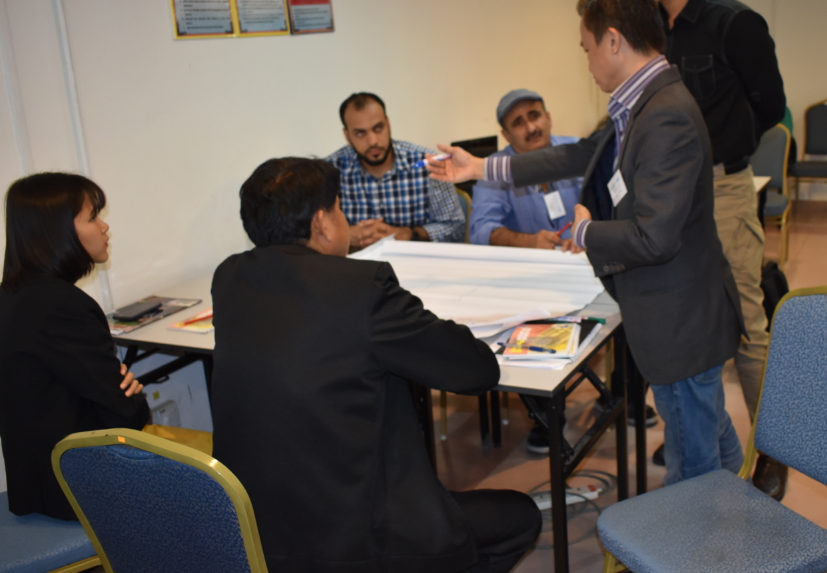
Dr Les arranged a Hand on Exercise for the participants for planning of Digital radio network. Participants were divided into groups having 5-6 in each group. Discussions held on how to plan, design and implement a digital radio network. Three groups worked over the days in specified slots and presented their respective group’s work on the concluding day.
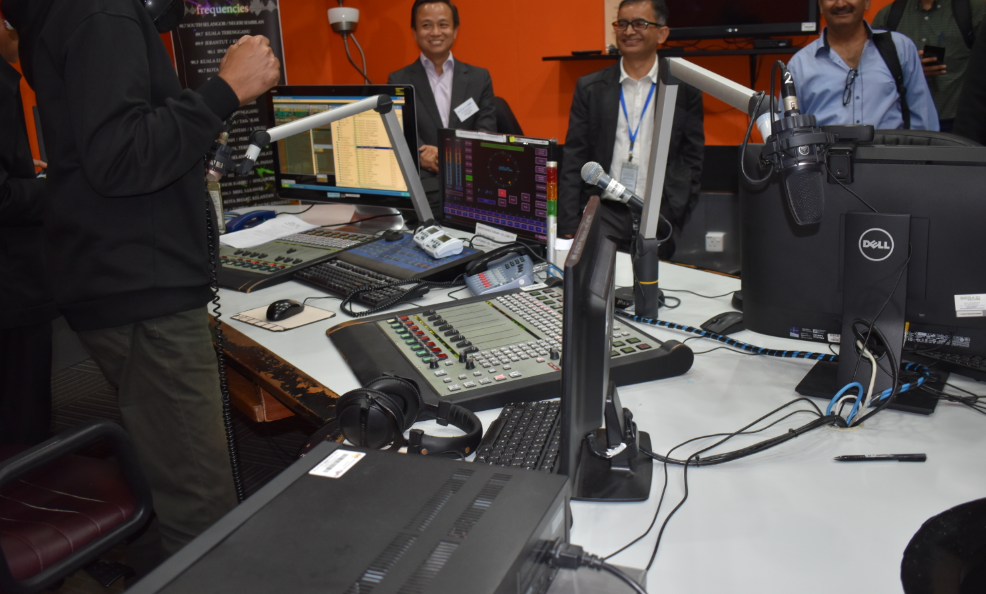
Participants joined a half-day field visit to Radio Television Malaysia (RTM) Radio studio facilities. The Engineer(s) at RTM demonstrated and explained to participants about FM Radio studios at Wisma Radio Complex. Participants fairly got information about FM and Digital Radio facilities at RTM.
]]>Technological advancements continue to transform broadcast media industry and content creation techniques. Digital content platforms have understood that the future lies in the hands of creative content. We have been talking about improved picture quality of content for some time. Ultra High Definition Television content production are very much in place in some developed markets. Recent major sports coverages were done using both UHD-1 and with high frame rates (HFR) as well as High Dynamic Range (HDR) wide colour gamut (WCG). Integrated Broadcast-Broadband (IBB) technology engines can now support UHD and HDR. Future workflows will cater to various audience segments and device profiles. Media production organisations are deploying technologies to maximise the utilisation of production facilities as the production equipment becomes obsolete in a shorter time. With the standardisation and adoption of SMPTE 2110 future facilities are expected to be more agile.
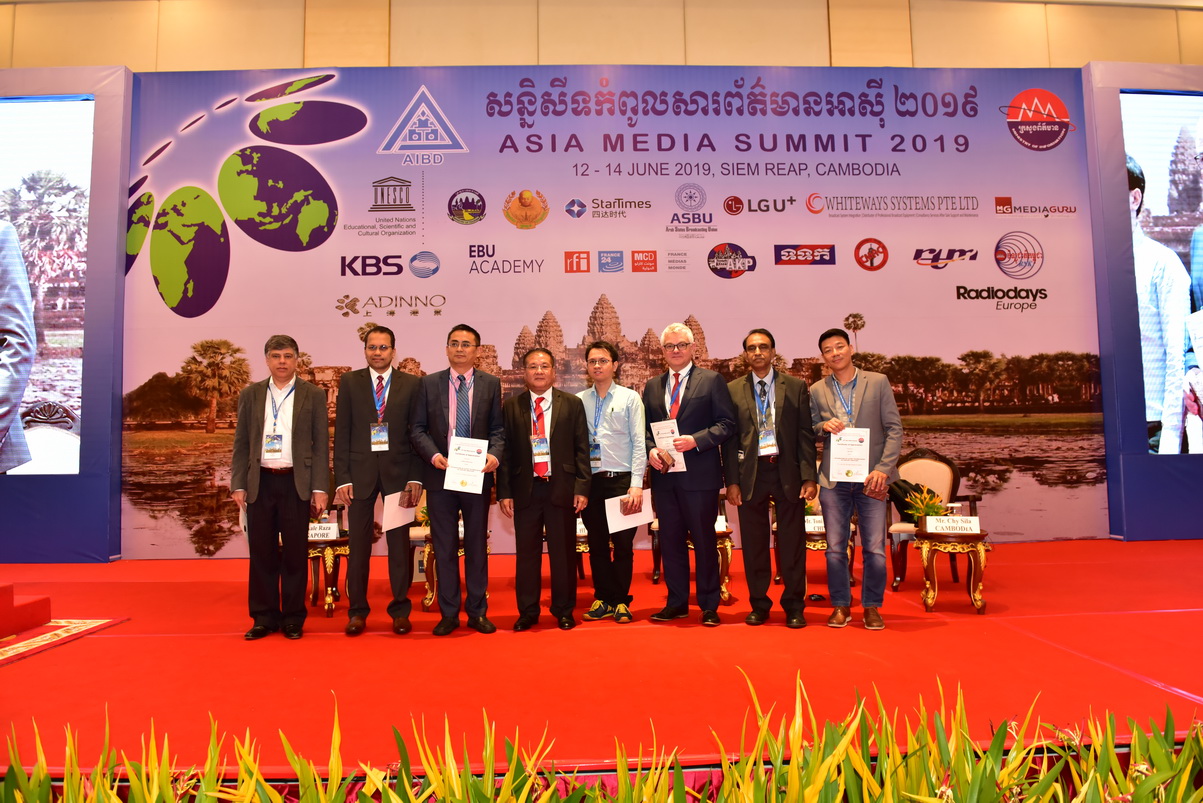
In the 16th Asia Media Summit (AMS-2019), one technology session was dedicated on the topic “Integration of Latest Technologies in Content Creation”. Five distinguished speakers from diverse technology arena presented their view points in the latest trends in content creation. Mr Ale Raza , Director of Whiteways Systems Pte Ltd Singapore moderated the session facilitating the speakers to disseminate balanced technology updates in media content creation. This session addressed the opportunities and challenges posed by AR, VR, UHD, HDR, HFR, WCG and IP in production and immersive media experience in both audio and video.
The first speaker of the session Mr Bala Murali Subramaney, Chief Technology Officer Astro Radio Sdn Bhd Malaysia talked about the availability of latest technologies in radio set up and trends for implementing them in real situation. He presented case studies on radio studio set up required in News Department and another case study of ‘On Air Studio’. Mr Bala explained that from a creative perspective, the radio station of the future’s emphasis will be in delivering ‘watchable’ radio content. The talent (announcer) will be both heard and seen on multiple social media platforms. Compelling multimedia video content from the on-air studio – created, produced, packaged and delivered effectively – will become the focus of radio stations. He also told that the heart of the radio studio operation is the mixing console. A thorough understanding of the console’s operations is critical. The future console will be compact yet intelligent & easy to use and will have fewer buttons, faders and fully automated. There will be less human interaction with Radio Console and it will free up time for the announcers to focus on delivering other compelling content. Also there will be provision for enabling the announcers to incorporate web-content into their shows on-air and on-line. Mr Bala detailed on the automation system of the future which will be driven by the Radio Automation Software having ability to integrate to other systems via TP/IP, DMS, Dante, Ravenna and other protocols. VOIP System with Virtual screen , 4G and 5G Data based – Studio Telephone Hybrids, WhatsApp, Viber, WeChat and Messenger based calls into radio studio will be regular feature in future.
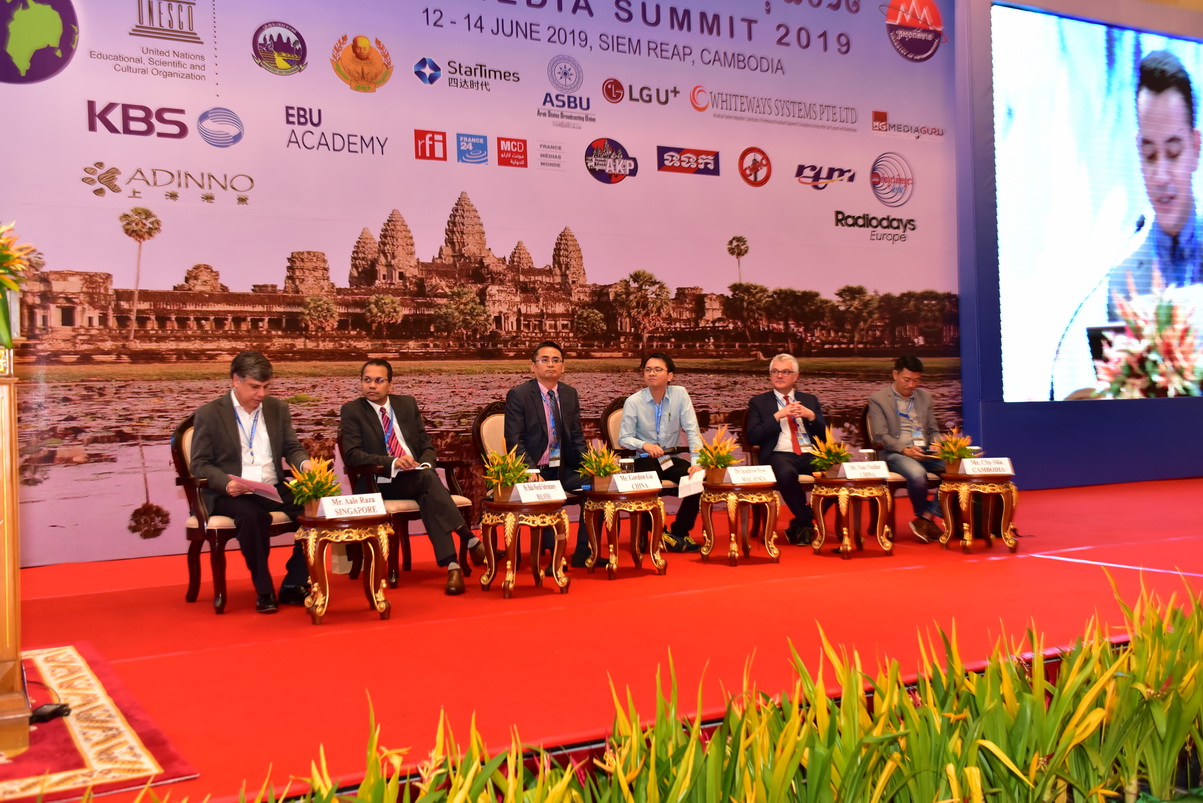
The second speaker Mr Gordon Gu, Chief Executive Officer ADINNO INC talked about 4K content creation and related production equipment like 4K Encoder, 4K OB-VAN, 4K All in one internet Box, 4k Event Production Wireless Transmission and Monitoring System Platform. He explained that SEEi-4k Encoding transmission server adopts real-time 4K UHD HEVC encoding technology, which has lower power consumption compared to software encoding scheme, and uses HEVC / H.265 encoding, which reduces the bit rate by nearly 50% compared to H. 264 encoding of the same quality video stream, and achieves better video picture quality with the same bandwidth. 4K encoding transmission server is a product tailored for new media processing applications. It supports the encoding processing capacity of 4K/60P Main10 HEVC/ H.265 at the broadcasting level, and the power consumption is less than 35W. 4K encoding transmission server supports additional 4K acquisition function having interfaces HDMI, DP and 4-way 3G-SDI. He described 4K/HD OB VAN which can meet 4-12 channel HD or 3 channel 4K ultra HD, the production system can undertake conferences, outdoor activities, variety shows, small recording and live broadcast requirements for TV shows such as sports events. 4K All in one internet Box is One Box machine to complete the video broadcast, broadcast switch, recording, subtitle superimposed, multi-screen and other functions. Mr Gordon also introduced SEEi.TV 4K OTT platform through which consumers expect a flawless viewing experience and instant access to high definition video content on any screen.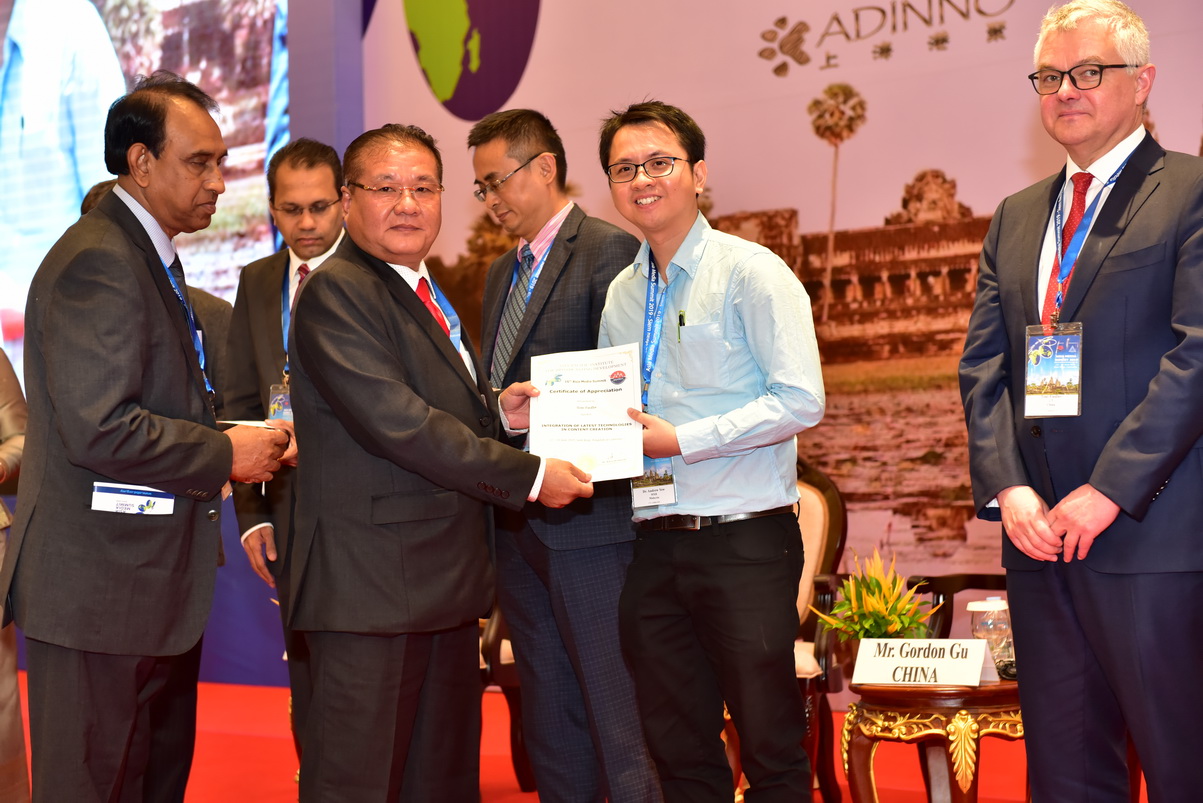
Mr Toni Fiedler, General manager- Fraunhofer Institute of Integrated Circuits (IIS) presented features and developments in MPEG-H Immersive Audio System and standardization. Mr Toni mentioned that Fraunhofer IIS is the main inventor of mp3 and co-developer of (xHE-)AAC, MPEG-H Audio and EVS. He provided the latest developments in standardization about MPEG-H audio system and its merits. Broadcast is in Transition from HDTV to UHDTV and Broadcasters and Telcos compete for frequency spectrum for upgrading the TV Standards to 4K / 8K Video and 3D Audio. MPEG-H is a choice in all relevant TV standards worldwide. Introducing MPEG-H with UHDTV make use of rich features step by step for producing 2.0 / 5.1, second language, mix preset, 3D Audio, multiple objects and interactive objects. He explained that speed of adoption is up to the broadcaster and additional equipment can be integrated when needed and surely huge variety of creative features in the content will attract TV viewers.
Dr Andrew Yew, Co-founder & Chief Technology Officer- Ministry Asia Sdn Bhd Malaysia spoke on the creation of content in Augmented Reality (AR), Virtual Reality (VR) and Mix Reality(XR). While explaining the Principles and Technologies of Content Creation for XR, he told that XR is a concept whereby the reality of the user is mediated and augmented by different technologies, hardware and software. It is a paradigm shift in human-computer interaction that is revolutionising every industry. The user experience that can be achieved is virtually limitless, making it a challenge to craft truly effective applications. In his talk, he described the principles behind optimizing user experience design for XR applications and the corresponding methodologies for creating XR content.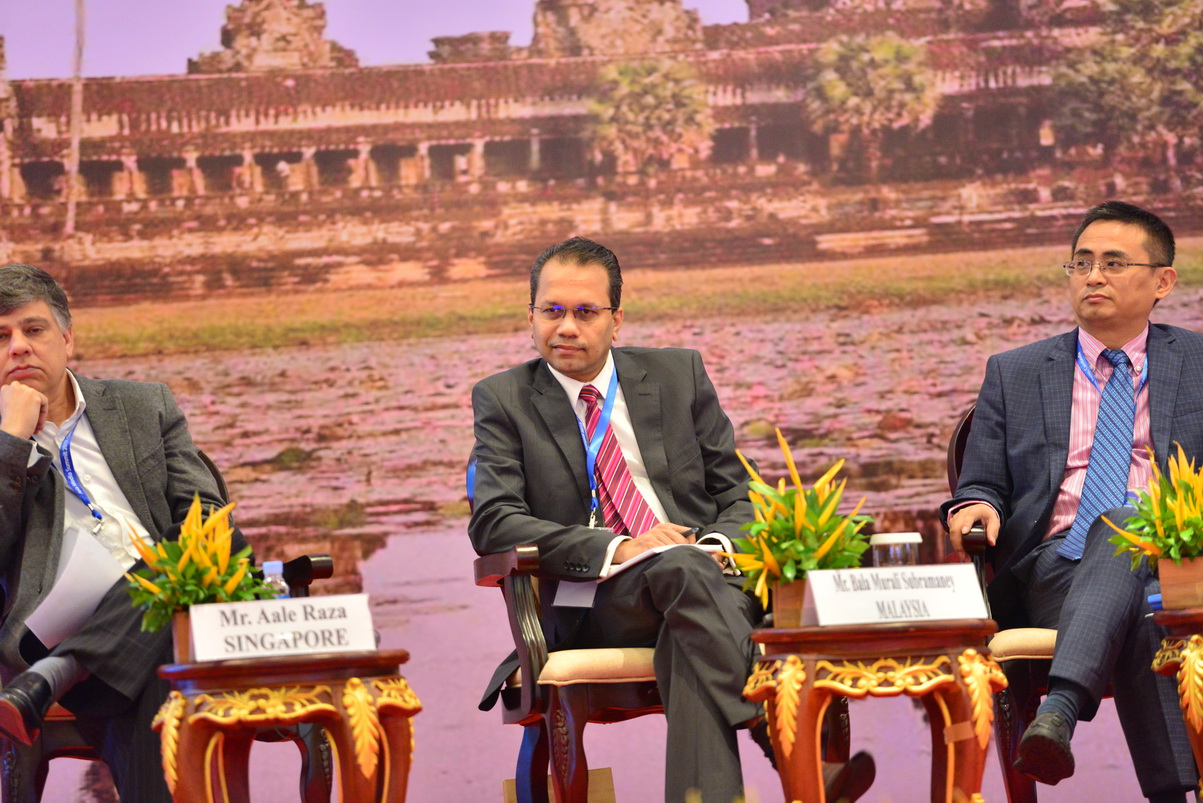
Mr Chy Sila, CEO and Founder of Sabay Digital Corporation- Cambodia, in his talk provided details about what his company is doing as content creator. Sabay is a premier digital content producer in Cambodia, with an aim to educate, inform and inspire the Cambodian population with awesome daily online content. He said the Sabay Group is made up of many smaller parts, providing varied digital products and services across the board. Cambodia is an exciting country with a dynamic youth community eager to play an active role in the digital era. Sabay Digital Corporation was formed to help meet this demand, with new services and products including online content and mobile entertainment. Sabay is a forward thinking pioneer and has been the first to introduce online gaming, unified SMS content and original online entertainment (news, movies, music and TV) in the Kingdom of Wonder. Sabay Web was created for providing combination of breaking news and unlimited entertainment focusing on important news related to youth. The primary objective of the webpage news.sabay.com is to provide main contents such as entertainment, life, society, technology and sports. Mr Chy Sila mentioned that Sabay.com is aimed to be a melting pot of ideas, opinions, gossip, experiences, where the youth gather to gain and share information and knowledge. Sabay.TV, Internet TV channel, currently hosted at sabay.tv, is producing domestic content. Their goal is to bring a cutting edge and topical programming to inform, inspire and entertain the new generation of Cambodia. He also talked about the Cambodian Network Exchange (CNX) which is a not-for-profit, open and neutral Internet Exchange that serves to enhance the Internet environment for local and international IP traffic in Cambodia. Today CNX and Data Center contribute with massive cost savings for content distribution to SDC
]]>The age of technology is right here and everyone is trying to get their content streamed on the digital platform. Audiences are enjoying content on both broadcast and online delivery mode. There are challenges in delivering high bandwidth content such as live television online while assuring Quality of Experience (QoE) but obviously some progress have been made. It is evident that Direct To Home (DTH) services through satellite are being used to deliver UHD content with assured quality. In 2020 satellite is likely to be used to deliver UHD-2 (8k or Hi-Vision) content of Tokyo Olympic coverage. Digital Terrestrial Television services are also making significant improvements to its delivery. ATSC 3.0 has been adopted in the Republic of Korea and North America, China is coming up with enhanced version of its DTMB and DVB introduced single illumination and DVB-I for online delivery. On the other hand, user interface (UI) is extremely important for audience to discover, interact and share to enhance their experience with content. Probably the remote control with button that we have enjoyed so long will become insignificant and soon there will be revolutionized interfaces using voice commands for content searches and interactivity. Thus hybrid technologies like Hbb TV offering seamless navigation on both broadcast and online delivery would be prominent.
In the 16th edition of Asia Media Summit (AMS-2019), Siem Reap, the Kingdom of Cambodia there was a session on Technologies for Distribution of Media Contents. In this 60 minutes session a number of distinguished speakers from various organizations from Cambodia and abroad put forward their ideas, views and opinions on the subject and discussed elaborately. Mr Som Ratana, Vice-Rector of the Royal University of Phnom Penh, and an Advisor to the president of National Assembly of the Kingdom of Cambodia moderated the session and facilitated the speakers very efficiently and effectively.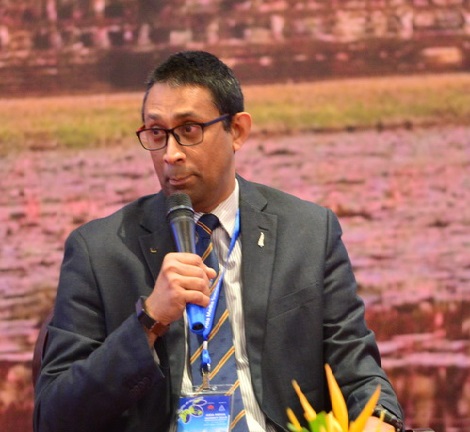
The very first speaker Dr Amal Punchihewa, Distinguished Lecturer of IEEE Broadcast Technology Society Technologies and from ADP Consultancies New Zealand talked about transformation and realities in distribution and delivery of media contents. He provided an overview to technologies that are relevant to distribution and delivery of media contents. He emphasized the difference between delivery and distribution in today’s context. Satellite was initially used to distribute television signals to transmitter stations. Then direct to home satellite signal (DTH) gave audience an alternative way to receive television signals. In recent times there are many advances in television signals with more pixels (SD-HD-UHD), better pixels with high dynamic range (HDR) and wide colour gamut (WCG). Broadcasters and industry have standardised how to capture signals and deliver them to the viewers. The consumer industry has been responding by supplying television receivers capable of UHD-1, HDR and WCG. Broadcasters are seamlessly combining their over the air delivery (DTTB, DTH) with over the broadband (OTT) using processing engines such as HbbTV based on HTML 5 browsers. Catch up services are offered in the form of OTT and access to many devices have been made available. Using interactivity and user data some insights can be derived to provide better quality of experience (QoE) that is beyond the quality of service (QoS) for the delivery network. The main point of his presentation was the recent evolution of switched-multi-CDNs. This is a culmination of many years of research done over last 10 years on objective quality metrics for QoE, video quality evaluation and network management. When a number of broadcast members share selected CDNs, that cost can be shared among members gaining cost reduction. Not only financial gain, but also multi-CDNs provide improved availability and reliability with increased quality.
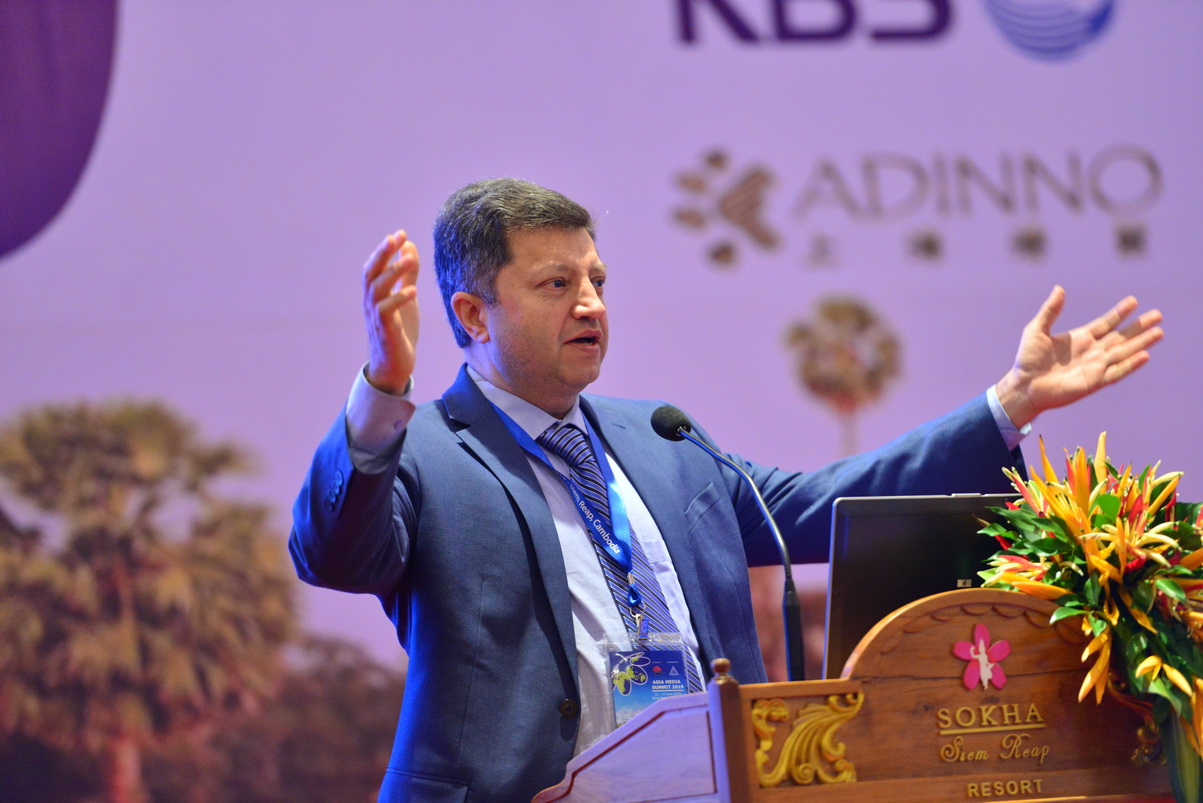
Dr. Syed Ismail Shah, Head, ITU Area Office Jakarta, the second speaker talked about Artificial Intelligence Systems for Program Production and Exchange. Globally, broadcasters are grappling with the rapidly evolving standards available to deliver consumers increased quality and choice. Transition to these new technologies is complex and costly, and requires careful planning. However, there are opportunities offered by new technologies like Artificial Intelligence (AI) which is driving new broadcasting technologies. Use of AI increases productivity, efficiency and creative opportunities during program production. In areas of Technological Benefits using AI/ML Dr Ismail explained Workflow Optimization, Bandwidth / Quality Optimization, Automated Content Creation, Optimization of Asset Selection-Metadata Creation,Dynamic Product Placement and Advertising for Broadcast and Content personalization. On the area of automated content creation he explained the use of social media data from people geographically located near to where a known incident or event may have occurred. Automatic search for trends and notable information for news production from a massive amount of Twitter data (tweets) and subsequently judge the authenticity of such posts. Techniques like Recursive neural networks (RNN) are used to determine the presence of any target terms typically associated with news-worthy breaking events like “fire” or “accident” captioning. Conventional captioning systems use humans who work in a quiet room to simultaneously provide a clean speech stream from the original noisy or inarticulate speech that serves as input to the automated recognition algorithms for live captioning. For automatic recognition of program audio without the need for the added human re-speaking, Deep Neural Network (DNN)s have been adopted to develop an acoustic model that estimates vowels and consonants of input speech to increase recognition.
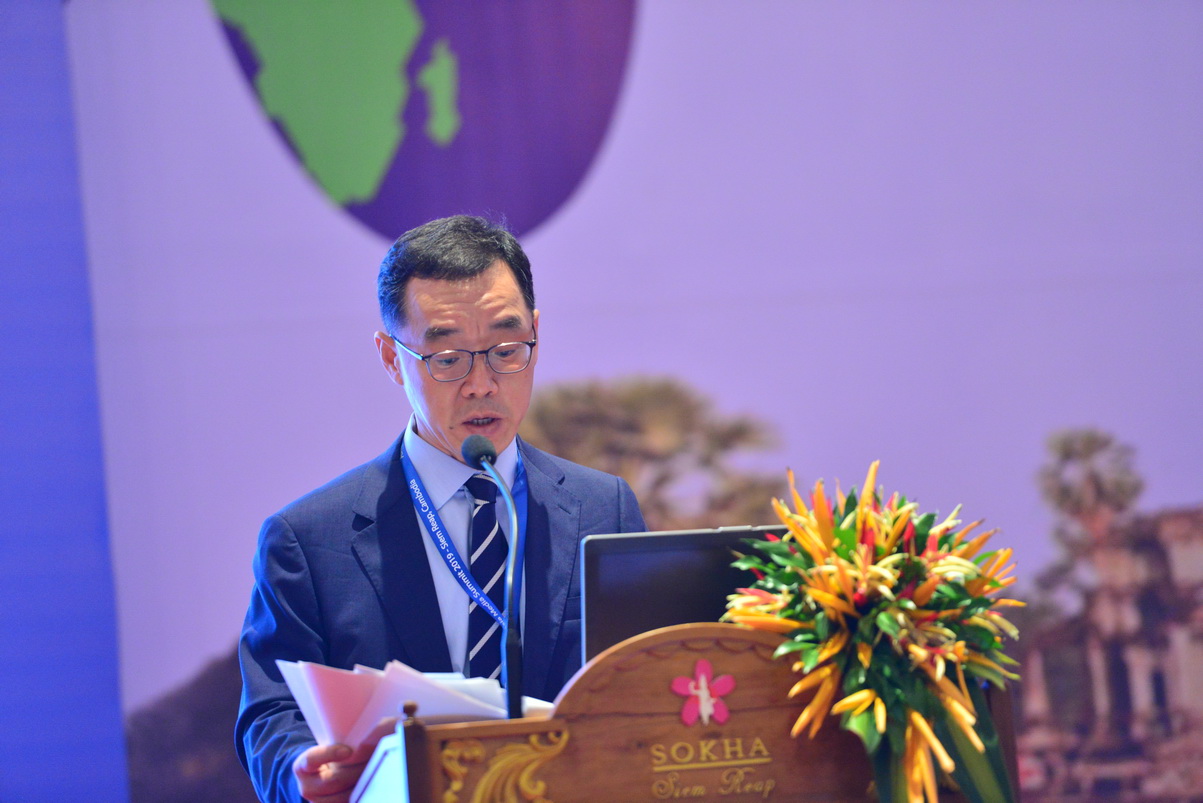
Mr Shin Seung-han, Director of the Regional Media Policy Division of the Korea Communications Commission started his presentation talking about the difficulty facing the traditional media industry due to the convergence between broadcasting and communication, and the terrestrial UHD broadcasting and commercialization of 5G. Due to the accelerated convergence of broadcasting and communication, and changes in media usage, YouTube and Netflix are growing fast in Korea. As a result, the competitiveness of traditional media companies is deteriorating. He mentioned that there are more than 24 million YouTube users in Korea, and the duration of viewing time was 25.1 billion minutes. YouTube has a higher share than other OTT services. Also, the number of Netflix subscribers increased 11 times in the past 2 years. Competition in the media industry is getting tougher. Mr Shin provided the details on the development process of terrestrial TV in Korea citing that in May 2017, terrestrial UHD broadcasting started in the Seoul capital city area for the first time in the world, and was expanded the service to metropolitan cities and Gangneung and Pyeongchang. We are planning to complete nationwide terrestrial UHD broadcasting network by 2021. He told that Korea adopted ATSC 3.0 as the technical standard for terrestrial UHD broadcasting. ATSC 3.0 supports three times higher megabits per second than ATSC 1.0, which was initially applied to digital TV, it can provide immersive broadcasting based on improved image quality, and customized additional services through interworking with IP-based communication service. Mt Shin also talked about the future prospects for terrestrial broadcasting that UHD will bring. The sense of immersion will be an important factor that will determine the competitiveness of content. The image quality will be 8k or better, and convergence with VR, AR and hologram will be possible.
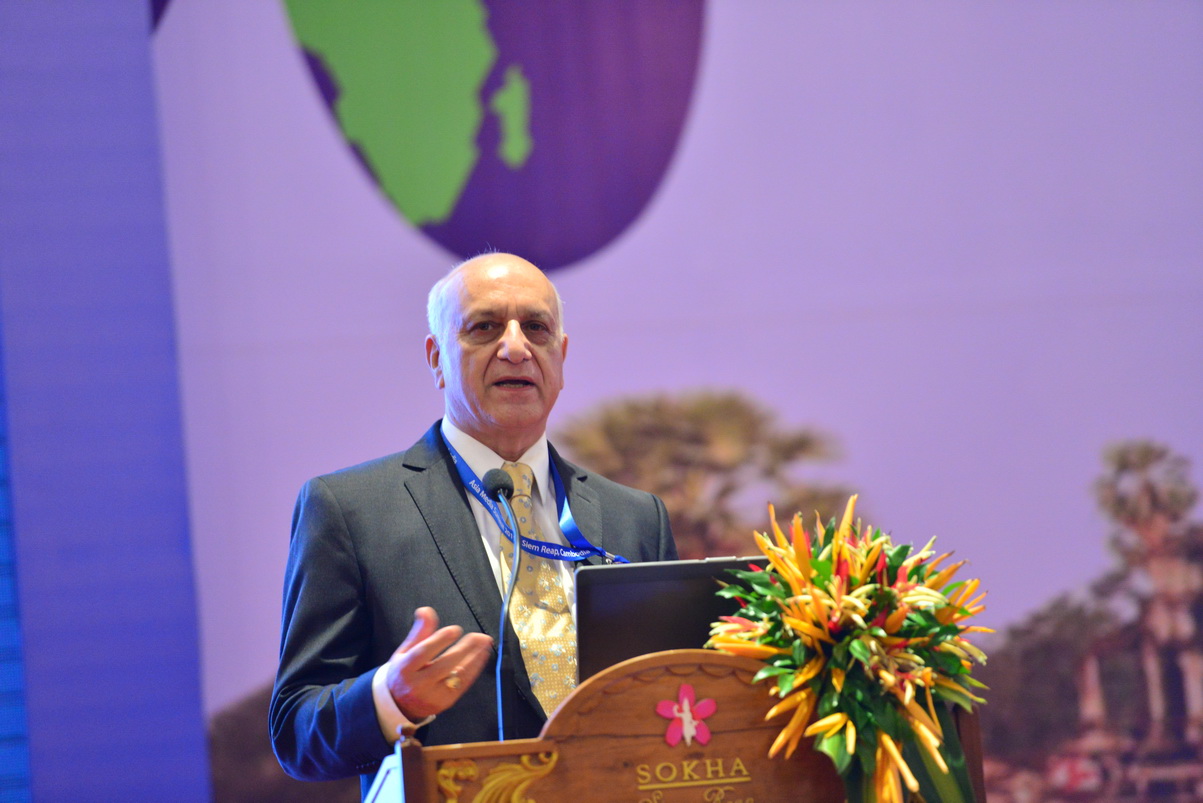
Mr Sharad Sadhu, Technical Consultant, on behalf of DRM Consortium, presented on the topic “Excitement of Digital Radio in FM Band”. The digital radio system in the FM band, DRM FM, offers an exciting opportunity for FM radio broadcasters. It has been positively demonstrated that the DRM FM digital radio slots can be inserted in the guard-bands between two analogue FM radio carriers without disturbing or impacting operation of the ongoing analogue FM radio services. Each of the 96 kHz wide DRM FM frequency slots can provide up to three quality stereo radio services plus multimedia components as against one service from each analogue FM slots. It has been clearly established that even in the existing congested frequency spectrum in the FM band, DRM FM digital radio services can well be added and operated. He explained that prospective broadcasters must understand the potential and flexibility of the system in order to allow them to optimise and configure their DRM networks in accordance with their particular market conditions. Multiple radio services provided by DRM FM can be employed to reduce the congestion in the FM band existing in major cities and offer new revenue opportunities for existing FM broadcasters. DRM FM digital radio channels can be utilised to meet other requirements of existing FM operators; reduced or no interference, good quality signal, reduced pressure of FM analogue on FM spectrum. He said that the current FM radio operators may be able to use their analogue FM service transmitting equipment for the new DRM FM service. DRM FM is, therefore, a flexible solution that permits broadcasters to provide listeners with significant improvements in service reliability, audio quality and, most importantly, usability.
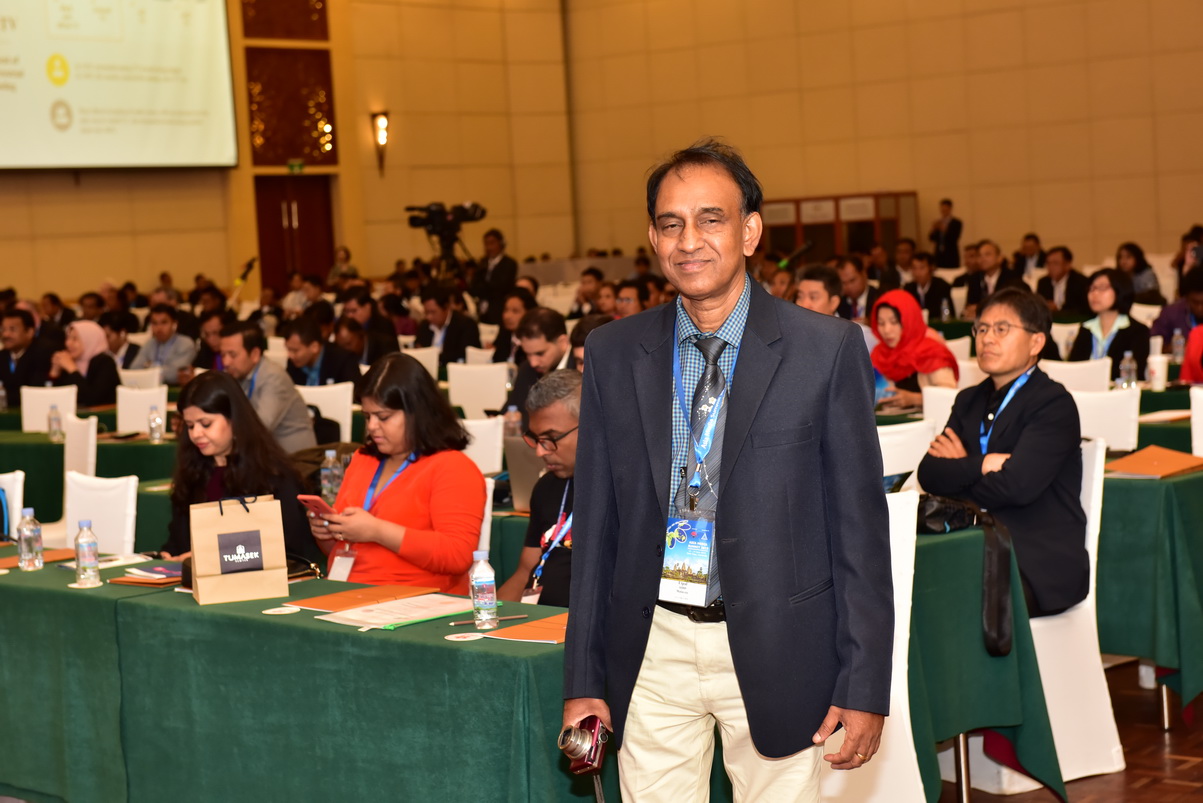
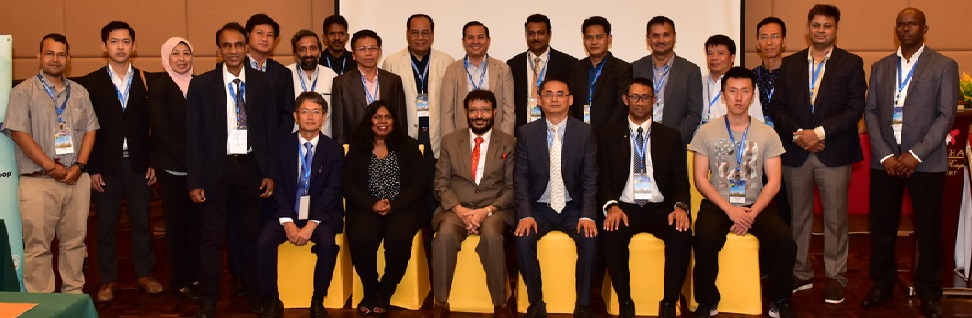
The emerging trend of high resolution display has led to the development of Ultra High Definition (UHD) also referred to as 4K televisions. UHD displays exhibit 4K resolution and are called as 4K panels. 4K means 4,000 pixels in various digital formats mainly used for the purpose of shooting motion pictures. As their names imply, 4K UHD has a considerably higher resolution than 1080P HD video. 4K resolution is exactly 3840 x 2160 pixels, whilst 1080P consists of 1920 x 1080 pixels. This massive difference brings about some important advantages for 4K when one compares it to the quality of a 1080P video.
Ultra High Definition Technologies for television are rapidly developing. Compared with existing high definition and standard definition television systems, UHD-1 or loosely known in television industry as 4K is advancement in technology that offers better viewing experience. More technical or appropriate term in television industry would be first generation Ultra High Definition television. The technical parameters of UHD-1 systems include higher image resolution, higher image frame rate (HFR), higher image dynamic range (HDR), wider color gamut (WCG), and advanced sound system technologies. The intent of a combination of all these enhanced parameters is to provide a more “immersive” and better experience for the viewer. Some broadcasters and producers of high value programs are already taking advantage of the latest “UHD” equipment in the market.
In view of the development that are taking place in 4K UHD Television arena, AIBD in collaboration with M/S ADINNO conducted one day pre-summit workshop on “Trends in 4K Technology” on 11 June, 2019 at Siem reap, Kingdom of Cambodia. The workshop highlighted the production and distribution of 4K content and how the image quality is enhanced with UHD cameras and production equipment. Dr Amal Punchihewa, Distinguished Lecturer of IEEE Broadcast Technology Society and Mr Gordon Gu, CEO of ADINNO were the expert consultants. The experts talked on technical parameters of UHD, including UHD-1 and UHD-2, end to end solution for UHD content, production, distribution, streaming and/or broadcasting and display devices.
On the first session ‘UHD Demystified’ Dr Amal introduced UHD Television to the participants with various standard, parameters, their impact on picture quality etc. Concepts of user experience (UX) and Quality of Experience (QoE) were explained to them in relation to end to end media value chain. He told 5G and 8K are two next-generation technologies that are pushing forward the envelope of innovation for video experiences. In the near future, 5G is expected to play a role in the delivery of mobile video content. Possibility of delivering live, catch-up TV and VOD content in pristine 8K to TVs and mobile devices using 5G networks.
Dr Amal briefed about High Dynamic Range (HDR) and Standard Dynamic Range (SDR), Influence of HDR on capture and display and HDR eco system as a whole. He discussed UHD-1 delivery of DVB-T2 and ATSC 3.0 systems and also satellite for UHD-1 delivery. Before the practical demos in subsequent sessions the basics of UHD 4K was well elaborated.
The subsequent sessions of the day was covered by ADINNO expert Mr Gordon Gu along with his colleague Mr ChaoJun Du with the theme “New Opportunity – New Media & 4K/8K-4K Universe UHD channel cover European market and more”. ADINNO Inc, located in Beijing, Shanghai, Bay area USA, is the leading 4K/HD end to end solution provider to worldwide Mobile/Fixed operators & Cable TV/ IPTV etc. offering 4K UHD based Contents and Production and OTT/ IPTV platform.
Mr Gordon talked about 4K UHD HDR and SDR and HFR/WCG citing that the technical parameters of UHD systems include higher image resolution, higher image frame rate (HFR), higher image dynamic range (HDR), wider colour gamut (WCG), and advanced sound system technologies. The intent of a combination of all these enhanced parameters is to provide a more “immersive” and better experience for the viewer. Mr Gu covered the following area elaborately.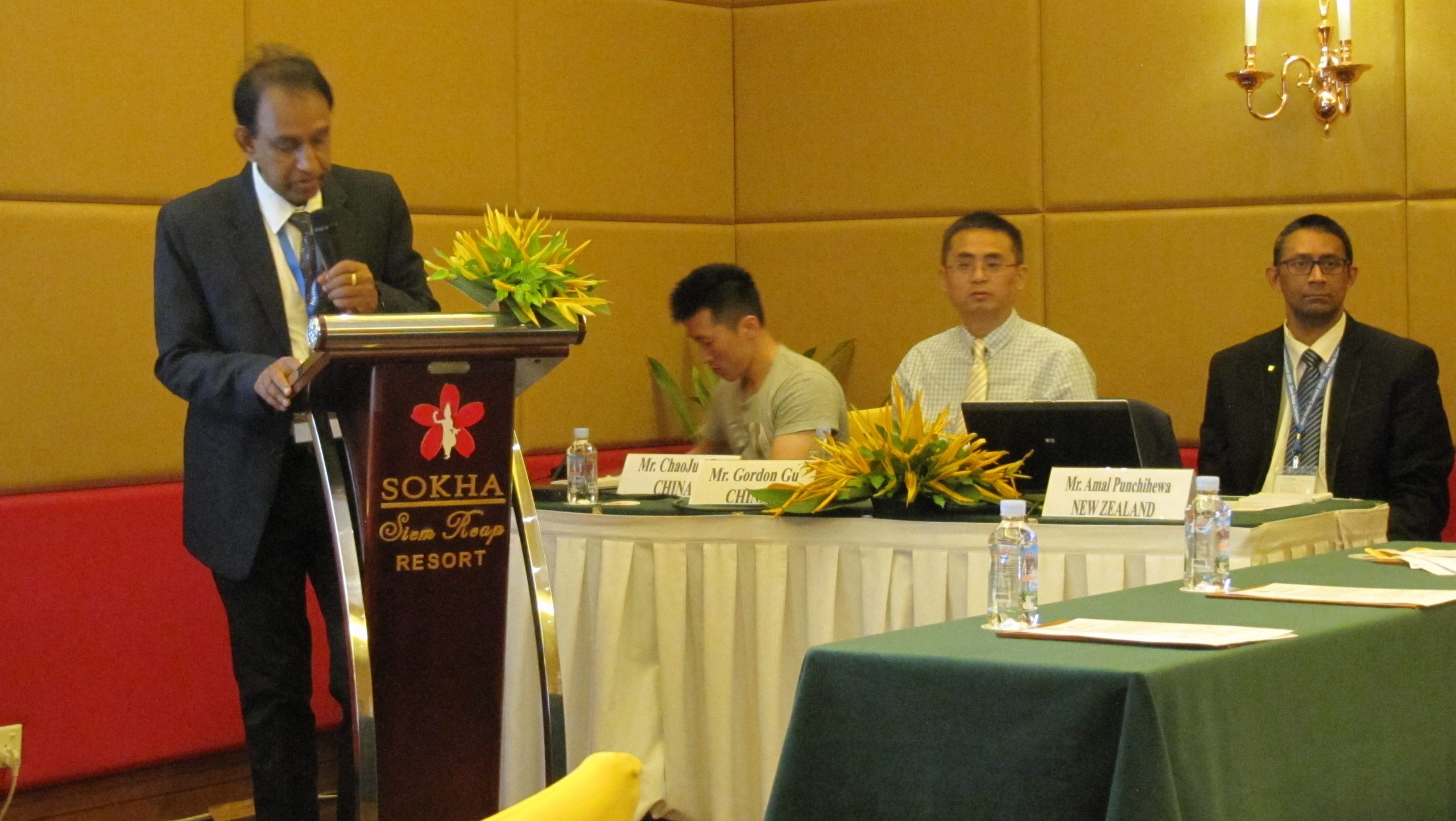
4K Contents: One of ADINNO’s investment portfolio-4KUniverse Inc. is the first one offering 4K 7x24H channel in USA with Holleywood 4K UHD video/film, Partners with SES/ Amazon Fire TV/ European Swisscom,etc.
4K Production: The 4K based live production solution include the economic live 4K OBVAN, All-in-one IP production system, etc.
4K OTT/ IPTV: The 4K SEEI.TV offers the OTT/IPTV Combined total solution, including OTT/IPTV cloud, Intelligent CDN design and deployment, APP/H5/Player for end user’s Mobile phone/ PC/ laptop/ STB-smart TV/ Smart projector application, supporting Broadcast Matrix (TV Station, Cinema, Radio, Internet Video Web, such as Facebook Youtube etc).
For the better understanding and visualization of 4K studio and 8K studio production, Demos were set up in the classroom and experts explained every element in details benefiting the participants. Twenty one participants from 10 countries Cambodia, India, Laos, Malaysia, Maldives, Mozambique, Nepal, Srilanka, Vietnam and Thailand attended the workshop. Overall satisfaction level of the participants were very high as per feedback received.
]]>
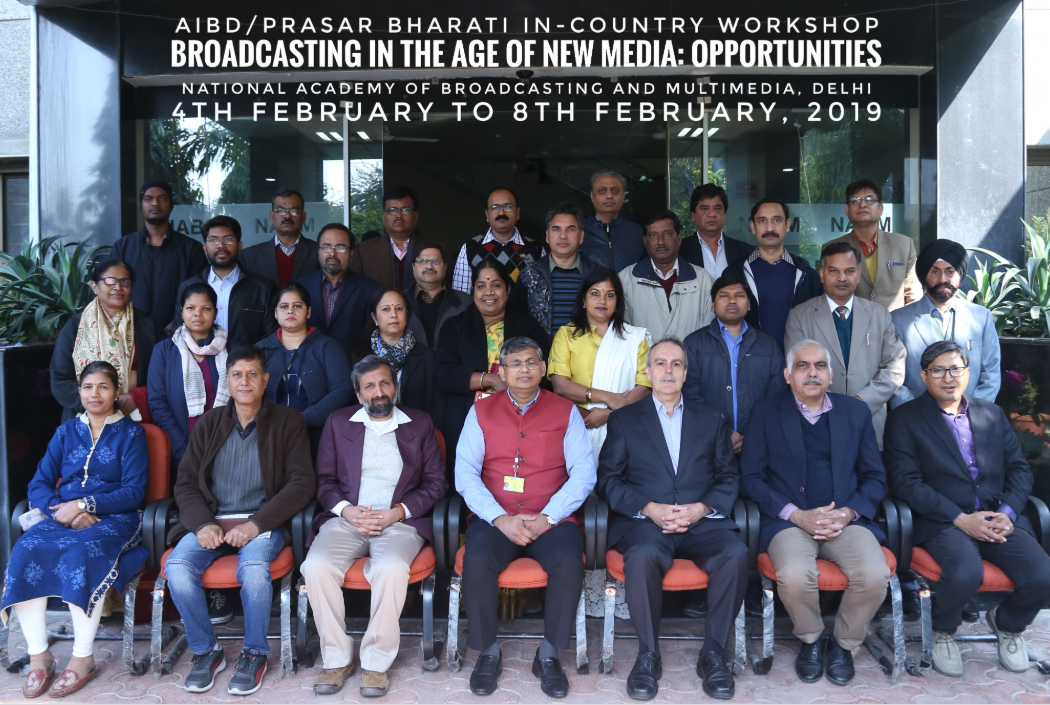
The new age platforms in media industry bring a paradigm shift in broadcasting. Internet and the new social media have transformed the media broadcast scenario across the globe. With the influx of new media tools, the media consumption patterns worldwide has changed drastically. Internet blogs, news portals and online news, Facebook, You Tube, podcast and webcast, and even the short messaging system (SMS), are all included in new media. Broadcasters in this age of new media not only face new challenges but also get ample opportunities to remain vibrant. The modern revolution enables everybody to become a journalist at little cost and with global reach. Nothing like this has ever been possible before. The emergence of blog streams is a reflection on society’s awareness of the importance of information dissemination. Traditional broadcast media has remained free. Then pay television came along to alter the model by introducing narrowcasting to paying customers. The internet has taken narrowcasting a step further by targeting small groups and individuals. Television networks are now keen to establish websites to help offset audience loss. Online radio and television, grabbing the ears and eyes of netizens, have the potential to become viable alternatives to on-air broadcasting. The reach of broadcasting stations is limited by signal range, whereas online broadcasting is available without any boundary and wherever internet coverage is available. At this juncture, it becomes imperative for the traditional broadcast professionals to learn about various emerging options of ever evolving so called new media.
Asia Pacific Institute for Broadcasting Development (AIBD) and National Academy of Broadcasting and Multimedia (NABM), the national training Institute of Prasar Bharati collaboratively organised an in-country training and workshop at Delhi, India during 4th to 8th February 2019. The theme of the training and workshop was “Broadcasting in the Age of New Media: Opportunities for Broadcasters” with the aim to inform participants about new media developments across audio and video platforms, including social media, smart speakers and podcasts.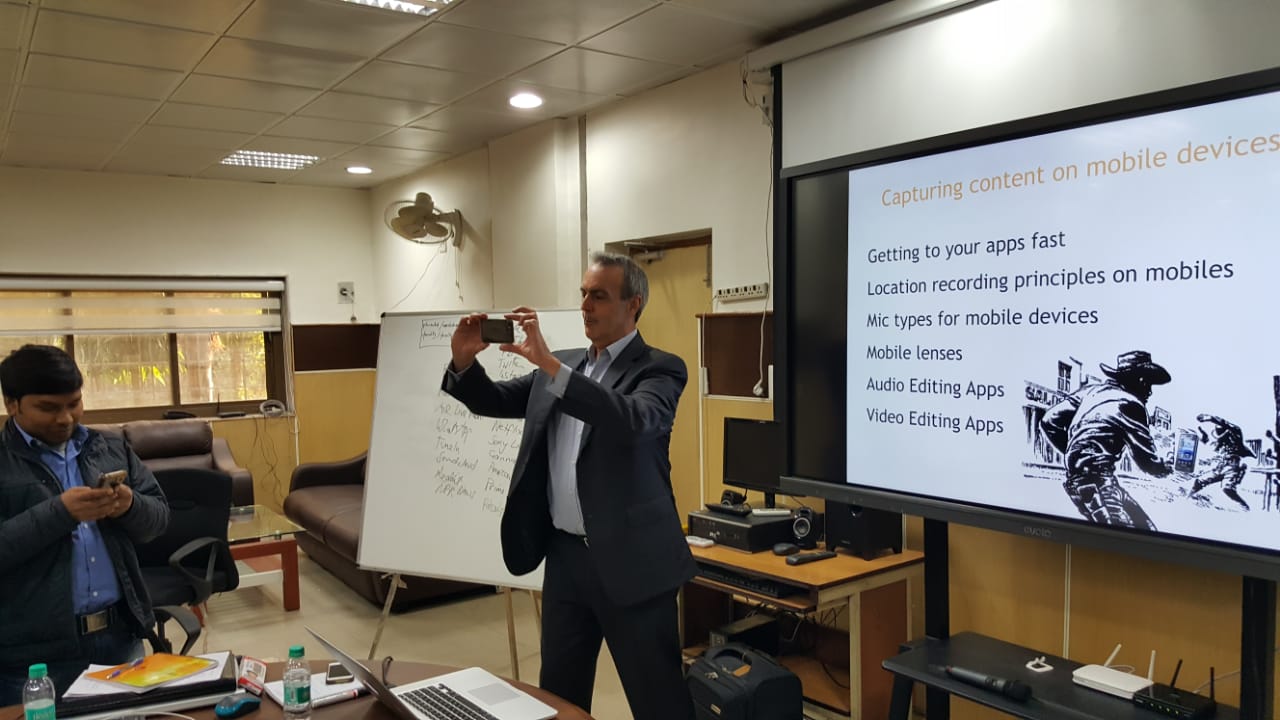
International trainer Steve Ahern, a broadcast journalism and new media expert from Australia planned and conducted the workshop, which explored new ways to use smart phones and new media technology to report broadcast content. The course also covered fake news and other elements of content creation in the new media environment. Twenty four staff members from Engineering and Programme departments of both All India Radio (AIR) and Doordarshan India (DDI) participated in the course. In addition several staff from NABM sat in on the course, using it as a Train the Trainer experience for themselves.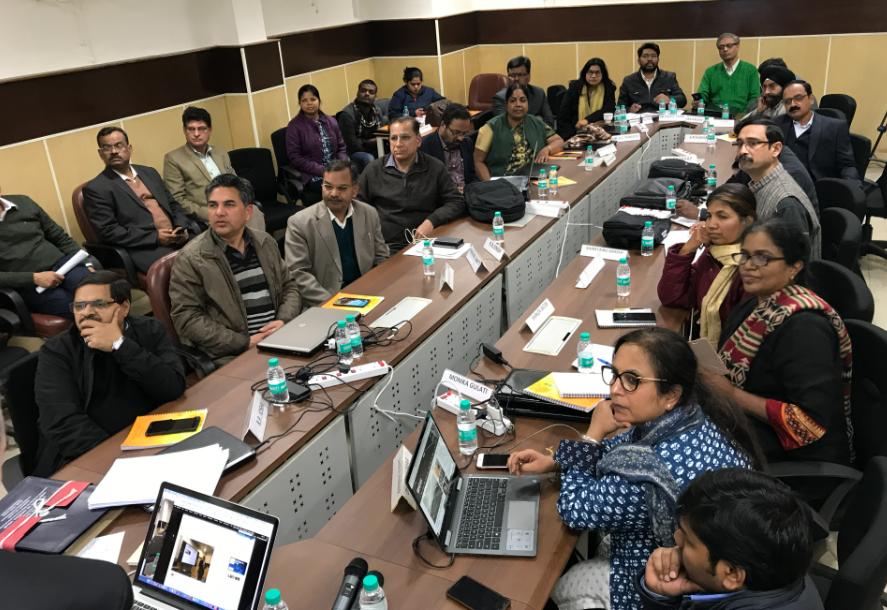
Participants were informed on how to understand the latest developments in social media and use the dynamic nature of new media to remain relevant. The course also highlighted the usage of Smart phones as a powerful tool for producing content faster and cheaper. The course suggested ways of delivering content in new media such as linear, non-linear, catch-up, download, Spotify and Pandora (which is highly popular in US ) along with traditional media. A session of the workshop was devoted to learning and exploring various editing apps for seamless and fast delivery of content. Examples of success stories were given in the course, such as an Afghan news agency which started using smart phone reporting and cloud services to decrease news reporting time. Another example was NHK, Japan’s national broadcasting organization, presenting content in small snack size with catchy video on social media to increase viewership among young people was an interesting case study. The changing broadcasting trends and use of social media was discussed with examples like in case of Indonesia who made use of citizen journalism. Several social media tips were shared like using social media for promotion, research, live interaction with audience and repackaging of programs was discussed. Maintaining a two way relationship with audience and to know what the audience want and also to educate audience using social media was discussed in great detail. Another interesting and useful topic was how to detect fake news on social media like Facebook and Twitter. Use of several already available websites for detecting fake news was discussed which is very useful for a broadcaster.
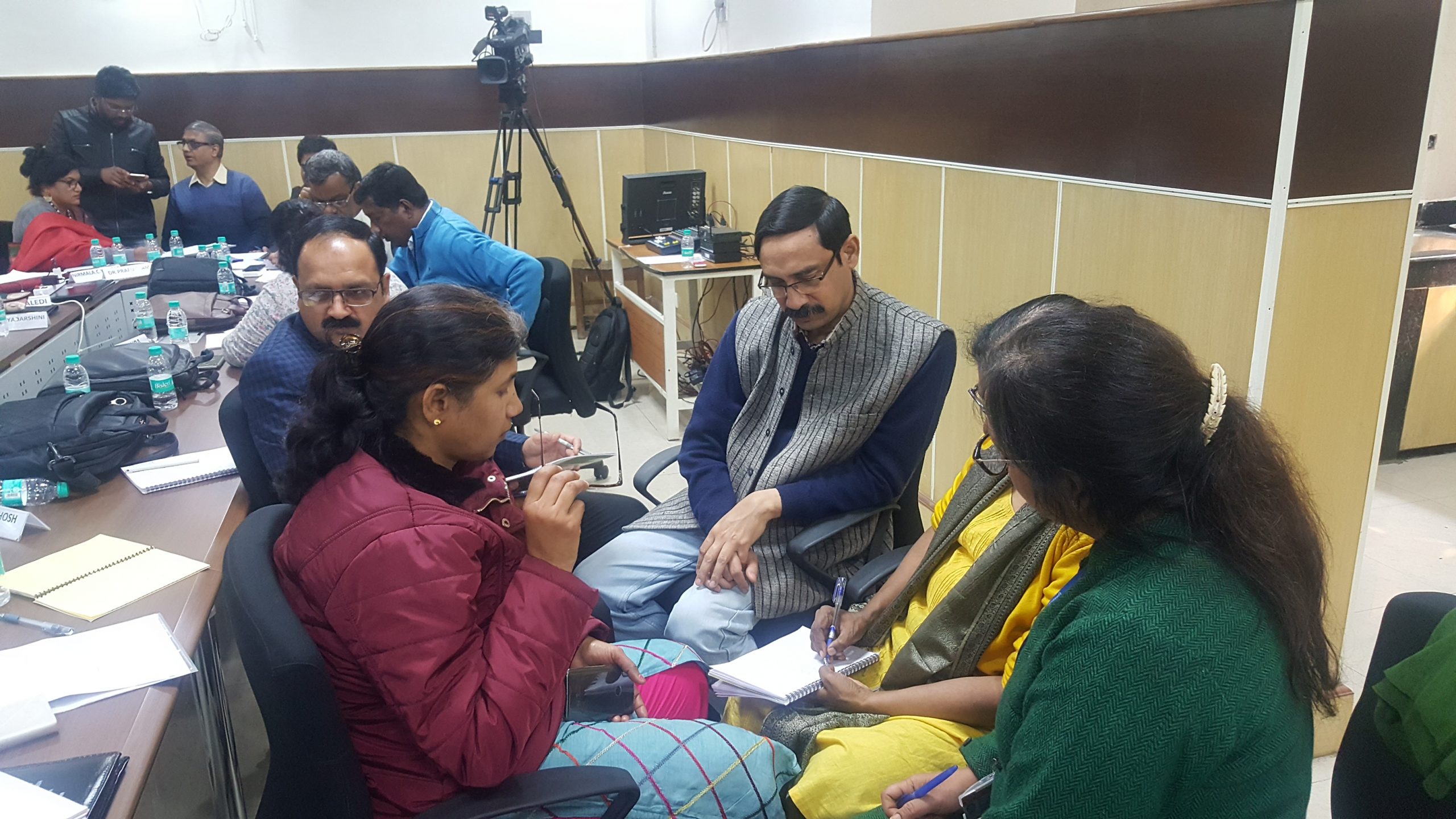
At the end of every session the participants had to take part in various assignments like shooting and editing videos using various apps on a smart phone. The class was asked to form a group and prepare a flow chart using new tools to optimize content for various mediums. A delightful session was also conducted where participants shared examples of fake news and discussed how to identify and combat it. Group members were also asked to file a news story of all the activities that took place in a workshop. The entire class was divided into three groups for the last assignment to create a New National Media Business, and all the groups presented their ideas of how new broadcasting businesses for the modern era should be organised, without downgrading the quality of journalism or cultural significance of the content. This activity crystallized all the content of the workshop so that participants would remember the content and know how to use it in their jobs when they returned to work.
The participants enjoyed the tools for use in social media for New Media gathering, editing and filing tools including mobile apps, social media accounts and social media monitoring tools. Podcasting, Vodcasting, Smart Speakers, AI, Blockchain and fake news busting were the hot topics discussed in detail. The course content was innovative and would be very useful in using social media in broadcasting which is need of the hour.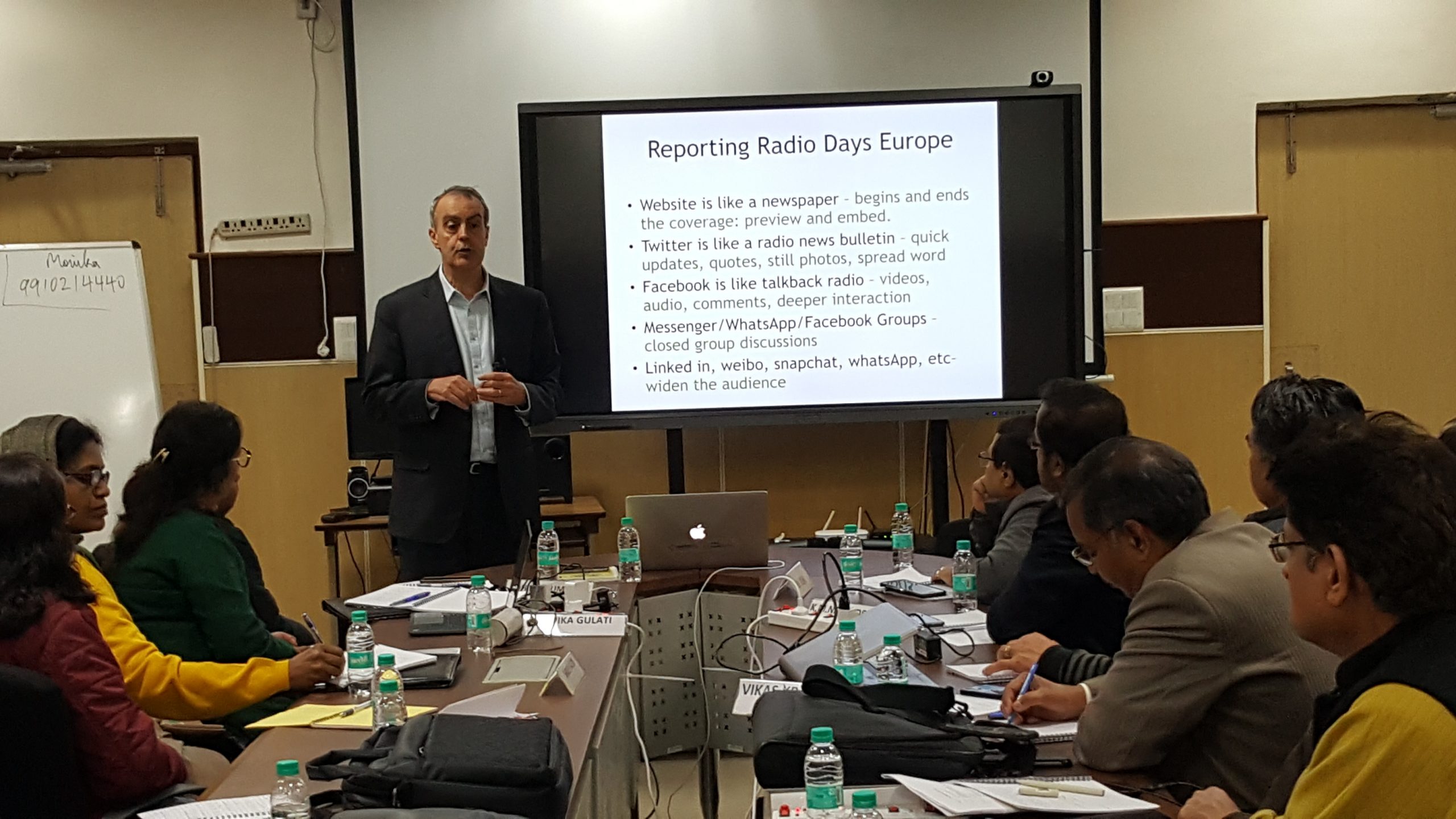
“The most striking and attractive feature about the training is that the faculty, Mr. Steve Ahern is the best one we can get for the purpose. He is well-versed in both the technical and sociological aspects of the contemporary media scenario. His democratic and liberal point of view, and avoidance of political extremes makes him the right trainer for AIR and DD.”
-Comment from Participant
]]>
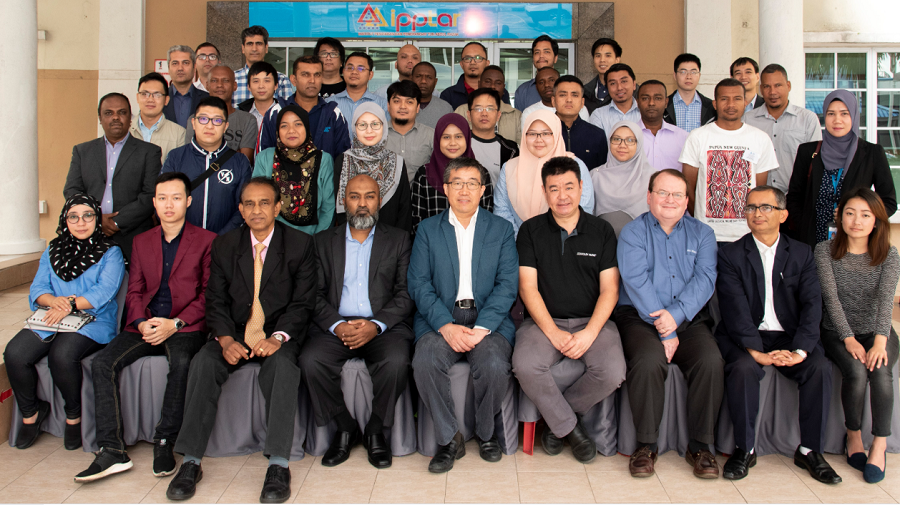
Asia-Pacific Institute for Broadcasting Development (AIBD) in collaboration with the Asia-Pacific Broadcasting Union (ABU) organised a 5-day regional workshop on Engineering Fundamentals for Broadcasters in Kuala Lumpur, Malaysia from 03 to 07 December 2018.
The workshop was specifically designed for broadcast engineers and technologists who are at the beginning of their careers and working in the broadcasting organisations. 34 participants from fourteen AIBD and ABU member countries attended the workshop.
The five-day workshop brought forward different topics that included Basics on Sound and Picture, Concepts of Analogue to Digital Conversion, Evolution of Audio and Video and Broadcast On-Air Chain, Audio Video Integration, Digital Video Fundamentals, Filed Based Media, Principles of media compression, technologies and standards, MPEG Video Schemes and standards, Spectrum for Media Delivery and Management, Evolving Media and Delivery platforms, Radio Studio and System Design for the future, IBB (HbbTV) service setup and provision for DTV, Azure Inspired Software Defined with windows server and Hyper-V, Used of IP in Media Production, Converged media-IT-Broadcast landscape, Audio capture and processing for immersive audio, Audio processing for future broadcasting and Media, Big data and Cyber security.
The workshop’s resource persons, who were experts in their subjects, were Dr Mohieddin Moradi of IRIB Iran, Mr Ahmed Nadeem and Mr Shree Bhadra Wagle from ABU, Mr Utpal Kanti Mandal from AIBD, Mr. Bala Murali Subramaney, Chief Technology Officer, Astro Radio, Mr Matte Ashe from Benchmark System, Mr Noel Teng, Technology Specialist Microsoft and Mr Geoffrey Low from Dolby.
The workshop started with the brief introduction of the workshop and overview of the topics by Mr Utpal Kanti Mandal and Mr Ahmed Nadeem. Dr Mohieddin Moradi three sessions in succession and discussed about the basics of sound and picture , understanding video capture, and processing and detailed about the audio processing, monitoring and measurement. He also took several other sessions in subsequent days wherein he provided in depth knowledge in various topics like principles of media compression technologies and standards, evolving media and delivery platforms, converged media-IT broadcast landscape and others. He provided latest developments and advancements in media technology in great detail to the extent of evolving technologies like Artificial intelligence (AI), Machine Learning (ML), Augmented Reality (AR) and Virtual Reality(VR). The participants were largely benefitted with vast knowledge base and effective teaching technique of Dr Moradi. Mr Shree Bhadra Wagle of ABU in his session talked about Broadcast Path: from Microphone and Camera via Console to the Screen and Speakers; Systems for Recording, Modulation, Transmission and Reception chain.

Mr Nadeem Director Technology ABU took a number of sessions and provided details on evolution of audio and video, brief history of radio and television, audio and video distribution system and fundamental of analogue and digital signals. He utilised quite a number of audio visual clips for clear understanding on the subjects like audio basics, camera, microphones etc. on which participants showed special interest. He discussed about repurposing of content, file formats and codecs, IP protocol and streaming methods. He also took a lecture session on Big data and Cybersecurity providing components and applications of Big data and opportunities and challenges for media due to increasing threat of Cybercrimes.

Mr. Utpal Kanti Mandal of AIBD took lecture session on Spectrum management and network planning for broadcasting services. He provided the basics of spectrum management and frequency allocation for various services based on the ITU allocation. He explained to the participants about the structural details of International Telecommunication Union (ITU) and also about the National Spectrum Management Authority. He explained about network planning for Television broadcasting and touched upon radio wave propagation phenomenon in different layers of ionosphere. He also discussed about the complex process of World Radiocommunication Conference (WRC) of ITU.
Mr Matt Ashe, Principal Engineer at Benchmark Broadcast Systems in his session briefed about Analogue Transmission Systems, MPEG Standards Overview, MPEG-2 Transport Stream Structure, Digital Terrestrial Transmission Standards, Digital Modulation Schemes and Digital Terrestrial Transmission Systems. He provided detailed information about all the analogue and digital TV standards, basic structures of different systems and specifications. He also provided the details of Chinese standard DTMB while comparing with other standards like DVB-T/T2, ATSC etc.
Mr. Bala Murali Subramaney of Astro Radio talked on Radio Studio and System Design for the future. He explained details on various elements of radio studio and systematic approach needed for designing the studio. He elaborated on radio studio console, radio studio automation system, central router, social media workflow and others. He also briefed about the radio studio construction including typical electricity requirement. The participants who are working in Radio could take valuable information about studio system by seeking clarifications during the lecture session.
Mr Noel Teng, Technology Specialist Microsoft in his lecture session discussed about the Azure Inspired Software Defined with windows server and Hyper-V. Azure and Windows Server have been sharing deep capabilities for a number of years now. In the latest Windows Server 2016 and more recently, Windows Server 1709 even more Azure inspired Software Defined capabilities have been downloaded from Azure. Mr Noel shared the latest and greatest capabilities of Azure with demos and videos. His session was highly interactive and participants were very keen to know more about the cloud service and raised unprecedented number of questions to clear their doubts.
Mr Geoffrey Low of Dolby Laboratories in his session discussed Dolby Atmos: The next generation 3D audio experience. He explained general aspects of 3D productions, setting up microphones for 3D, producing sports broadcasts in 3D, producing live music recordings in 3D, mixing immersive sound formats, content creation tools for immersive audio, up mixing from Stereo to 3D, monitoring immersive sound formats and also Dolby Atmos content creation process.
Participants also visited the radio and television studios of Radio Television Malaysia (RTM) including their HD studio, Master Control Room, Satellite Earth Station set up. The Engineers of RTM in respective areas gave briefing about their systems. The participants were very enthusiastic and were able to gather substantial knowledge and information from the technical facilities of RTM.
This was the fifth regional workshop designed specially to enhance capacity of newly employed engineers / technologists working in the broadcasting organisations. The 6th Regional workshop in this series will be held at Kuala Lumpur, Malaysia during 02 to 06 December 2019.
]]>
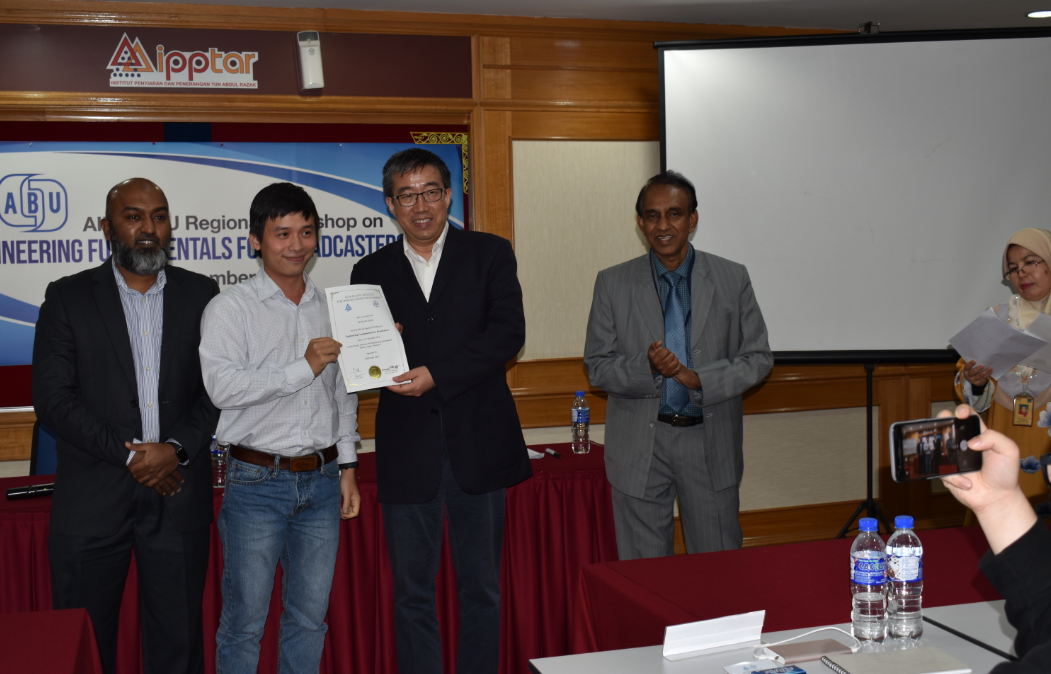
Asia-Pacific Institute for Broadcasting Development (AIBD) in collaboration with the Asia-Pacific Broadcasting Union (ABU) organised a 5-day regional workshop on Engineering Fundamentals for Broadcasters in Kuala Lumpur, Malaysia from 03 to 07 December 2018.
The workshop was specifically designed for broadcast engineers and technologists who are at the beginning of their careers and working in the broadcasting organisations. 34 participants from fourteen AIBD and ABU member countries attended the workshop.
The five-day workshop brought forward different topics that included Basics on Sound and Picture, Concepts of Analogue to Digital Conversion, Evolution of Audio and Video and Broadcast On-Air Chain, Audio Video Integration, Digital Video Fundamentals, Filed Based Media, Principles of media compression, technologies and standards, MPEG Video Schemes and standards, Spectrum for Media Delivery and Management, Evolving Media and Delivery platforms, Radio Studio and System Design for the future, IBB (HbbTV) service setup and provision for DTV, Azure Inspired Software Defined with windows server and Hyper-V, Used of IP in Media Production, Converged media-IT-Broadcast landscape, Audio capture and processing for immersive audio, Audio processing for future broadcasting and Media, Big data and Cyber security.
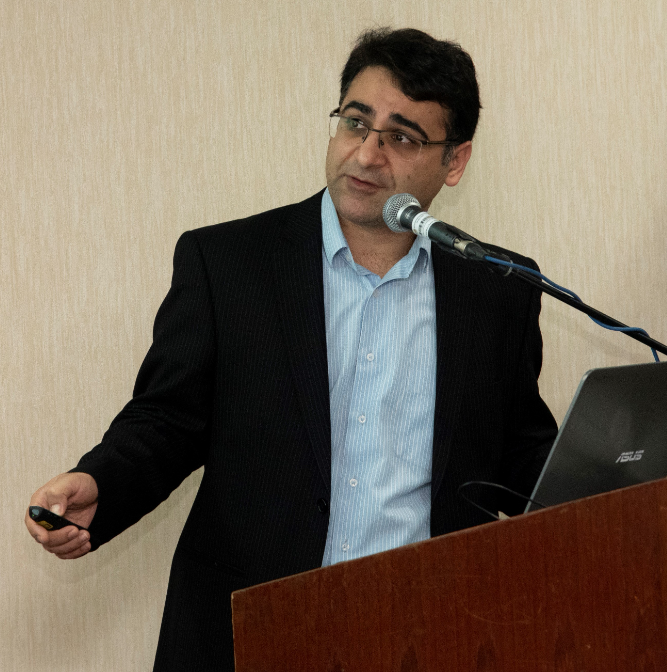
The workshop’s resource persons, who were experts in their subjects, were Dr Mohieddin Moradi of IRIB Iran, Mr Ahmed Nadeem and Mr Shree Bhadra Wagle from ABU, Mr Utpal Kanti Mandal from AIBD, Mr. Bala Murali Subramaney, Chief Technology Officer, Astro Radio, Mr Matte Ashe from Benchmark System, Mr Noel Teng, Technology Specialist Microsoft and Mr Geoffrey Low from Dolby.
The workshop started with the brief introduction of the workshop and overview of the topics by Mr Utpal Kanti Mandal and Mr Ahmed Nadeem. Dr Mohieddin Moradi three sessions in succession and discussed about the basics of sound and picture,understanding video capture, and processing and detailed about the audio processing, monitoring and measurement. He also took several other sessions in subsequent days wherein he provided in depth knowledge in various topics like principles of media compression technologies and standards, evolving media and delivery platforms, converged media-IT broadcast landscape and others. He provided latest developments and advancements in media technology in great detail to the extent of evolving technologies like Artificial intelligence (AI), Machine Learning (ML), Augmented Reality (AR) and Virtual Reality(VR). The participants were largely benefitted with vast knowledge base and effective teaching technique of Dr Moradi. Mr Shree Bhadra Wagle of ABU in his session talked about Broadcast Path: from Microphone and Camera via Console to the Screen and Speakers; Systems for Recording, Modulation, Transmission and Reception chain.
Mr Ahmed Nadeem Director Technology ABU took a number of sessions and provided details on evolution of audio and video, brief history of radio and television, audio and video distribution system and fundamental of analogue and digital signals. He utilised quite a number of audio visual clips for clear understanding on the subjects like audio basics, camera, microphones etc. on which participants showed special interest. He discussed about repurposing of content, file formats and codecs, IP protocol and streaming methods. He also took a lecture session on Big data and Cybersecurity providing components and applications of Big data and opportunities and challenges for media due to increasing threat of Cybercrimes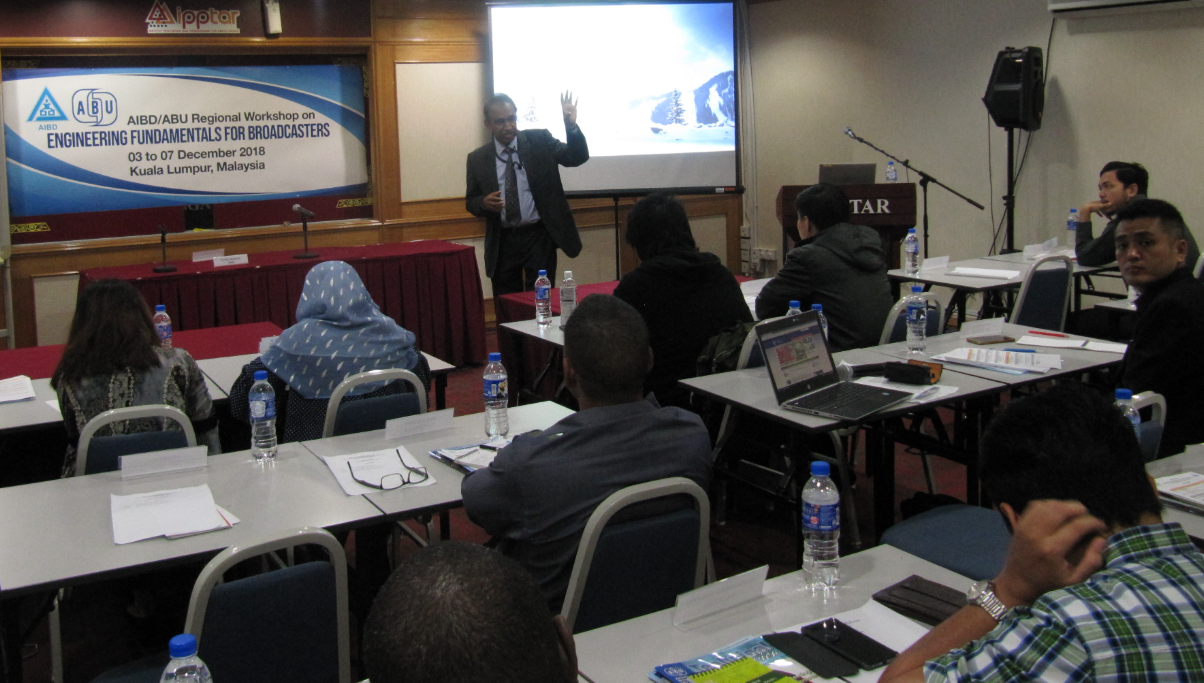
Mr. Utpal Kanti Mandal of AIBD took lecture session on Spectrum management and network planning for broadcasting services. He provided the basics of spectrum management and frequency allocation for various services based on the ITU allocation. He explained to the participants about the structural details of International Telecommunication Union (ITU) and also about the National Spectrum Management Authority. He explained about network planning for Television broadcasting and touched upon radio wave propagation phenomenon in different layers of ionosphere. He also discussed about the complex process of World Radiocommunication Conference (WRC) of ITU.
Mr Matt Ashe, Principal Engineer at Benchmark Broadcast Systems in his session briefed about Analogue Transmission Systems, MPEG Standards Overview, MPEG-2 Transport Stream Structure, Digital Terrestrial Transmission Standards, Digital Modulation Schemes and Digital Terrestrial Transmission Systems. He provided detailed information about all the analogue and digital TV standards, basic structures of different systems and specifications. He also provided the details of Chinese standard DTMB while comparing with other standards like DVB-T/T2, ATSC etc.
Mr. Bala Murali Subramaney of Astro Radio talked on Radio Studio and System Design for the future. He explained details on various elements of radio studio and systematic approach needed for designing the studio. He elaborated on radio studio console, radio studio automation system, central router, social media workflow and others. He also briefed about the radio studio construction including typical electricity requirement. The participants who are working in Radio could take valuable information about studio system by seeking clarifications during the lecture session.
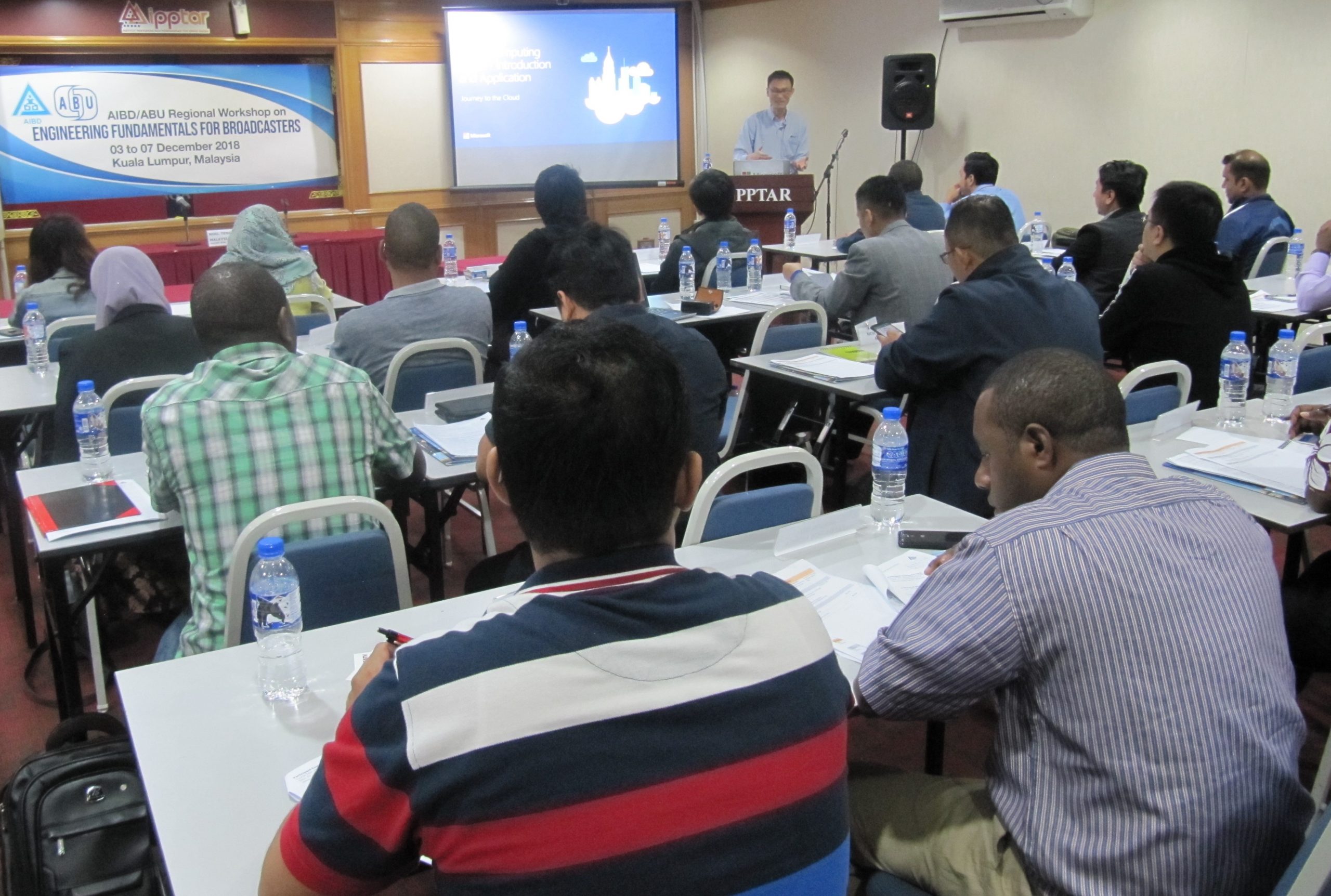
Mr Noeng Teng,Technology Specialist Microsoft in his lecture session discussed about the Azure Inspired Software Defined with windows server and Hyper-V. Azure and Windows Server have been sharing deep capabilities for a number of years now. In the latest Windows Server 2016 and more recently, Windows Server 1709 even more Azure inspired Software Defined capabilities have been downloaded from Azure. Mr Noel shared the latest and greatest capabilities of Azure with demos and videos. His session was highly interactive and participants were very keen to know more about the cloud service and raised unprecedented number of questions to clear their doubts.
Mr Geoffrey Low of Dolby Laboratories in his session discussed Dolby Atmos: The next generation 3D audio experience. He explained general aspects of 3D productions, setting up microphones for 3D, producing sports broadcasts in 3D, producing live music recordings in 3D, mixing immersive sound formats, content creation tools for immersive audio, up mixing from Stereo to 3D, monitoring immersive sound formats and also Dolby Atmos content creation process.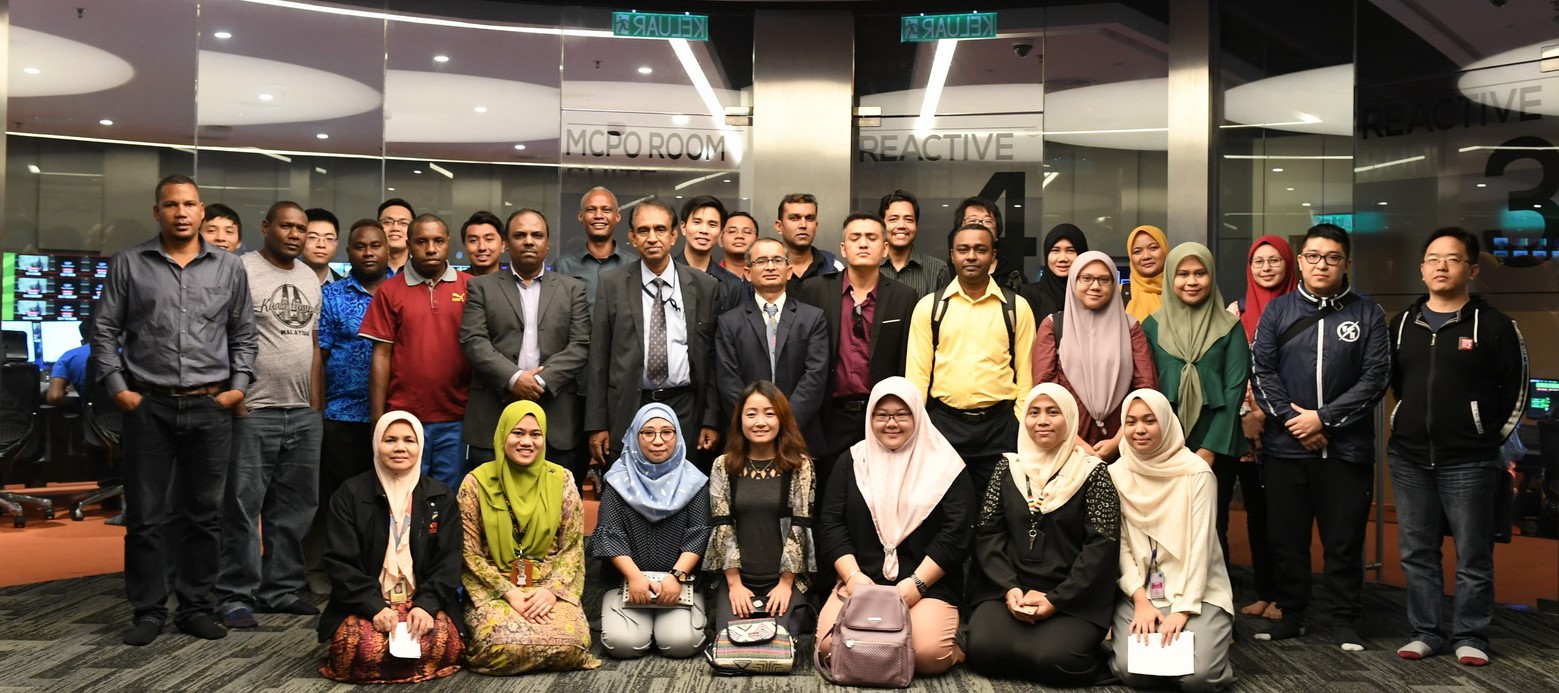
Participants also visited the radio and television studios of Radio Television Malaysia (RTM) including their HD studio, Master Control Room, Satellite Earth Station set up. The Engineers of RTM in respective areas gave briefing about their systems. The participants were very enthusiastic and were able to gather substantial knowledge and information from the technical facilities of RTM.
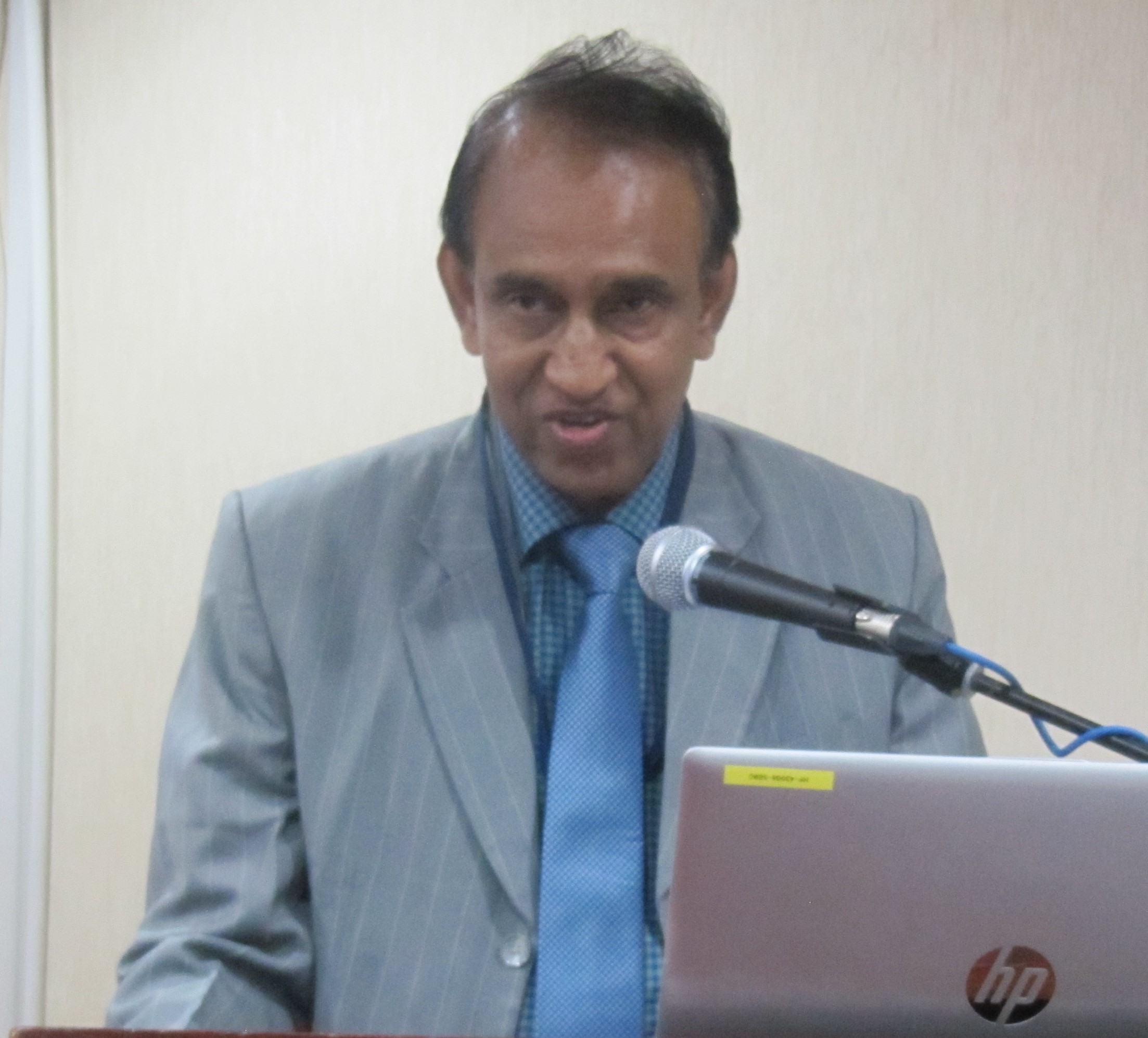
This was the fifth regional workshop designed specially to enhance capacity of newly employed engineers / technologists working in the broadcasting organisations. The 6th Regional workshop in this series will be held at Kuala Lumpur, Malaysia during 02 to 06 December 2019.
]]>
Mauritius Broadcasting Corporation – MBC is the public broadcaster in Mauritius entrusted with serving nearly four hundred households. Mauritius is one of the countries in the African region to make transition from analogue television to digital quite early.
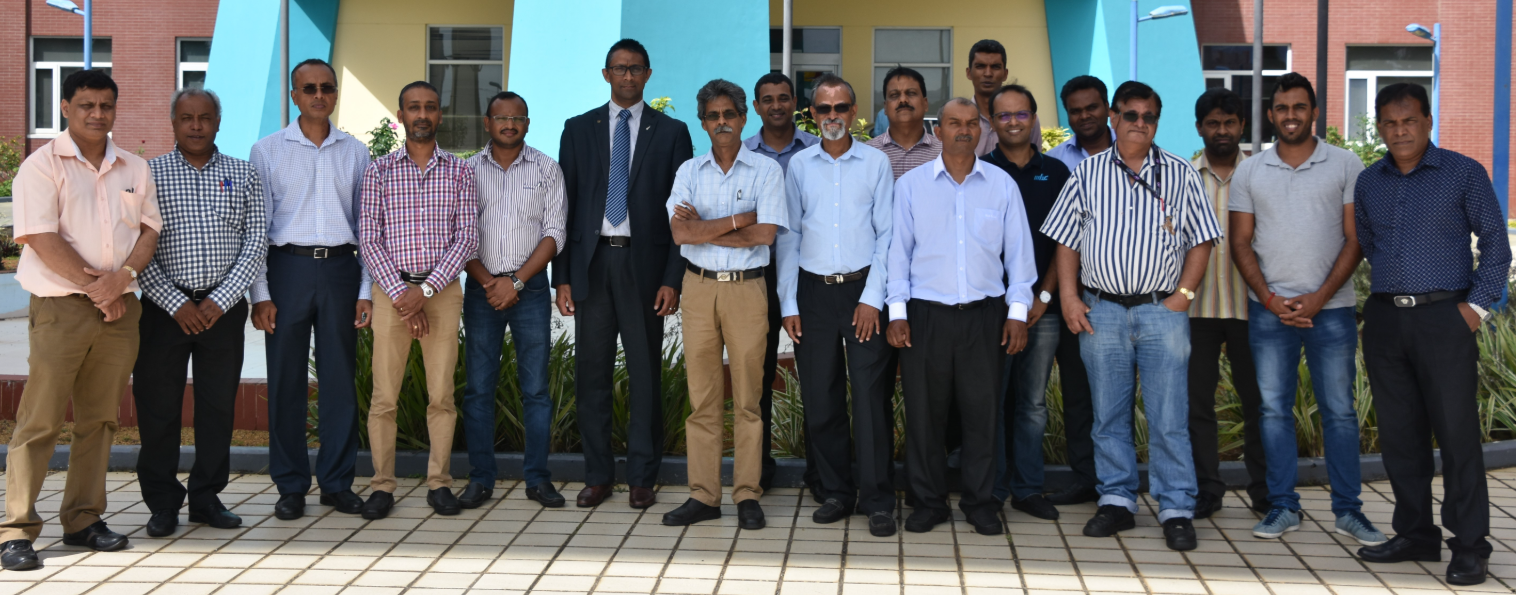
The Asia-Pacific Institute for Broadcasting Development (AIBD) and Mauritius Broadcasting Corporation (MBC) jointly organised and conducted in-country training and a workshop facilitated by the broadcast and ICT consultant and trainer Dr AMAL Punchihewa from 15th to 19th October 2018 at MBC, Mauritius. The theme of the training and workshop was “Emerging Technologies for Broadcasting and Media; Production to Delivery”.
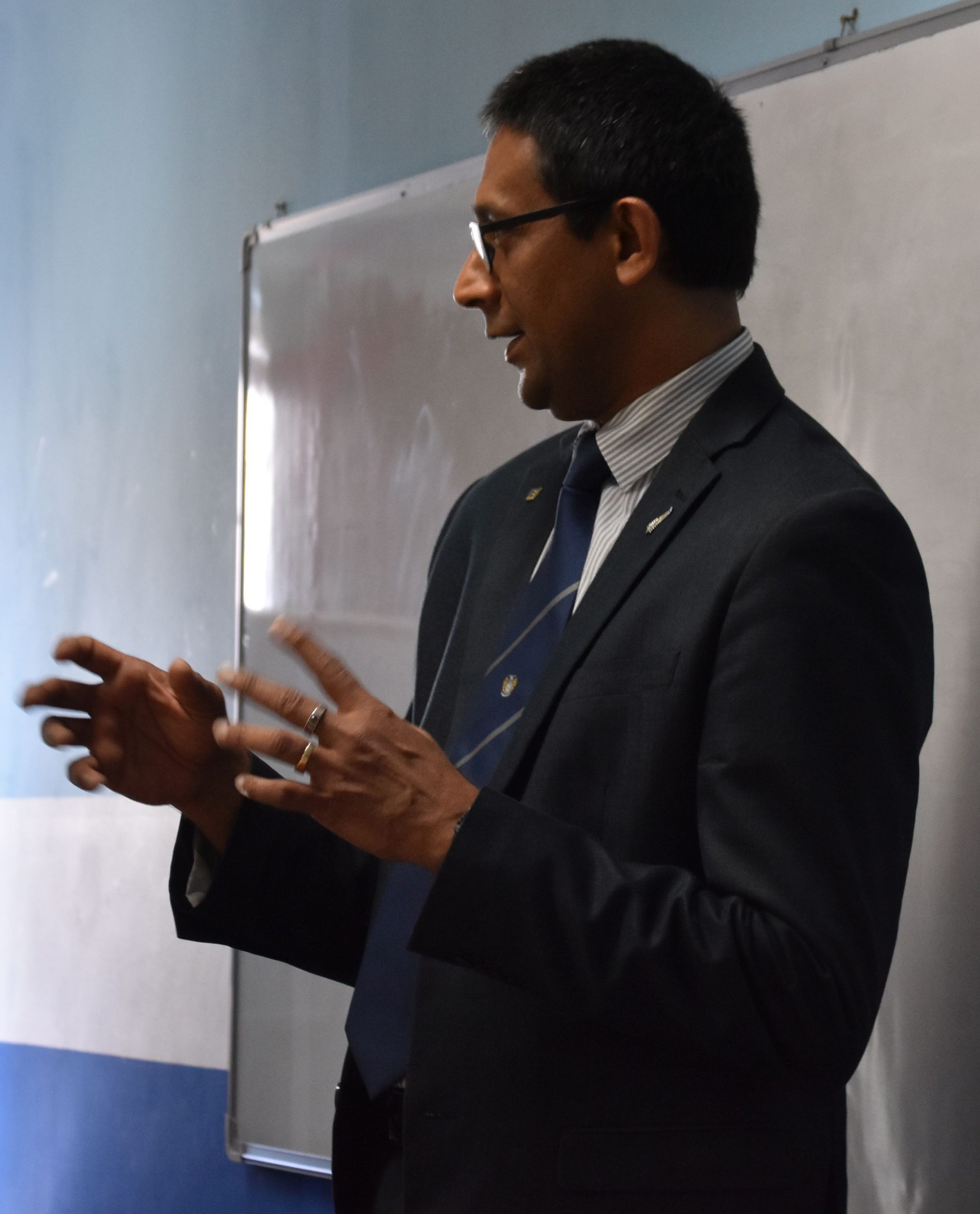
During five days; from 15th October to 19th October 2018; senior engineers and technical staff participated in studying more than ten topic areas and twenty technologies that are driving the broadcast and media industry. Twenty staff who received in-depth training appreciated Asia-Pacific Institute for Broadcasting Development (AIBD). Having refreshed basic concepts and fundamentals in data acquisition, compression, networking, distribution and delivery, emerging technologies were described in details to emphasise their influence on broadcast and media industry. The compression technologies from MPEG-2, AVC, HEVC to VVC, acquisition mechanisms in SD, HD and UHD, Standard Dynamic Range (SDR) to High Dynamic Range (HDR), High Frame Rate (HFR) and Wide Colour Gamut (WCG) were explained upto great extent. Due consideration was given to cost of each technology against benefits they could offer during discussions.
The training and workshop not only explored emerging technologies but also examined other value added services and business opportunities that they could introduce to gain a competitive edge in the market place. Participants focused on advancements in technological aspects and its impact on business having discussed basic principles, techniques and broadcasting trends. Case studies from Asia-Pacific region and European region were presented highlighting similarities and differentiations.
Among other topics trainees were exposed to IP based media production, receive devices, catch up VOD services, immersive audio and video, online media distribution, cyber security, multi-CDN and artificial intelligence and machine learning in broadcasting. Over the five days, discussions covered a variety of technologies, infrastructures and services connected with modern broadcast station.
CDN and Multi-CDNs for media operations were discussed. Trainees were introduced to multi-CDN architectures and systems that could enhance media delivery over the Internet. Multi-CDN solution used by EBU members known as EBU-flow, currently marketed by Eurovision as Eurovision-flow, was explained with improved performance and cost benefits. It was also discussed how to improve the user interface (UI) which is an important aspect of better user experience (UX) including speech interfaces.
Trainees visited IPTV facility of Mauritius Telco and Digital Terrestrial Television network hub of MCML to get first-hand experience how network operation centres operate and building blocks of those systems.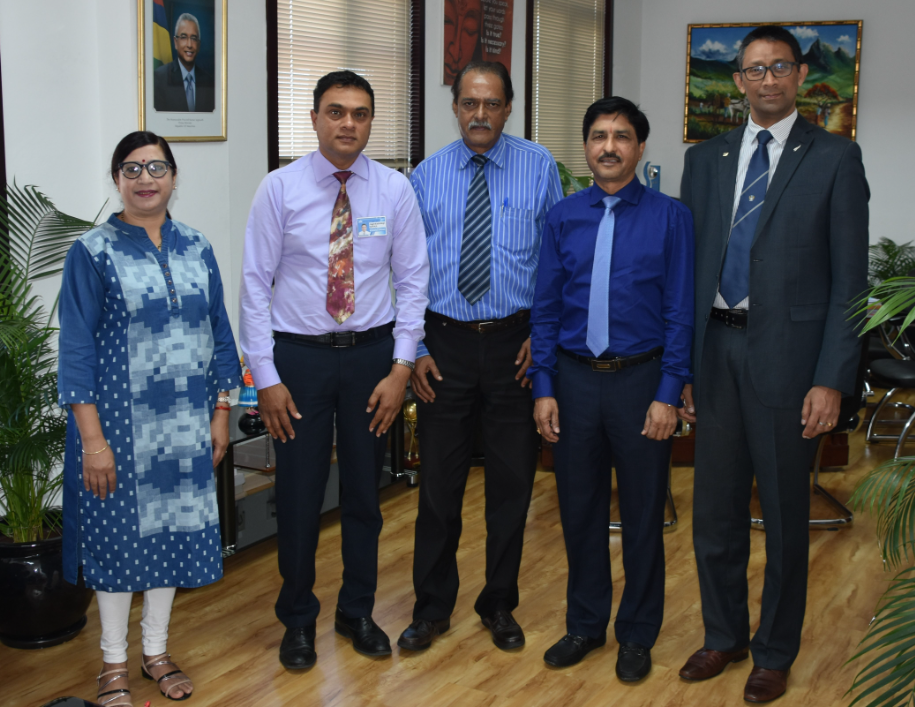
During the closing ceremony, the chairman of MBC reminded that MBC needs to think beyond traditional way and the organisation needs to attract investments.
Both MBC and trainer expressed their special gratitude to AIBD staff that enabled such valuable human capacity building event in Mauritius for MBC.
]]>