Backed by International Telecommunication Union (ITU), the world celebrates fourth Thursday in April, every year as Girls in ICT day. AIBD supports this ITU initiative which aims to create a global environment that empowers and encourages girls and young women to consider careers in the growing field of information and communication technologies (ICTs).
ITU has encouraged all stakeholders to organise events with the vision to empower and encourage girls and young women to consider studies and careers in the growing field of ICTs.
Supporting the cause, AIBD also suggests to its members, affiliates and partners to celebrate this day. For smart ideas to celebrate the day, log on to the official website: http://girlsinict.org/about/Why-a-Girls-in-ICT-Portal
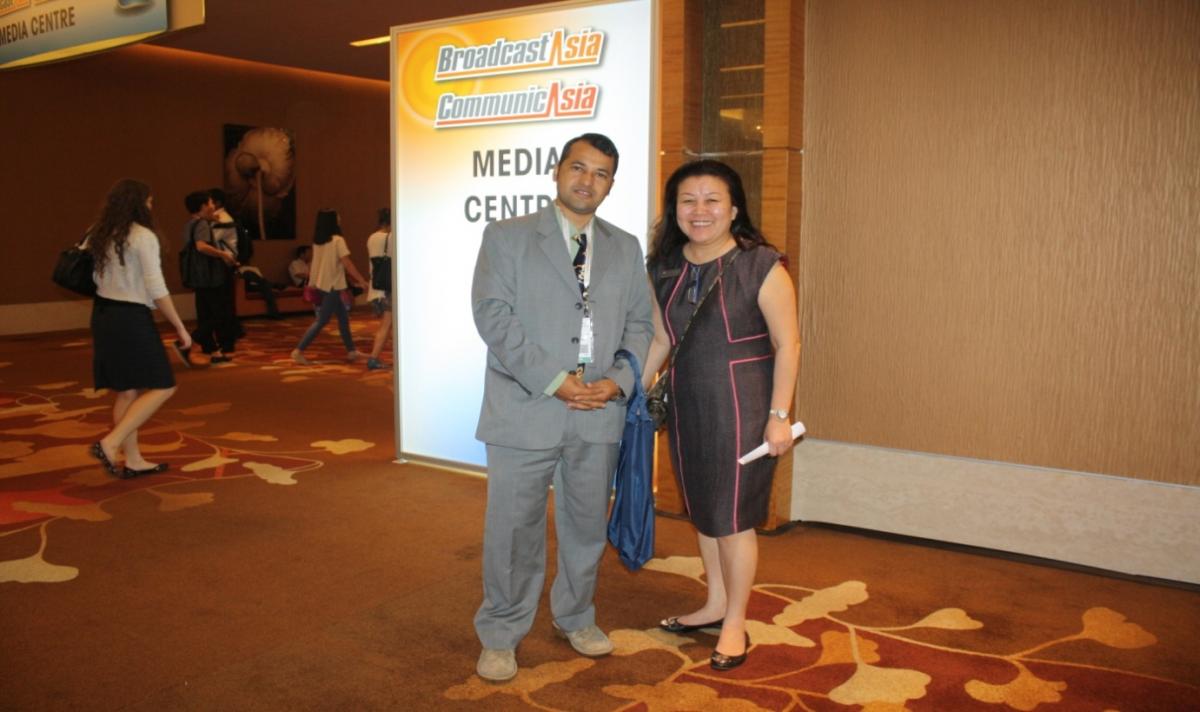
]]>AIBD, as a supporting organisation, participated in Broadcast Asia 2013 held from 18 to 21 June at the Marina Bay Sands, Singapore. More than 51,000 participants from 100 countries and regions attended the annual exhibition and conference.
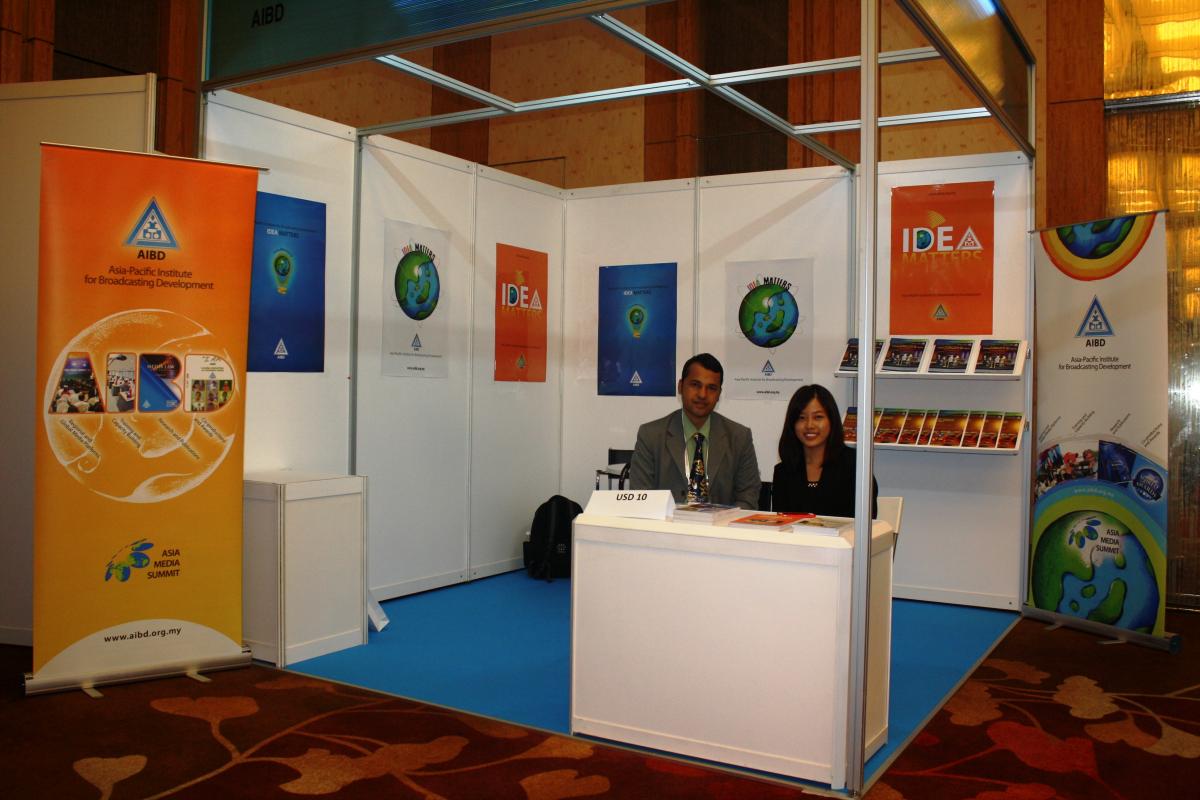
This year, the 18th edition of the show, together with CommunicAsia 2013 and EnterpriseIT 2013, gathered together top business, manufacturers, suppliers and government leaders from around the world to discuss on major industry issues, trends and to network and explore opportunities for their growth.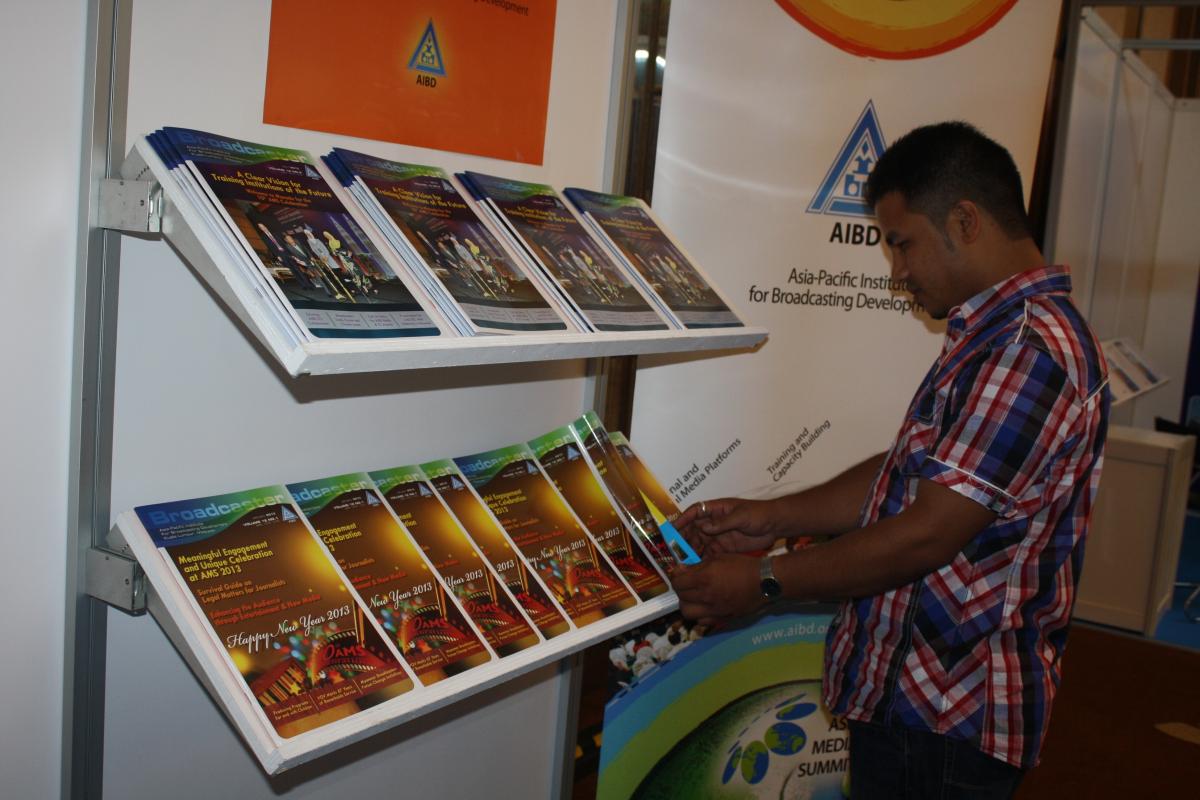
AIBD Programme Manager – Broadcast Engineer Mr. Rabi KC represented the Institute at Broadcast Asia 2013 and managed the AIBD booth, where he met the delegates and exhibitors.
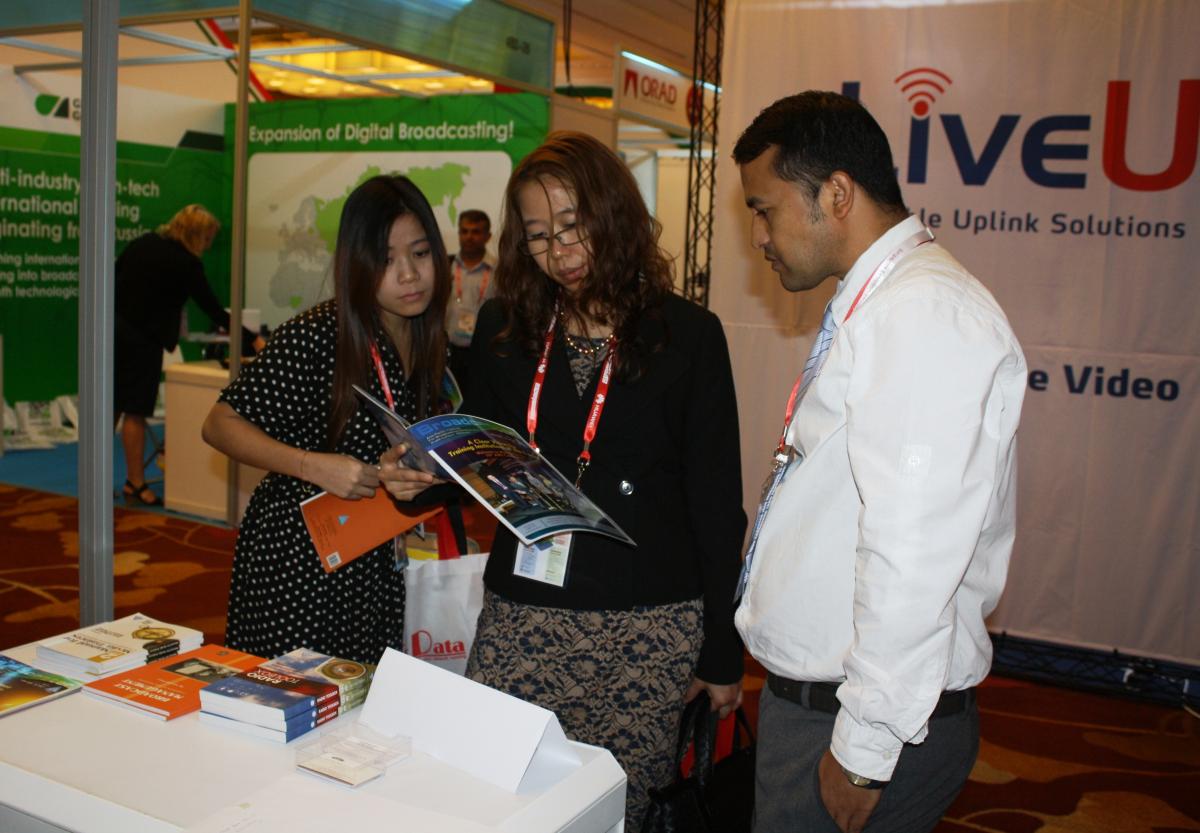
AIBD received good response from delegates and stakeholders who visited the AIBD booth. They collected information on the Institute and acknowledged the strength of AIBD on executing quality workshops, conference and trainings. Some of them have shown interest in becoming AIBD member.
Mr. Rabi also met with Mr. Calvin Koh, Assistance Project Director and Ms. Lindy Wee, Director, PR & Conference from Singapore Exhibition Services Pt Ltd. (SES), the organizer of the Broadcast Asia where he discussed about the partnership between SES and AIBD for 2014.
The Media cooperation exchange programme was held in Beijing, China from 23 to 28 August 2016. The programme was designed for the technical and programme staff of Radio and Television stations from AIBD member countries. The exchange programme was supported by Beijing International Radio, TV, Film equipment exhibition (BIRTV).
The Media cooperation exchange programme was held in Beijing, China from 23 to 28 August 2016. The programme was designed for the technical and programme staff of Radio and Television stations from AIBD member countries. The exchange programme was supported by Beijing International Radio, TV, Film equipment exhibition (BIRTV).

The exchange programme included a seminar, visit to different broadcast organisations and exhibitions. On the first day was the seminar and the participants were divided into two groups programme and technical. In technical group experts from media and broadcast industries gave an overview of Production and Broadcasting System of Digitalization and Networking at CCTV, Digital Broadcasting in China: Technology and Application, Development of CATV network technology and highly integrated automation playout system. Similarly in Programme group a creation sharing of “Forwards to the Future”, Internet + Broadcast what shall we connect, an introduction to CRI Film and TV Dubbing Services and Will new media replace traditional media, were discussed during the seminar.

The second day both groups visited BIRTV exhibition. The participants were given a tour by the BIRTV staff for the selected booths. BIRTV is China’s most prestigious exhibition in the radio, film and TV industry and a key part of China International Radio Film & Television Exposition. After the visit, a meeting was arranged with technical group and enterprises to discuss their products and services. The participants discussed and gather information about the products they saw at the selected exhibition booths. The programme group were taken to China International Film & TV Programmes Exhibition (CITV) and after the visit they had a discussion on the programmes with the exhibitors.

On the morning of the third day was a visit to China Central Television (CCTV). The participants were warmly welcomed by the representatives from CCTV. Different studios from news to sports were visited and in each studio, the head of the department explained about their facilities. Participants were also excited to visit the new building of CCTV where they discussed with each departments expert. In the afternoon participants were divided into two groups, programme group visited China Radio International (CRI) and Beijing HualuBaina Film & TV Inc. (HBN) whereas the technical group visited Dayang Technology Development Inc, one of the largest broadcast solution provider.

The last day participants were given an opportunity to visit the Great Wall located near to Beijing. Thirty-four participants from AIBD member countries attended the programme. Mr Rabi KC, Programme Manager, AIBD represented the Institute.

The Regional workshop on DVB T2 Transmission was held in Kunming, Yunnan Province, China from 16 to 18 August 2016. The workshop was designed for the technical staff of television stations who are working in transmission division. The workshop was hosted by Yunnan broadcast bureau of the State Administration of Press, Publication, Radio, Film and Television (SAPPRFT).
The Regional workshop on DVB T2 Transmission was held in Kunming, Yunnan Province, China from 16 to 18 August 2016. The workshop was designed for the technical staff of television stations who are working in transmission division. The workshop was hosted by Yunnan broadcast bureau of the State Administration of Press, Publication, Radio, Film and Television (SAPPRFT).

The three-day workshop consisted of theory, practical and visits to studio and transmission site of Yunnan broadcast bureau, Kunming, China.
On the first day of the workshop Prof. Jiang Song from DTV Technology R & D Center, Department of Electronics Engineering, Tsinghua University, China gave brief introduction about Technical trend of DTTB standards. He explained about the TV Broadcast networks and different ITU standards adopted by different countries. He also highlighted the 2nd generation of DTTB systems.

Dr Li Lei Lei from Academy of Broadcasting Planning, SAPPRFT gave a brief introduction on Digital Terrestrial Test. Which included transmitter system test, receiver system test and frequency planning.
The second-day focused on testing methods of digital TV. The topics covered were safety precautions, basic composition of transmitter, main test method of transmitter, main test parameters of transmitter and coverage system test. The presentation contained pictures of transmitter and test equipment with their test results, which helped in understanding the subject matter better.
After the classroom session, participants were taken inside the laboratory room for practical work. All the test equipment along with DVB T2 and DTMB Transmitters were ready for testing. Participants were excited and did testing themselves and discussed with the instructor.
The last day of the workshop was visits to Studio and Transmitter sites of Yunnan Radio and Television station. At the analogue and digital transmitter site of Yunnan TV station, the chief engineer explained about their systems. Participants got the opportunity to see multiple transmitters, transmitting from the same place. In the afternoon at the Yunnan Television studio, the studio engineer highlighted and explained about their system and brief information about their HD studio.

Nineteen participants from Cambodia, Iran, Laos, Nepal, Thailand and Vietnam participated in the workshop. They were invited by AIBD and SAPPRFT. Mr Rabi KC, Programme Manager, AIBD represented the Institute.
]]>AIBD organised a two-day training on Quality Management Audit from 27 to 28 June 2016. The training was focused for the new staff who has not attended any Audit training. In addition to the new staff all staff members were provided with the opportunity to participate in the training, this was an effort of AIBD to develop its own human resources.
AIBD organised a two-day training on Quality Management Audit from 27 to 28 June 2016. The training was focused for the new staff who has not attended any Audit training. In addition to the new staff all staff members were provided with the opportunity to participate in the training, this was an effort of AIBD to develop its own human resources.

The first day of the training explained the ISO 9001:2015 and ISAS Media 9001:2016. The trainer highlighted a new change in the standards. On second day the session focused on the internal audit. He explained how the internal audit is conducted. The roles of Auditor, Auditee and Observer were explained with how to record the audit report.

The training was designed in such a way to cover both theoretical and practical aspects of audit. Individual and group assignments were given to the staff. The training was interactive. AIBD staff members benefited from the training.

Mr Delip Singh, a Registered Quality Management System Auditor was the Trainer with SGS Systems and Certification in Malaysia. He has twenty-eight years of ‘hands-on’ experience and has facilitated audit training programmes locally and in many different countries on different areas ranging from strategic management to manufacturing excellence in quality management systems.
]]>The In-Country workshop on HDTV Lighting was held in Bandar Seri Begawan, Brunei Darussalam from 9 to 14 May 2016. The workshop was designed for the programme and technical staff of Radio and Television Brunei (RTB).
The In-Country workshop on HDTV Lighting was held in Bandar Seri Begawan, Brunei Darussalam from 9 to 14 May 2016. The workshop was designed for the programme and technical staff of Radio and Television Brunei (RTB).

The practical training during the workshop enabled the participants to explore in depth the studio lighting practice that is required by the producers to achieve the standard quality of High Definition TV productions. Participants gained various information and practices during the training such as: the general practice lighting setup for HDTV studios, how to apply lighting materials and equipment to specific productions, how to use measurement tools for lighting setup, identifying key lighting elements during setup, understanding how important lighting giving look and feel of the productions, adapting general principle of lighting specification to specific TV productions, how to blend conventional and intelligent lighting light sources, understand match lighting and camera chain equipment, how to blend the light source for specific productions, producing illumination look and feel of the production, the importance of proper planning on the lighting design and setup and understanding key specifications of the production requirements.

Participants responded that the training was very useful for both the future and the current work activities. They showed high commitment during studio practices and will apply the knowledge learned from this workshop to the current production. The participants have identified their direction after this workshop by sharing and exchanging training experiences with their workmates in the organisation, including the knowledge and skills in lighting operations and the know-how to determine the lighting elements to improve production values and standards. Finally, this workshop helped the participants to practice the setup process through the exercise of using correct techniques, current trends and key elements.

Having said that lighting is the most important element in the HDTV production, it is highly recommended that other areas should be considered as important as lighting. These include make-up, set design, vision mixer, camera operations, audio setup, OB facilities, CCU and related skills. The operators should be trained with the latest techniques.

Twenty seven participants from different departments, which includes operations and productions staff with working experience from 2 to 29 years attended the workshop. The workshop was conducted by Mr Sahat Amin, Lighting Director for FIDA Technology, Malaysia.
]]>


We do our jobs every day and we know how to deal with in doing our jobs. But when David asked us to consider every participant as a center of a star and then out people/departments that we connect every day in daily jobs, draw arrows to show how we receive/give things to each other.
I realised how complicated our relations in workplace and how important to develop our ability in teamwork.
That will make stars shine and twinkle.
Mrs Sumonpan Kosonsiriset, Director, Institute of Public Relations, NBT, Thailand
The star exercise is good and fun to do. It gives us clear picture of doing our duties that involves with many people at different levels, and with different directions and approaches.
It makes us realise that everybody has roles to play and that we can’t leave out any one in a process of training management.
Ms Munira Murad, Head of Integrity, IPPTAR, Malaysia
Interesting, understand better our boundaries in communication within our organsiation.


The expectations from the AIBD / O'zbekiston MTRK In-Country Workshop on HDTV Lighting, held from 12 to 16 Oct 2015 in Tashkent, were very high. And it was indeed a challenge to live up to these expectations. My attempt was to satisfy the needs of the trainees through classroom lectures, case studies, studio activities and examples.
