Over 20 representatives and stakeholders from Telcoms, public broadcasters & legal officer from the Office of the Attorney-General, Government of the Republic of Fiji are attending the consultation meeting n discussion.
Journalists need to anticipate various kind of potential risks that they would encounter while covering events. The Managing Director of Lazarus Training Ltd, United Kingdom, Mr Alistair Hollington said media organisations should plan and outline the basic of risk assessment before deploying their personnel to cover any events in the field. Sharing his expertise at a webinar on Safety for Journalists, he pointed out that ‘journalists should report the news, don’t be the news’.
He gave real-life examples of road accidents by stressing the importance of risk planning and assessment such as communication plans, transport plans, emergency plans and evacuation plans. “All these should become the standard operating procedures (SOPs) as a culture of safety”, he added.
This is to ensure the resilience of media personnel from various perspectives including physical, mental, practical aspects, equipment, food, clothing and even first aids should also be looked into.
“Delay, but don’t abandon”
Another speaker, Mr Nadim Majeed from the Capital Maharaja Organisation Ltd, Sri Lanka spoke on safety precautions that investigative journalists and editors must take to ensure their safety while exposing corruption cases.
He said, “no story is worth your life, if there are serious safety risks or probability of violent reprisals, take a step back and re-evaluate the situation”. Mr Majeed suggested to delay the publication to re-assess the safety risks and come back to the story at a later date with the strategy ‘delay, but don’t abandon’.
“Some of the precautions that the editors can take would be assessing the risks early, plan early, monitor continuously, and handling threats responsibly,” he said, adding that one should be ‘MEAN’ when it comes to following safety guidelines.
Journalists – covered by OSHA 1994
The Resident Trainer of National Institute of Occupational Safety and Health (NIOSH) in Malaysia, Ms Ruzita Mohd Shariff, said journalists must identify the 5 types of hazards they will be facing while discharging their duties.
She categorised these hazards as Physical, Chemical, Biological, Ergonomical and Psychosocial. Physical such as slip, trip and fall from electrical cables or wires; Chemical like chemical spill; Biological such as the current COVID-19; Ergonomical like awkward posture during coverage or manual handling of heavy load and Psychosocial such as threat, bully and sexual harassment.
She said once the types of hazards are identified, journalists can then assess the risk of exposure and how to control, prevent and protect themselves under any circumstances. “Therefore, journalists must know how to balance between the requirement of work and the need to take care and protect themselves and their family members.”
Invest in the resilience of journalists through MHPSS & PFA
Senior Public Health Specialist of the Asian Disaster Preparedness Center (ADPC), based in Bangkok, Thailand, Dr Yvonette Serrano Duquo said Mental Health and Psychosocial Support (MHPSS) and Psychological First Aid (PFA) for journalists during emergencies, disasters and disease outbreaks is important.
“Most of the countries in this region do not have proper MHPSS guidelines for emotional and mental health care due to the lack of exposure,” she highlighted.
Dr Yvonette described journalists as ‘frontliners’. She said journalists need to gather ‘facts and figures’, thus it increases their vulnerability to infections and diseases while discharging their crucial role.
“Journalists need to have a “SELF HELP PLAN” and following some recommendations to booster their immune system is always essential at all times,” she advised. “It’s OK not to be OK. Don’t go beyond what you cannot do. Ask for help if you need to.”
Risk Communications: Media Interactions
The Head of Geo-Meteorological Risk Management Division (GMR), National Institute of Disaster Manager (NIDM) in India, Dr Surya Prakash, said there should be a chain of two-way communications involving the Citizens, Disaster Experts, Health Specialists, Officials, the Government, Media and Non-Governmental Organisations (NGOs).
Dr Surya suggested using digital communications or technological means to gather information rather than involving oneself physically. This, he said, will avoid getting infected or infecting others as asymptomatic carriers.
Journalists should be frank in discussing their mental health issue
The moderator of the session, Dr Ming-Kuok Lim, Advisor for Communication and Information for UNESCO Office Jakarta, said journalists should be frank in discussing their mental and physical health issues with their supervisors.
He said UNESCO and Reporters Without Borders have come up with a pocket-size guideline on safety for journalists, and urged all journalists, including freelance journalists to get themselves familiar with the guidelines.
He stressed that journalists, especially those going to dangerous parts of the world, must adhere to international norms and advices to protect themselves.
“The only constant thing in this world is ‘change’. If you remain unchanged, you might be lost and find yourself drowned in the sea of change,” he said.
In her concluding remarks, Director of AIBD, Ms Philomena Gnanapragasam, urged media organisations to play a crucial role in safeguarding the safety of their journalists.
More than 70 news reporters and journalists from across the Asia-Pacific region attend the 2 and half hours’ webinar, the 7th addition by AIBD since the Movement Control Order (MOC) was imposed on 18th March 2020.
]]>


Thai Public Broadcasting Service (Thai PBS) focus its mandate in three specific content genres based on its founding principle as ‘People’s Media’.
Its Director General, Dr Wilasinee Phiphitkul disclosed that news, documentary and entertainment combined are the three key broadcast content since its inception 12 years ago.
As a public broadcaster adheres to self-governing philosophy and ethic, Thai PBS has built its brand by providing a “life-long learning experiences for all strata of the society”. It representing the people’s local issues through various social activities in three aspects – on air, on the ground and online programming segments.
Hence, Thai PBS has earned the “Trustworthy Media Broadcaster” with its tagline “Transformative Learning Space for All” which is unique and inclusive to serve all sectors of the society.
Dr Wilasinee was briefing AIBD team led by the Director, Ms Philomena Gnanapragasam during a goodwill visit to Thai PBS in Bangkok. 
On training requests, she hoped AIBD could help coordinate workshop on strategic management to change the mind-set and workflow of the station’s personnel bought about by digital convergence.
]]>
The Asia-Pacific Institute for Broadcasting Development (AIBD) wishes to work with the Malaysia Digital Economy Corporation Sdn Bhd or MDEC on several feasible projects in 2020.
Director, Ms Philomena Gnanapragasam said as an international inter-governmental organisation, AIBD is duty bound to help realise the aspirations of its members.
AIBD hopes to partner MEDC to conduct the following activities for the enhancement of the members’ knowledge in tandem with the Fourth Industrial Revolution:
a. AI Data Week in early October;
b. Conduct AI basic course online;
c. Cross-Border Data Sharing among Government to Government (G2G);
d. Feasible training workshop on AI and related areas on Data Management.
This is the outcome of the discussion with MDEC’s Director of Data Economy, Ir. Dr. Karl Ng during a courtesy call by the Director, Ms Philomena Gnanapragasam.
]]>Korea strives to realize the common vision of “mutual development through media” by exchanging suitable broadcasting content, resources and personnel with member countries in the Asian countries.
Standing Commissioner of the Korea Communications Commission (KCC), Mr Heo Wuk said Media Literacy is a vital skill in the 21st century, and it represents viewers’ rights and interests. As such, the KCC expressed its hope that model examples of the Community Media Centers (CMC) would expand across Asia and lead to more mutual cooperation.
Managed by Community Media Foundation (CMF), CMC is the on-site organisation for the viewers to participate in broadcasting and improve media literacy for the general public. It serves as a new cultural playground for the 21st Century and a gateway to the world. The success of CMC required sustained effort and interest from the administrative and policy arms of the government, in addition to personnel on the ground.
He added that a citizen in a democratic society should be able to access and critically analyze various sources of information, express his or her opinion through social media, listen to the opinions of others and participate in dialogue.
Mr Wuk was making a welcoming remarks at the AIBD/CMF Regional Seminar on Media Education Policy from 27-29 November 2019 in Seoul, Korea. Seven foreign participants representing respective Information Ministries and broadcasting organisation from Bhutan, Cambodia, Malaysia, Myanmar, Papua New Guinea, the Philippines and Vietnam attended the seminar.
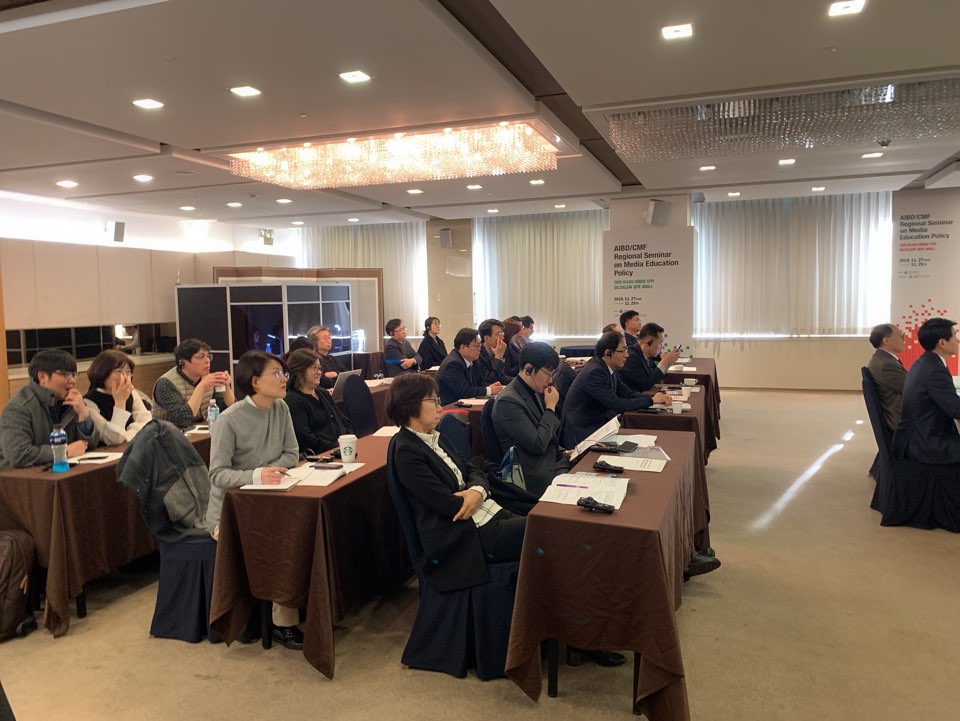

Since inception in 2005, there are eight (8) CMCs in the whole country of Korea with two (2) more to be established by 2020. CMF hopes to establish a total of 17 Centers in all of the local provinces in the near future.
The Asia-Pacific Institute for Broadcasting Development (AIBD) being a regional inter-governmental organisation, wants to work with all governments on media information literacy (MIL) programmes in the Asia-Pacific Region.
Director, Ms Philomena Gnanapragasam said as such, AIBD hopes to enhance bilateral relationships with all governments in the region by creating greater awareness on media information literacy among the peoples. The move is to use the media responsibly and to promote a better media literacy for all populace in the Asia-Pacific Region.
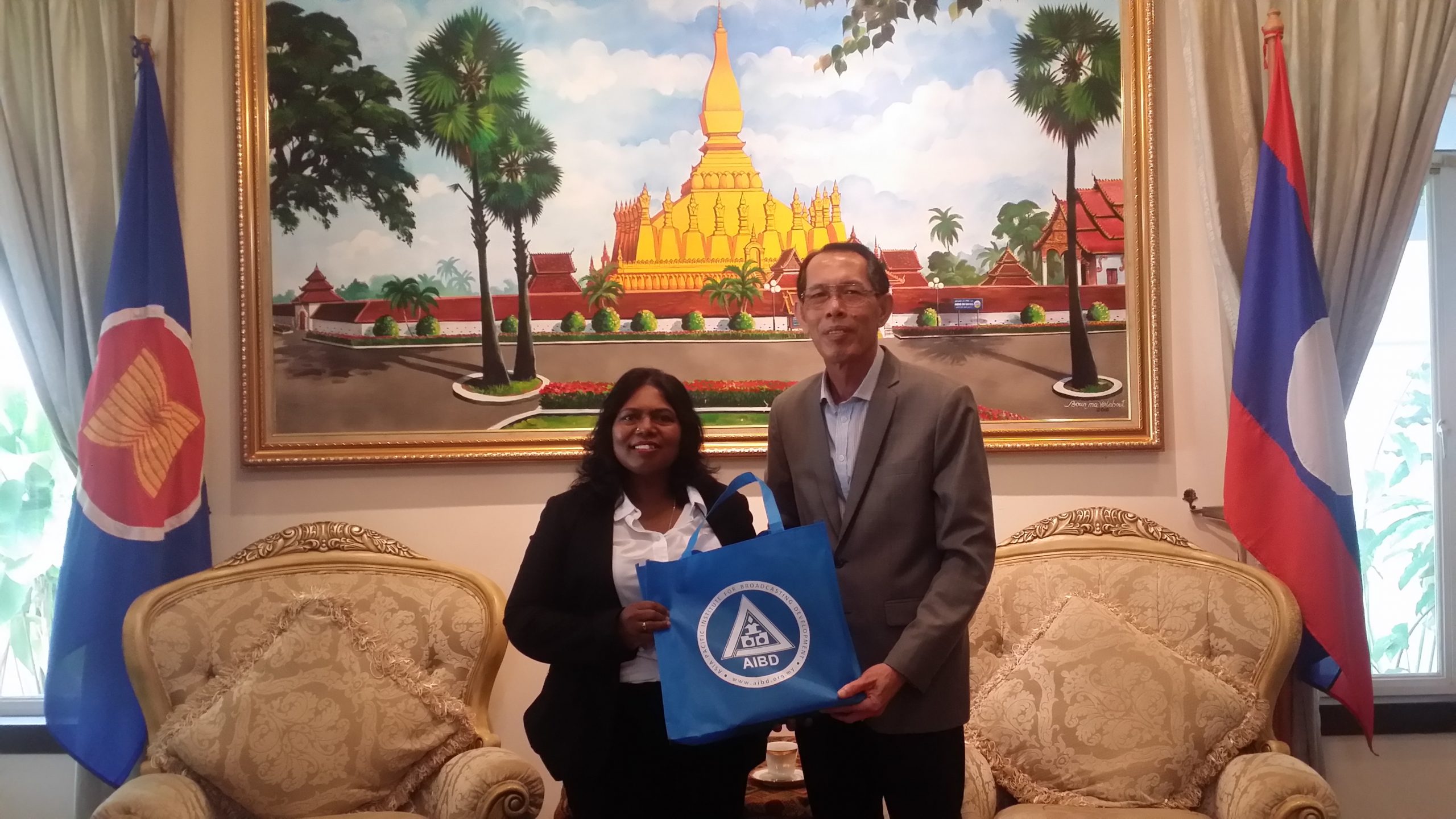
She expressed her views during a courtesy call on the Ambassador of the Lao People’s Democratic Republic to Malaysia, His Excellency Houmdaophone Soukhaseum at Laos’ Embassy in Kuala Lumpur.
In his reciprocal remarks, the Envoy has assured to render whatever assistance needed to AIBD in executing these meaningful activities for the betterment of the society at large.
Your excellency, Minister Khieu Kanarith
Your excellency, Minister Pe Myint
AIBD President
Representatives from all countries
Ladies and gentlemen
I am KO Sam-Seog, standing commissioner of the Korea Communications Commission. I am very pleased to present for the second year in a row at Asia Media Summit.
Last year, I spoke on “President Moon’s Media Policy Direction,” and explained the role of media in the revolutionary change Korean society experienced. Today I’d like to talk about Korea’s media policy in the digital revolution age and share examples from Korea’s experience.
In Korea, terrestrial analog broadcasting ended in 2012, resulting in full digital switchover. In 2017, Korea launched the world’s first terrestrial UHD broadcasting service.
In telecommunications, from 2nd generation CDMA, 3rd generation WCDMA, 4th generation LTE-A and to 5th generation communications, Korea was the first to commercialize many technologies.
And by responding swiftly to the changes in the broadcasting and communications environment, Korea continues to lead the global market in the digital revolution.
In February 2018, Korea started pilot 5G service at the Pyeongchang Winter Olympic Games. In December last year, it launched B2B service of 5G. This April, it was the first in the world to successfully commercialize smartphone-based B2C 5G service.
As of May 2019, there were approximately 700,000 5G service subscribers. In June of 2019, that number is expected to exceed 1 million. The average data usage per person is about 22 gigabits.
5G’s characteristics are ultra fast, ultra low latency, hyper-connectivity.
5G’s highest throughput is 20 times faster than 4G, and response time is over 10 times faster. Ten times more people and devices can connect through 5G.
The World Economic Forum, OECD, and other prestigious global organizations forecast that 5G will impact all industries, including automobile, medical, distribution, media, providing convenience across the economy and industry. They predict that it will transform the structure of economy and society in a positive and fundamental manner.
5G will enable the digital revolution age, creating 5 “hyper” phenomena:
First, hyper connectivity – it will connect people and things in the IoT
Second, hyper convergence – convergence across industry will dismantle the barrier between industries.
Third, hyper intelligence – embed intelligence into all things and realize big-data based AI
Fourth, hyper real – provide service more realistic than reality through AR and VR,
Finally, Hyper gap – The trend of winner takes all will intensify, and an overwhelming gap will form between those who participate in the 5G digital revolution and those who cannot, as well as between individuals and companies
These phenomena will present a completely new future across our economy and society. And the broadcasting and media sector is no exception.
Along with the digital revolution, the global media environment is also changing rapidly. Strategic partnerships and acquisitions between broadcasting, communications and media companies will strengthen the competitiveness of content and platforms.
Furthermore, global OTT companies like YouTube and Netflix are drawing upon their significant capital to enter global markets. Facebook, Amazon, Google and other global companies are strengthening their online marketing and content share of the market.
In particular, Netflix and YouTube’s growth poses a large threat to traditional media. Netflix’s annual growth rate is approximately 30% and as of 2019 Q1, the platform had approximately 150 million paid subscribers.
Youtube’s monthly active users amounts to 1.5 billion, and it has approximately 5 billion daily views.
Like other countries, in Korea, YouTube is overwhelmingly ahead of other OTT online platforms.
As opposed to the growth of new media, the share of TV, newspapers and traditional media in the advertising market is consistently decreasing. This phenomenon is observed not only in Korea and the US, but is common to the global market.
Along with the change of the media market, user consumption patterns are also changing.
With the proliferation of the Internet and smartphones, the convergence of broadcasting and communications is accelerating. With the advent of multimedia and multi channels, new media will replace traditional media.
In particular, younger generations prefer the Internet and mobile services, and there is a movement from real-time (linear) to non real-time (non-linear) content consumption.
The individualization of content helps explain this trend. In the digital revolution era, there will be an explosive growth of using Internet-based new media over traditional media.
To respond to this rapidly changing digital revolution, Korea is pursuing the following policies and strategies:
First, spread “Hallyu” content.
Second, establish a Korean content platform.
Third, strengthen status as a leading country in 5G.
First, Korean wave “Hallyu” content is receiving the global spotlight.
Starting last year, the boy band BTS began a world tour including the US, Japan, Southeast Asia, Europe, South America, holding over 50 concerts across the world.
This year, BTS held a concert in the world famous Wembley football Stadium in the UK, with 60,000 fans in attendance. The concert was also streamed live through a pay service called V LIVE by the Korean Internet company Naver.
Additionally, Korean director Bong Junho’s movie “Parasite” was the first Korean movie to win the Top Award at Cannes Movie Festival.
These examples show that Korean content like music and movies, are competitive in the global market.
As I explained before, Korea is continuously striving to expand Hallyu content based on the strength of Korean content.
First, Korea is focusing on the global expansion of K-pop, drama, games, music and other Hallyu content.
Additionally, by converging media and commerce, Korea is continuing to expand its global influence through content.
For example, Korean studio CJ ENM has a video commerce business, where it has infused fun and storytelling into commerce videos and spread them through social media. I believe it is an interesting and noteworthy business model.
Because of the competitiveness of Hallyu content, Netflix is utilizing Korea as an outpost to circulate content. Additionally, Korea plans to utilize capital from global firms like Netflix to promote the Hallyu content market, if necessary.
Korea is also striving to create a Korean content distribution platform.
CJ and the Korean Ministry of SMEs and Startups have hosted a K-culture festival called KCON every year since 2012. This is not simply a K-pop concert, but includes drama, movies and other cultural content, as well as IT, fashion, beauty and other Hallyu related themes. It is a cultural platform that fuses together exhibition and concert.
Recently Korean telco SKT and three terrestrial broadcasters joined hands to release an OTT service in July to enter the global market. This service will be like a Korean Netflix.
Lastly, the Korean government will not simply stop at being the first in the world to commercialize 5G. The government is actively pursuing a nationwide strategy to make the “world’s best 5G”.
By preparing the necessary infrastructure early on and expanding the introduction of new services, Korea’s strategy is to promote the market in the early stages. To this end, the government released its 10 core industries and 5 core services. Among these, the media-related industry and service will the first stepping stone on the path to 5G promotion.
Taking a closer look at the details, the Korean government plans to support “killer content” in 5 major areas.
360 degree multi-view relay which is immersive and realistic;
Multilateral hologram video calling;
VR shopping platform, which is an area in high demand in our daily lives; and
Through this, our goal is to promote the 5G content market in the early stages.
In the private sector, there are various preparations already underway for diverse 5G services centered on the work of Telcos. For example, realistic media, autonomous vehicles, disaster and emergency response, smart factories and more have potential applications for 5G
Some of these possibilities were showcased at major events such as CES and MWC at the beginning of this year.
The future digital revolution that 5G enables, however, is not all rosy perfect. While the digital revolution has potential to greatly benefit our lives, including in the media use environment, there is a darker side. Therefore, in order to lessen this shadow to the digital revolution, the government emphasizes the importance of policy to reduce the digital gap and protect users.
In the digital revolution age, the gap between countries, and also between domestic users will widen. Additionally, AI based algorithms repeatedly expose users to only their preferred content, which can cause a lack of diversity. Digital sex crimes, fake news, personal data leakages, and cyber terror are other examples of the darker side to this future. There will be increased polarization between leaders and latecomers among firms, between the haves and have nots.
Furthermore, as the shared economy takes place, the advent of new technology and services like Uber will lead to new conflicts between existing and new groups. To resolve these issues, companies own voluntary efforts are important. But I believe the government also needs to respond proactively.
President Moon’s administration aims to pursue an innovative strategy in this era of hyper-connectivity that emphasizes innovation and growth, while maintaining a focus on the people. It is proposing a nationwide strategy to this end.
Furthermore, even great technology and services may not necessarily be adapted by individuals and society. There needs to be policy understanding and consideration as to who, why, how of the digital revolution is accepted or rejected, expanded or resisted. Without this, a truly digital revolution is not feasible.
The Korean government proposes that this type of policy consideration and effort be shared with countries in the Asia Pacific region.
Thank you for your kind attention.
]]>The use of virtual studio and virtual studio implantation technology is bringing a new visual experience for the TV audience, and providing new thinking and creative new tools for television producers.

They are applications of the virtual reality technology and are becoming a new trend in the broadcast industry in Asia Pacific, Mr Huang Lei, Product Manager, Jetsen Technology Co. Ltd, Beijing, said in his presentation at a pre-summit regional workshop on augmented reality on 4 June 2017 in Qingdao, China. The workshop is a partnership among AIBD, Jetsen Technology Co., Whaley, and Bang Productions.
Mr Huang highlighting the advantages of virtual studio technology and said it can easily replace the environment background and remove the repeated construction of a real scene. It can reduce costs and enhance quality of the programmes. He also said using virtual implantation technology in the virtual studio provides additional and brilliant effects to the programme, making them more impressive for audiences.
In his presentation, Huang discussed the development of four stages of the virtual reality technology. First is virtual reality (VR), a popular trend globally. Its most important sign is the use of a helmet or head mounted display, which allows the user to be fully surrounded by the virtual world. When he moves his head or walks around, he can see that the virtual world also moves, just like he is in the real world, but it’s not actually a real world, it’s just a virtual world.
The second stage is augmented reality (AR), which is also achieved by using a head mounted display equipment like the google glass. This allows the user to receive information and data from a real world while they observe the real world,which can help him in his work. For instance, when a user wears an AR glass, and comes across a dinning room, the glass will instantly show him the famous dishes and their prices as well. Huang said this kind of technology in the broadcasting industry becomes the virtual studio that we all know.

The third stage is the mixed reality (MR), which is the combination of VR and AR plus digital information. MR puts the virtual items into real world and allows the users to have interaction with those virtual items.
And the fourth stage is cinematic reality (CR), which he said is another form of mixed reality.
While admitting that most TV stations have their own virtual studio system, Huang said that they mostly stay in the production of 2D or 3D precept animations, a level that precludes any connection between the virtual contents and the hosts or even the interaction with the audiences.
But with the development of the motion capture system, he said ‘ this fills the void of interactivity in the virtual studio system and the interactivity of the programme has been further improved.”
Speaking about motion capture technology use in the broadcast industry, Huang said this technology is not a stand-alone system. Huang said motion capture technology can be integrated into the virtual studio system as a foreground signal, and with the combination with the camera tracking signal, the show can have a perfect virtual character standing right beside a real person to give the audience a live program.
By expanding production’s thinking in using motion capture system, broadcasters can have more income from the sponsors to better advertise their IP in the programme, without having annoying advertisement,and improve TV viewing experiences of viewers.

In his presentation, he cited the three compositions for a full motion capture system. These are the facial expression capture technology, the body capture part, and the finger motion capture system.
Other speakers in the pre-summit workshop were Caspar Sonne, Head of New Media/IDFA DocLab of the International Documentary Film Festival in Amsterdam, andVikramChanna, Vice President of Branded Content & Partnerships, Production & Commercial Partnerships of Discovery Networks in Asia- Pacific, Singapore.
MrSonne presented some outstanding interactive productions from the IDFA, emphasizing that various formats are emerging, but there is no real box yet. “ We need undefined spaces for playing, and for exploring,” he said.
Acknowledging that VR technology is one of the big developments in the last five years, Sonnesaidwe need to be careful in jumping on board or dismissing it. He also said that new interactive storytelling initiatives should work on a long-term basis, beyond five years to be able to attract funding.
Given the complexity of technology trends across the globe, Sonne said players in the old and new media must have a dialogue to understand today’s reality in which the digital and physical entities have become blurred. To ensure success, he suggested that interactive storytelling should be timeless, moving and must have fun.
MrChanna talked about Discovery Channel’s audience shift, now targeting 18-40 year old viewers, or so-called millennials and older millennials. This new strategy, he said, is transforming the way they deliver content in various platforms, they structure their organisation and adapt their organisational culture to changes in the media landscape.
He said they are coming out with new programmes with international partners that are enhancing their audience’ viewing experience. Equally important, he said, is that they are able to monetise these new shows even at the conceptualisation stage leveraging on the brand that Discovery channel has established through the years.
To maximise the opportunities from new technologies, Sonne and Vikram advised that organisations must set up an innovation department and that every department should be innovative.
Other speakers were Guo Song-Jie, CEO of WuBuWei (Beijing) Film & TV Technology Co. Ltd., who discussed the development and application of camera matrix technology for augmented reality, and FengYunWen, Technical Consultant of Auro Technology, who spoke on auro 3D in augmented reality application.
]]>Bangladesh Ministry of Information (MOI) Secretary, Mr Martuza Ahmed highlighted AIBD and Bangladeshi media had decades long relationship as the then Director General of Bangladesh Betar (BB), Mr A K M Nesar Uddin Bhuiyan was AIBD’s past vice-president for two executive tenure from 2012 to 2016.
Besides, the public broadcasters like Bangladesh Television and Bangladesh Betar and the National Institute of Media Communication (NIMC) are full members of AIBD.
He also expressed his appreciation towards the efforts of AIBD with regards to capacity building of broadcasters in the Asia-Pacific Region.
Mr Ahmed also showed interest in having more meaningful relations in terms of more in-country workshops especially related to community radio and producing programmes on human development.
He disclosed this while having a brief discussion with Director Mr Chang Jin during his visit to the Asia-Pacific Institute for Broadcasting Development (AIBD) in Kuala Lumpur Malaysia.

Mr Ahmed felt that broadcasters have a social obligation to reach out to the hard core poor in order to bring them to the main stream of socio-economic development. This is in line with the UN-inspired Sustainable Development Goal 1 – No Poverty by sensitizing the people to partake in development efforts to enhance their socio-economic well-being.
He is happy to note that AIBD in collaboration with Bangladesh Television (BTV) are jointly organising a sub-regional SDG workshop with the theme – Ending Poverty on the 13th and 14th December in Dhaka Bangladesh.
First of its kind, the 2-day workshop has attracted some 30 participants representing the eight South-Asian Association of Regional Cooperation (SAARC) nations including local UN organisations like FAO, UNIC and UNDP.
Esteemed speakers to share their visions in Poverty Alleviating are from the World Bank Bangladesh, UNDP, Bangladesh Planning Commission, Ministry of Local Government, Rural Development and Cooperatives besides BRAC (Building Resource Across Communities), the world’s largest NGO dedicated to development and fighting poverty by acting as a catalyst in creating opportunities for people living in extreme hardship to realise their potential.
]]>A 4-day course to provide radio programmers an insightful knowledge in creating content and managing the whole radio production process for both live and recorded programmes began in Kuala Lumpur today.
This workshop of international-standard is aimed at enhancing the skills of creativity in radio’s content creations by learning the best theoretical and hands-on production practices.
It is being conducted by the Managing Director at Pop Up Radio, Brisbane Australia, Mr Anthony John Frangi and has attracted 28 radio programmers from throughout Malaysia including the Islamic Religious Programme. It will end on Friday, 27th July, 2018.

Among the Workshop Contents as follow:
- From idea to creation;
- The laws governing broadcast media (including online and social media);
- Producing for radio programming;
- Creating Content for news and the art of interviews;
- Creating content for programming and the art of interview (drama, documentary and writing for promos);
- Presenting skills and building a relationship with co-presenters;
- Promote your station using multi-social platforms;
- The art of talkback radio;
- Creating field reports and news/program packages;
- Concept of “Hot Clock” and segments’ planning; and
- The latest digital (online) technology in the world of radio broadcasting.