The speakers presented these perspectives at the 5th plenary session titled ‘Monetisation in traditional media/new media: competing or complementing’ at the Asia Media Summit held on 13 June 2019 in Siem Reap, Cambodia.
AIBD webinar on Crisis Communication was organised on 14 May 2020.

The session was moderated by Dr Kim Youngyill, Communication Officer at Korean Broadcasting Services (KBS) Korea and the main speaker, Mr Ravindaran Raman Kutty, a crisis communication and corporate communication expert and consultant, highlighted three critical steps in managing a crisis:
Pre- Crisis Readiness
During a Crisis
Post Crisis

He emphasised on the significant threat and potential damage a crisis can inflict on an organisation, if handled poorly. He presented case studies from different industries as well as the current pandemic – COVID19. Mr Kutty explored how various countries around the region is handling the pandemic, from early prevention plans in Taiwan, Hong Kong and Vietnam to Japan’s example of initial managing the crisis without lockdown, which was changed after the Hokkaido incident, where an early outbreak of the coronavirus was contained with a 3-week lockdown. But, when the governor lifted restrictions, a second wave of infections hit even harder and after twenty-six days the island was forced back into lockdown.

Dr. Nik Norma Nik Hasan, Senior Lecturer at School of Communication, Universiti Sains Malaysia (USM) Adjunct Fellow, United Nations University- International Institute for Global Health (UNU-IIGH), presented on the significance of public risk perception and how it can change behavior to assume new normal. Dr Nik presented from her on-going social media research on Twitter and Instagram users and how they react to authority and trust level in official channels. With real time analysis, she was able to get the data to quantify the risk perception in organisation and individuals, although she stressed that it was an ongoing research, and no conclusion could be drawn at this stage.

Although planned for one and half hour, the session had to be extended to accommodate questions from as many participants as possible. It was attended by 65 participants from 19 countries and was streamed live on Facebook. It is available on AIBD Facebook page: @MYAIBD
Link: https://bit.ly/3cdDqx9


In response to the ongoing COVID-19 situation and information dissemination efforts of media, Asia-Pacific Institute for Broadcasting Development (AIBD), organised a half-day In-Country Seminar on ‘Reporting on Health Crisis: Training Journalists for Emergencies and Outbreaks’ today. The Seminar was organised with support from World Health Organisation (WHO), National Institute of Health (NIH), National Institute of Occupational Safety and Health (NIOSH) and Asian Disaster Preparedness Center (ADPC).
Forty-five participants from 18 organisations attended the Seminar, which aimed to help the journalists and content creators gain deeper knowledge on the COVID-19 and explore methods on how to report on health issue to ensure greater public awareness.
There were five speakers highlighting different areas of focus within health crisis reporting. Dr. Cory Couillard, Consultant with WHO gave presentation on the current situation and emphasised the role of media on public health and risk perception.
Ms Khairulnissa Abdul Kadir, Health Education Officer at National Institute of Health (NIH) elaborated upon the public behavioural aspect and importance of disseminating accurate information at the correct time.
The third speaker of the event, Dr Yvonette Duque, Senior Public Health Specialist at Asian Disaster Preparedness Center (ADPC), Thailand gave an overview of the standard of procedure for Disaster Risk Preparedness from an international perspective, and Ms Ruzita binti Mohd Shariff, Technical Expert with Department of Education and Training at National Institute of Occupational Safety and Health (NIOSH), Malaysia, gave presentation on the key factors to ensure safety and health for journalists during crisis reporting.
The final speaker was Assoc. Prof. Dato Dr. S. Vellayan, consultant avian, exotic reptile, wildlife and veterinarian, gave brief presentation on the importance of research and history of pathogens while reporting.
An interactive session focusing on filtering information and avoiding sensationalizing during health reporting was also conducted after the seminar. The session was conducted by Dr Couillard.
]]>The Director of AIBD, Mrs. Philomena Gnanapragasam, called on the Ambassador of Maldives in Malaysia, Her Excellency Visham Ali in Kuala Lumpur on 4th November 2019. The meeting was part of the series of courtesy visits that the new Director is making to rebuild AIBD’s networks and partnerships.

The Director highlighted that Maldives has been a member of AIBD for a long time and appreciated the efforts in supporting the activities of AIBD. She said that AIBD is launching new initiatives and activities, exploring opportunities so that the member countries and organisations are benefitted in the end.
Ms Gnanapragasam briefed the Ambassador on some of the key activities being undertaken by AIBD, such as Angkor Anti-Fake News Initiative, Asia Media Summit 2020 in Nepal and Information Ministers’ Conclave in Samoa next year among others.
Congratulating on her appointment, the Ambassador reassured Maldives would remain an active partner and a member of AIBD. Her Excellency stated the need for assistance on adjusting and adapting to constantly evolving technology and reiterated the importance of AIBD’s role in providing this assistance.
]]>
The Director of AIBD, Mrs. Philomena Gnanapragasam, called on the Ambassador of France in Malaysia, His Excellency Frederic Laplanche in Kuala Lumpur on 17th October, 2019. The meeting was part of the series of courtesy call-ons that the new Director is making to rebuild AIBD’s networks and partnerships.
The Director highlighted that France has been a member of AIBD for a long time and appreciated the efforts in supporting the activities of AIBD. She said that AIBD is launching new initiatives and activities, exploring opportunities so that the member countries and organisations are benefitted in the end.
Ms Gnanapragasam briefed the Ambassador on some of the key activities being undertaken by AIBD, such as Angkor Anti-Fake News Initiative, Asia Media Summit 2020 in Nepal and Information Ministers’ Conclave in Samoa next year among others.
Congratulating on her appointment, the Ambassador reassured France would remain an active partner and a member of AIBD. His Excellency said that his team would sit down together and plan out areas that France could be of beneficial to other members. “Definitely, there are areas that we would like to help and at the same time also learn from other member countries”, the Ambassador said.
]]>The Director of AIBD, Ms Philomena Gnanapragasam was warmly received by the Deputy Chief of Mission and Consul General, Anne Jalando-on Louis and First Secretary and Consul, Mr Ruel U. Gunabe during a courtesy call at the Embassy of the Republic of the Philippines in Kuala Lumpur.

The courtesy call had a fruitful discussion in fostering closer-ties to carry out various media development training activities between AIBD and the broadcasting organization of the Philippines.
Among the key areas of discussion included the proposed Asia-Pacific Information Ministers` Conclave to be held in Samoa next year. Ms Philomena added that, AIBD is taking the lead in the field of media development on fake news by conducting workshop activities with AIBD members in the Asia-Pacific region.
She disclosed that the ‘Angkor Anti-Fake News’ Initiative spearheaded by the Cambodian Ministry of Information (MOI) was launched during the AIBD’s Annual General Conference (GC) in Bhutan recently. With the help of UNESCO, AIBD has embarked on a year-long research project with two universities in Malaysia. The outcome of the research with input from our member countries will be compiled and produced a “Blue Print” document.
Ms Philo envisaged that the “Blue Print” will be ready during the Asia Media Summit (AMS) 2020 which will be held in Kathmandu Nepal in June and hoped that the “Blue Print” would provide a mechanism on how to regulate and the implementation methodology on “fake news”.
Ms Anne remarked that it is crucial for AIBD as an inter-governmental organization to work with the respective government authorities on how to address the current trend on the “fake news” issues.
]]>The Director of AIBD, Ms Philomena Gnanapragasam was warmly received by Ms Yong Xin Tian, First Secretary (Political) at the High Commission of the Republic of Singapore and had a successful discussion on building networks to carry out various activities between the two neighboring countries.
Some of the key areas discussed were the Information Ministers` Conclave to be scheduled next year in Samoa. Ms Philomena added that, Singapore can share in the field of media development on fake news with AIBD members.
Speaking futher on ‘fake news’, Ms Philomena spoke of the launch of ‘Angkor Anti-Fake News’ Initiative in Bhutan recently. It is a big initiative undertaken by AIBD with its member countries. With the help of UNESCO, AIBD has embarked on a year-long research project with two universities in Malaysia and is already conducting various fake news trainings and workshops in the region.
Ms Yong remarked that the fake news initiative is a timely engagement by AIBD and she added that Singapore, after years of research on the threat of fake news have passed new laws which came under Protection from Online Falsehoods and Manipulation Bill.
]]>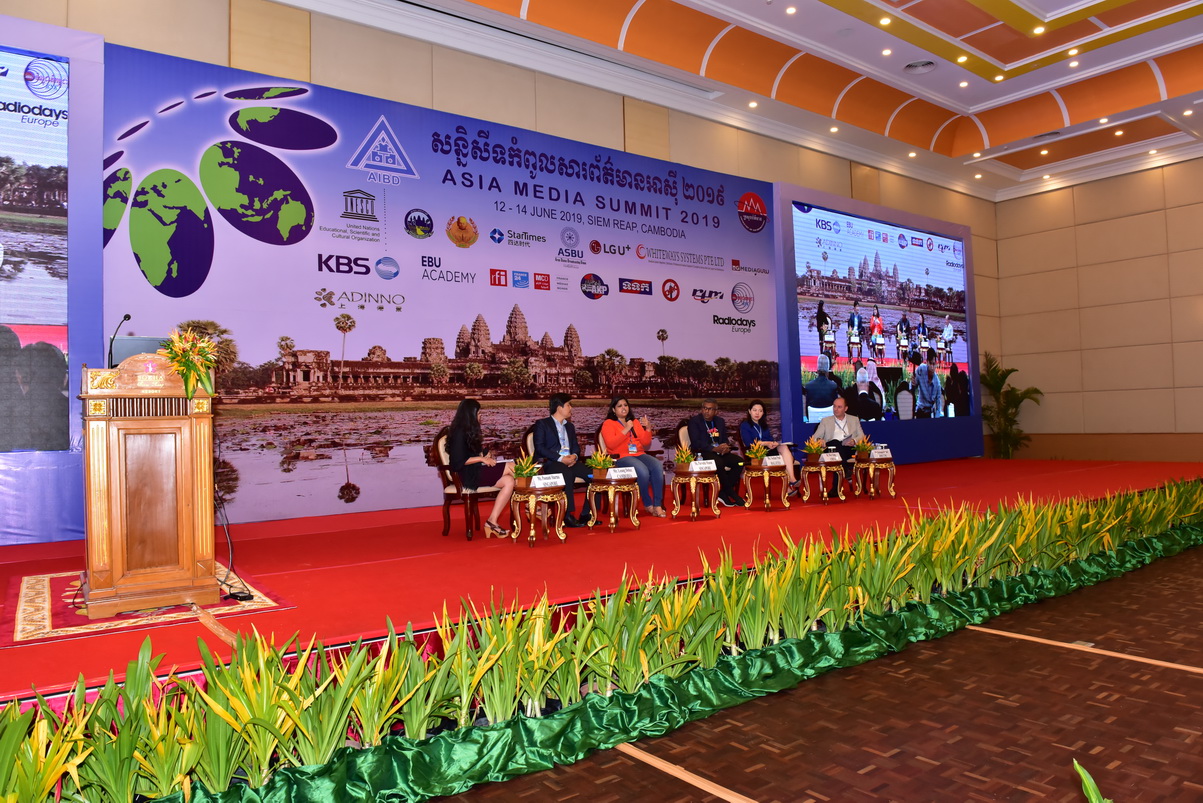
Google pursues partnerships and collaboration across products and platforms in the monetisation process for both traditional and new media, according to Ms Parvati Menon, Head of Partner Sales APAC, Google Singapore.
Speaking to participants at the 16th Asia Media Summit in Cambodia, Ms Menon said Google finds opportunities with new media entities that have a new way of telling stories as well as with traditional media, which boast of a legacy to support them.
“If you look at Google, we have partners that span across various services. It’s not that we choose parties often aligned with this, who want to engage us. In customising or helping achieve specific goals, there is constant dialogue. Is it about a business that will grow in the few years and is a partnership the best approach”? she questioned.
Understanding how to monetise is a big challenge particularly in the changing media landscape, she said, adding that in advertising, ‘it is about buying audiences rather than content’, advertisers may be looking for extended reach.
“We have seen consortiums where traditional and new media organisations go together to support programmes. It is not who has the price journalistic content, but how this material can reach to an extended audience. We want traditional broadcasters to understand this and there are solutions”, she said
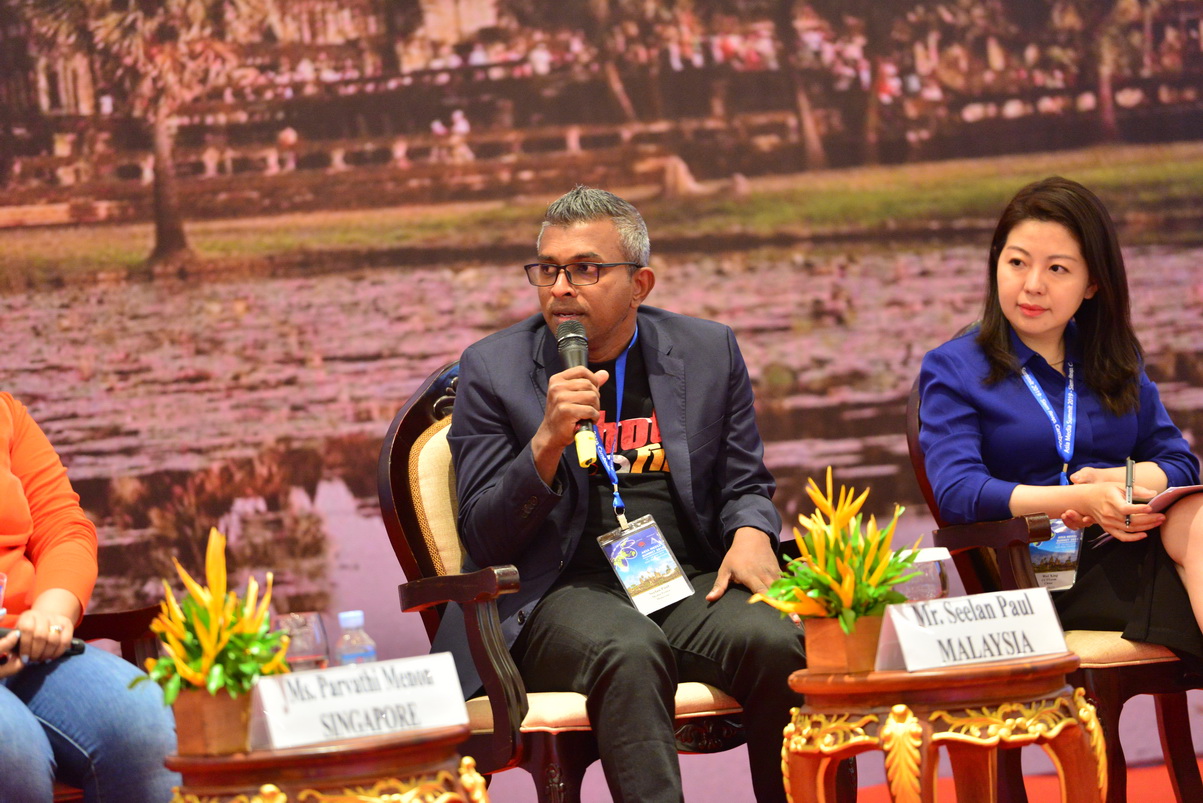
Another speaker, Mr Seelan Paul, Chief Executive Officer, RIPPLE, Media Prima Malaysia, said their media business strategy is to ensure they are in platforms where their audiences are developing content that they can monetise.
Media Prima is Malaysia’s leading full-integrated media company with a complete repertoire of media-related businesses in television, print, radio, out-of-home advertising, content and digital media.
In radio, he said “people don’t just listen to us; they also watch us in the studio. We develop not just audio but also visual content. We are no longer an audio platform, but a hybrid platform for us to be able to monetise”.
He added that to monetise they use the YouTube platform and branded content for clients who want to tap niche audiences.
Mr Leang Delux, Chief Executive Officer, Thmey Thmey Online webpage in Cambodia, spoke about the objectives of their operations, saying they have programmes that inspire, educate, innovate and chase what’s trending as well.
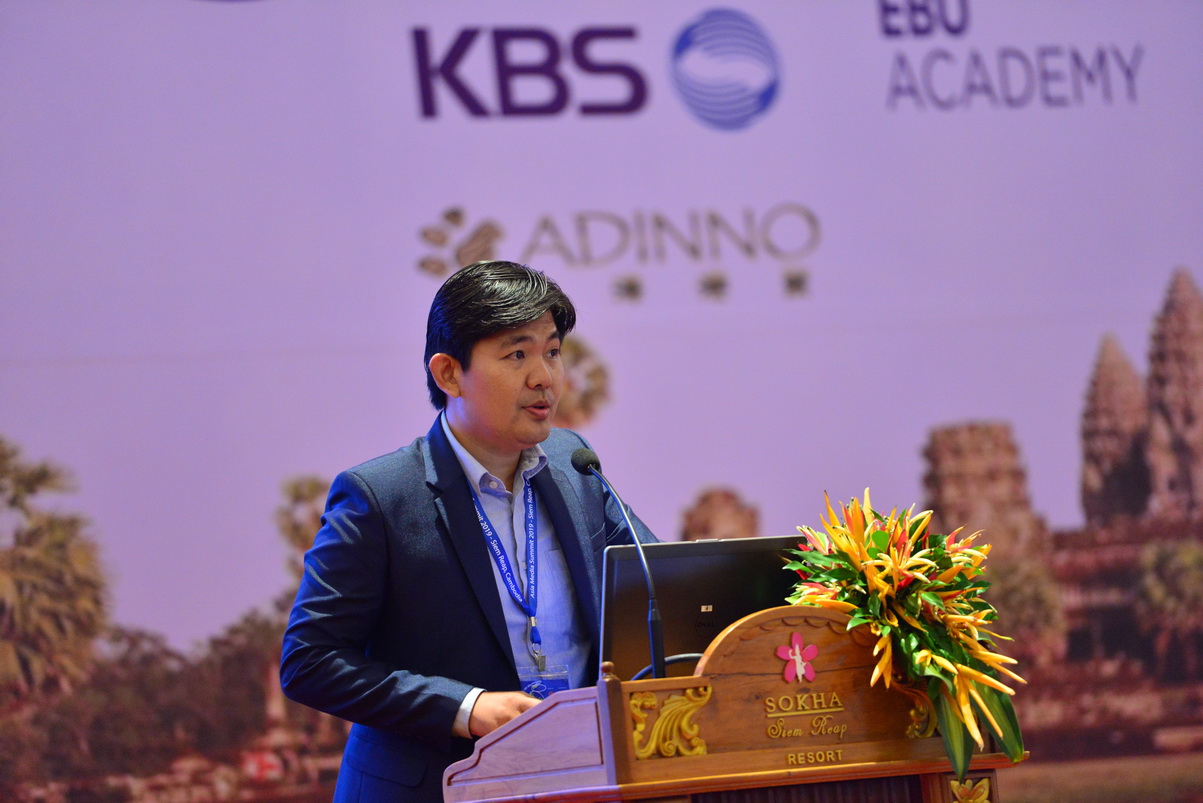
“We inspire with our content that focuses on model farmers, outstanding students and innovative people. We educate using deep interviews and meeting with experts, and we innovate by using cartoon, poems, and short videos, among others”, he said.
In generating revenues, Mr Delux said the company produces public relations pieces, banners and video spots. It also offers consultancy services and project and events management, and trainings.
The Deputy General Manager of CCTV.com, China, Ms Wei Xing, spoke about the concept of omnimedia era and media integration, which was the subject of an important speech by Chinese President Xi Jinping in early 2019.
She said that China is constructing the omnimedia communication pattern characterised by the integration of different types of media at the national level.
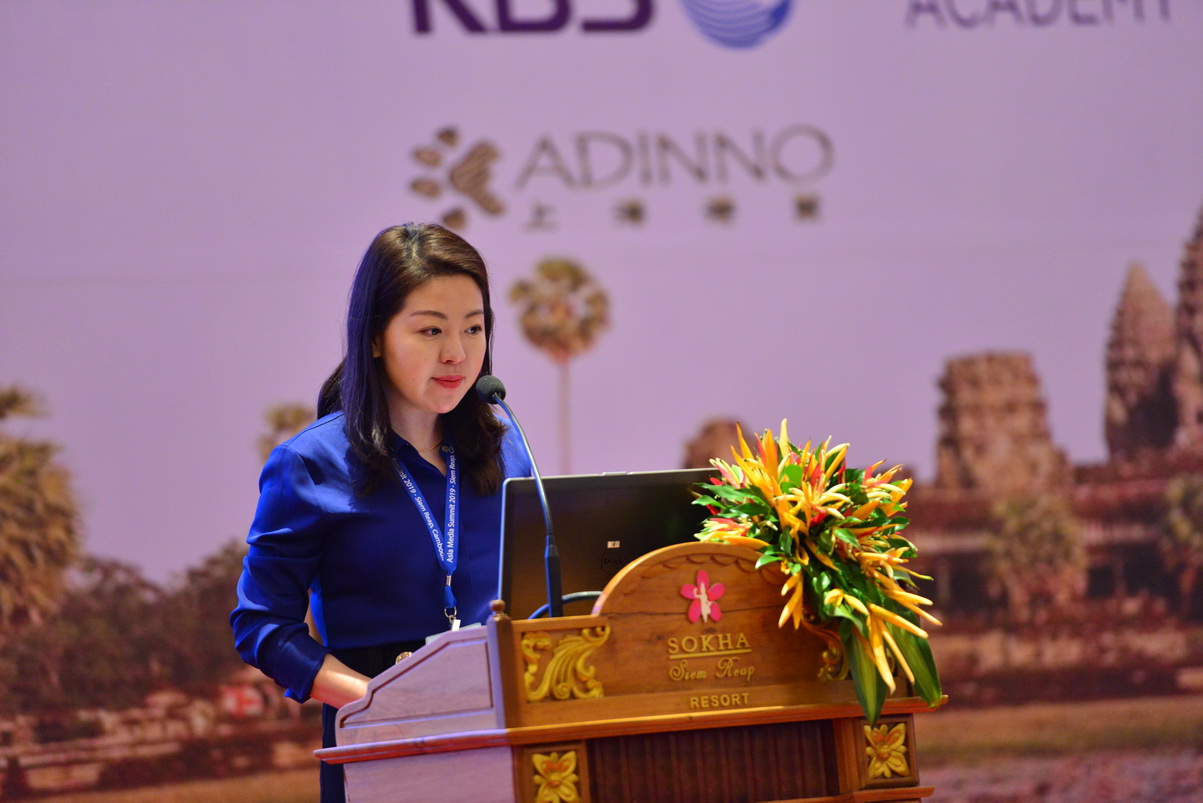
“The concept of omnimedia will assist the traditional and new media in breaking out of a zero-sum game framework, discover incremental markets, build up new markets and establish new profit models based on media integration”, she pointed out.
In the omnimedia era, she stressed that “the profit models of traditional and new media are not simply in complementary or competitive relationships, but rather as an integration of mutual growth, not as an arithmetical question of addition or subtraction, but rather a “chemical reaction”.
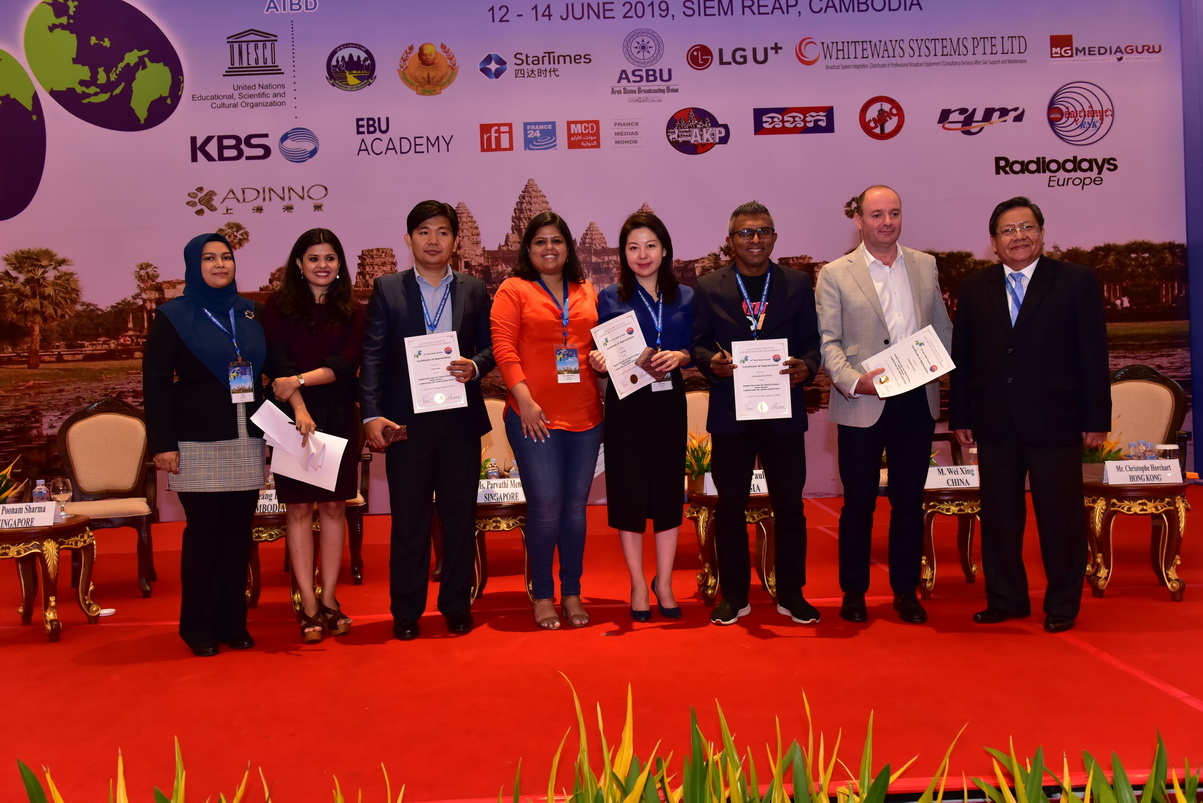
The speakers presented these perspectives at the 5th plenary session titled ‘Monetisation in traditional media/new media: competing or complementing’ at the Asia Media Summit held on 13 June 2019 in Siem Reap, Cambodia.
Winners of the World Television Awards (WTA) was announced in the Awards ceremony in Siem Reap, Cambodia. The event took place right before the closing ceremony of Asia Media Summit 2019.
WTA had two categories, and this year they focused on the most relevant issues in the respective areas, which was ‘Technology and Humanity – The Impact’ for the Category Humanity, while Category Science and Environment sought to focus on the pollution with the aptly titled ‘Taming the Sea of Plastic’.
The ceremony was grace by the presence of Honourable Minister of Information Cambodia H.E Dr Khieu Kanharith.
The ceremony began with Mr John Maguire Director of International Relations and Cooperation France Médias Monde, who served as the chairperson for the jury session, by giving an overview on the judging and the entries for this year, during his speech he remarked upon the necessity of such awards and for the participants to follow the brief of the categories.

Arab State Broadcasting Union (ASBU) was the main sponsored the Category Humanity. Mr Taleb Kadi Amin, Director of Arab League Arab States Broadcasting Union, Radio and TV Arab Training Center, delivered a speech on behalf of Mr Abdul Rahim Suleiman, Director-General of the Arab States Broadcasting Union (ASBU). The 1st place was won by MediaCorp, Channel News Asia, Singapore for the documentary ‘Becoming Human: Coding Morality’. Mr Chong Yew Meng who is the programme’s producer was presented the Awards’ trophy and certificate by Mr Saad Muhammed Al Juarias, Vice Chairman of ASBU.
Honourable Minister of Information Cambodia H.E Dr Khieu Kanharith, presented the award and the certificate for the winner of the Category Science and Environment. The Best TV Programme for this category was won by “Plastic Earth” produced by Mr Chul-hoon Song from KBS 1 from Korea. This category was sponsored by the LG Uplus.

During the ceremony Mr Fayyaz Shehryar, President AIBD and Ms Philomena Gnanapragasam, Officiating Director of AIBD accompanied Honourable Minister of Information Cambodia H.E Dr Khieu Kanharith on the stage and congratulated the award winners.
The runners-up for the World Television Awards are:
Category Humanity: Astropreneurs: To the Stars & Beyond by Inez Ana,
Mediacorp, Singapore,
Category Science and Environment: Trash Hero Thailand, Tlejourn
by Prasan Ingkanunt, Thai PBS from Thailand
]]>
The jurors are gathered in Kuala Lumpur for the 2-day judging session for the World TV Awards 2019. As last year, this year’s judging panel comprise industry experts, media professionals and senior TV producers.
Among the countries that entered the competition are; Bangladesh, Brunei, Fiji, Germany, Hong Kong, Kazakhstan, Korea, Maldives, Mauritius, Pakistan, Papua New Guinea, Singapore, Sri Lanka, Thailand and Vietnam.
There are two categories for the World TV Awards:
CATEGORY HUMANITY: The Best TV Documentary on Technology and Humanity – The Impact
CATEGORY SCIENCE / ENVIRONMENT: The Best TV Programme on Taming the Sea of Plastic
The winners and runners-up will be announced during the closing ceremony of Asia Media Summit 2019 in Siem Reap, Cambodia on 13th June 2019.
]]>