Ms Philomena Gnanapragasam, the Director of AIBD payed a courtesy call on the Honourable Secretary, Ministry of Information and Broadcasting (MIB), Shri Ravi Mital, IAS on the 15 January 2020, at the MIB Office in Shastri Bahwan New Delhi. Shri Ravi shared his insight on the changing trends of media and the Digital Age, and the further efforts by the Government of India on working closely with the international media organisation for the betterment of the Asia Pacific region.

Ms Gnanapragasam said that AIBD, as an international intergovernmental organisation, has a mandate to advise and educate its member governments and organisations on issues and trends shaping the media industry. The director added that AIBD looks forward to a more vibrant collaboration in the area of knowledge sharing in the region.
Elaborating on the AIBD ‘Anti Fake News Initiative’ the Director stated that it is important to empower the people with media literacy awareness and advocacy.
The insightful discussion ended with the Honourable Secretary agreeing to the plan of organising seminar or short conference on Fake News and Data Regulation outside Delhi. Mr Vikram Sahay, the Joint Secretary of MIB, was also present at the meeting.
Visit to Prasar Bharati House in Copernicus Marg, New Delhi
Next Ms Philomena Gnanapragasam, the Director of AIBD called upon Shri Shashi Vempati, Chief Executive Officer, Prasar Bharati. During the meeting the Director highlighted AIBD’s key activities and initiatives. Shri Vempati, discussed the many challenging factors on how to drive and monetise an organisation with an aging workforce.
The focal person for Prasar Bharati, Mr Sunil, Addl. Director General (Engineering) who is also the Directorate General Doordarshan and Mr Raman Kumar, Director in-charge of all the international relations for Prasar Bharati including Doordarshan and All Radio India, were also present for this meeting.

Visiting Doordarshan (DDI) and All India Radio (AIR)
A request to engage Indian experts for training from Doordarshan and having additional technical workshops to enhance capacity building was discussed during the meeting at Doordarshan. The Director reiterated that AIBD is happy to partner with DDI to organise such future collaborations in the region.
Meanwhile at the meeting in All India Radio, Dr Sangeeta Goel, Addl. Director General, suggested Workshop on Gender Sensitisation and Seminar on Media Literacy for future collaborations.
Visits to Broadcast Engineering Consultant (BECIL) and Consortium of Education (CEC)
The next day was reserved for the affiliate members of AIBD, with the first visit to Mr George Kuruvilla, the Chairman & Managing Director of Broadcast Engineering Consultants India Limited (BECIL), whereby both two sides discussed about possible partnerships in 2020 and beyond. The BECIL agreed to support AIBD in providing trainers/experts and consultancy for AIBD member countries in the field of broadcasting, telecommunications for the media and technology development in the region.
This was followed by a meeting in the IUAC Campus of the Consortium for Educational Communication(CEC), where Ms Gnanapragasam met Prof. Jagat Bhushan Nadda, Director CEC.
He was joined by his renowned team-Mr Nageshwar Nath, Joint Director (HW), Dr Sunil Mehru, Joint Director, Mr Navin Soi, Chief Administrative Officer and Mr K.S. Mahejan, Consultant. Prof Jagat shared the information on the establishment of CEC as one of the Inter-University Centres set up by the University Grants Commission (UGC) of India in 1993, focussing on Digitalised Higher Education with Content Across Diverse Disciplinary Stream. Ms Gnanapragasam spoke of how honoured AIBD is to be part of CEC`s vison to illuminate the path of digitalisation of higher education, to address the issues of equity, access and quality in higher education, through broadcast and non-broadcast media in India. She added that AIBD prepared to collaborate with CEC in any training activities and initiative for digital media and technology development in the region. 
AIBD/NABM Sub-Regional Workshop on Studio & Newsroom Automation in Kingsway Camp, 13-17 January 2020
AIBD in collaboration with Prasar Bharati and NABM conducted a Sub–Regional Workshop on Studio & Newsroom Automation in Delhi from 13 to 17 January 2020.

AIBD Director, Ms Philomena Gnanapragasam, and the Compliance & Strategy Operation Officer, AIBD, Ms Lee Lai Mee were present at the certificate awarding ceremony. The Director took the opportunity to thank the CEO for the successful organisation and conclusion of the workshop. Six foreign participants of the workshop had the honour of receiving their certificates personally from the CEO in his office.
After the training concluded, AIBD team met with the Addl. Director General NABM, Gp Captain Ashok Nigam and discussed on possible collaborations in future training activities
]]>
AIBD in collaboration with Prasar Bharati and NABM conducted a Sub–Regional Workshop on Studio & Newsroom Automation in Delhi from 13 to 17 January 2020.
AIBD Director, Ms Philomena Gnanapragasam, and the Compliance & Strategy Operation Officer, AIBD, Ms Lee Lai Mee were present at the certificate awarding ceremony. The Director took the opportunity to thank the CEO for the successful organisation and conclusion of the workshop. Six foreign participants of the workshop had the honour of receiving their certificates personally from the CEO in his office.
After the training concluded, AIBD team met with the Addl. Director General NABM, Gp Captain Ashok Nigam and discussed on possible collaborations in future training activities

AIBD/NABM Sub-Regional Workshop on Studio & Newsroom Automation in Kingsway Camp, 13-17 January 2020
AIBD in collaboration with Prasar Bharati and NABM conducted a Sub–Regional Workshop on Studio & Newsroom Automation in Delhi from 13 to 17 January 2020.
AIBD Director, Ms Philomena Gnanapragasam, and the Compliance & Strategy Operation Officer, AIBD, Ms Lee Lai Mee were present at the certificate awarding ceremony. The Director took the opportunity to thank the CEO for the successful organisation and conclusion of the workshop. Six foreign participants of the workshop had the honour to receiving their certificates personally from the CEO in his office.
After the training concluded, AIBD team met with the Addl. Director General NABM, Gp Captain Ashok Nigam and discussed on possible collaborations in future training activities.
]]>As Asia-Pacific Institute for Broadcasting Development (AIBD) has launched a year-long ‘Angkor Anti-Fake News Initiative’ a group of officials led by the Director, Ms Philomena Gnanapragasam, visited Singapore to learn and discuss about their recently enacted law- ‘Protection from Online Falsehoods and Manipulation Act 2019’ (POFMA).

The officials from POFMA, Ministry of Communications and Information, and Infocomm Media Development Authority (IMDA) were present during the meeting.
Ms Philomena said that AIBD, as an independent inter-governmental organisation, has a mandate to advice and educate its member governments and organisations on issues and trends shaping the media industry.
Speaking on ‘fake news’ the Director said a lot of the governments are considering introducing a legislation to deal with ‘fake news’. “A hastily made law could be detrimental in a democratic society. It is important to provide different perspectives to our members who are considering such a legislation to be put in place,” she said, adding that since Singapore has already passed a law it would be better to learn its best practices.
The officials from POFMA said that it wasn’t easy to come up with such a law. Various meetings and discussions with stakeholders at all levels were held before the enactment. It was also put up on public domain for feedback and suggestions, they said.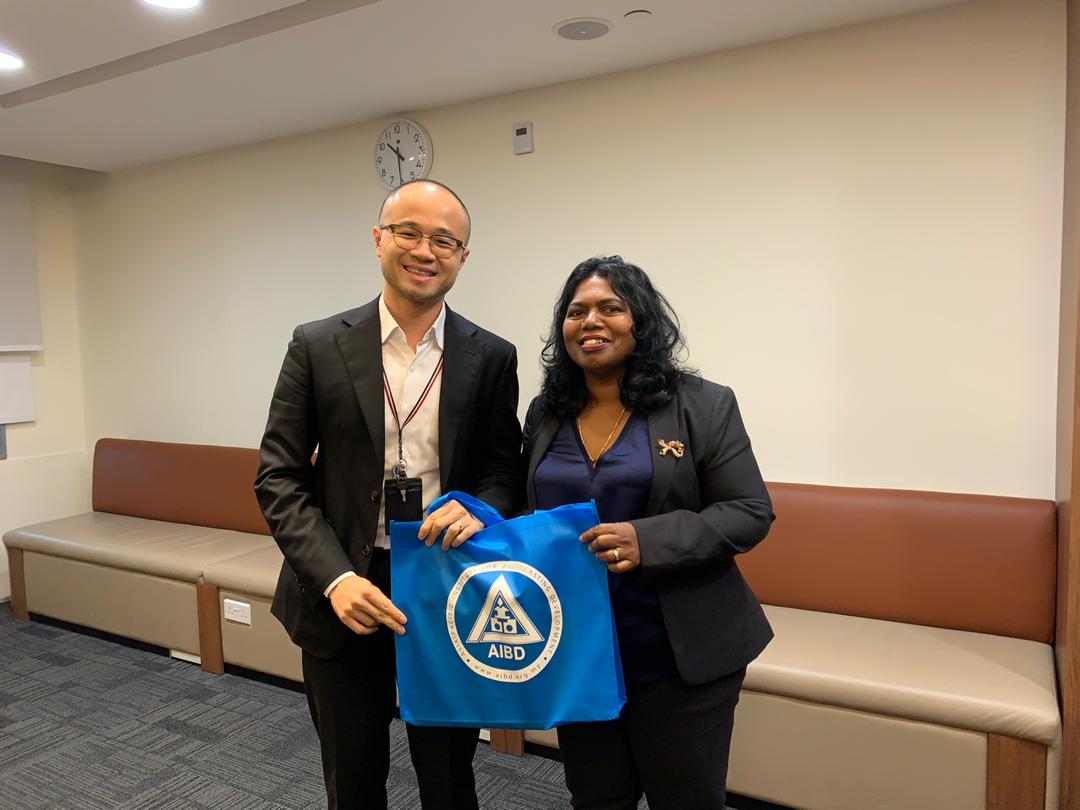
Ms Philomena said that AIBD is organising various activities on the issue in Kuala Lumpur, Malaysia and during the Asia Media Summit (AMS) in Kathmandu, Nepal next year. “As Singapore is a member of AIBD I would like to invite you all to come aboard this mission to share your best practices and experiences to other members”.
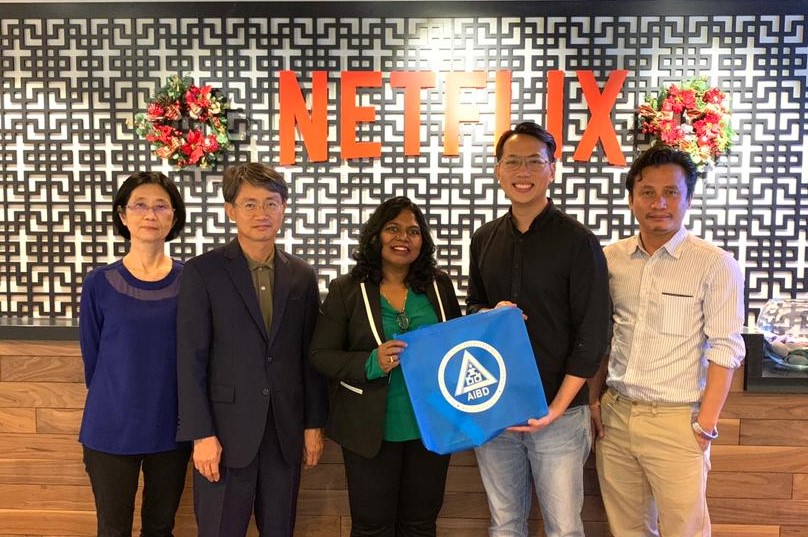
The AIBD officials also met with other members and partners during the two-day visit. At the Netflix, AIBD’s newest member, the two sides discussed about possible partnerships in 2020 and beyond. The Netflix agreed to support and be part of the Asia Media Summit in Kathmandu, Nepal next year.
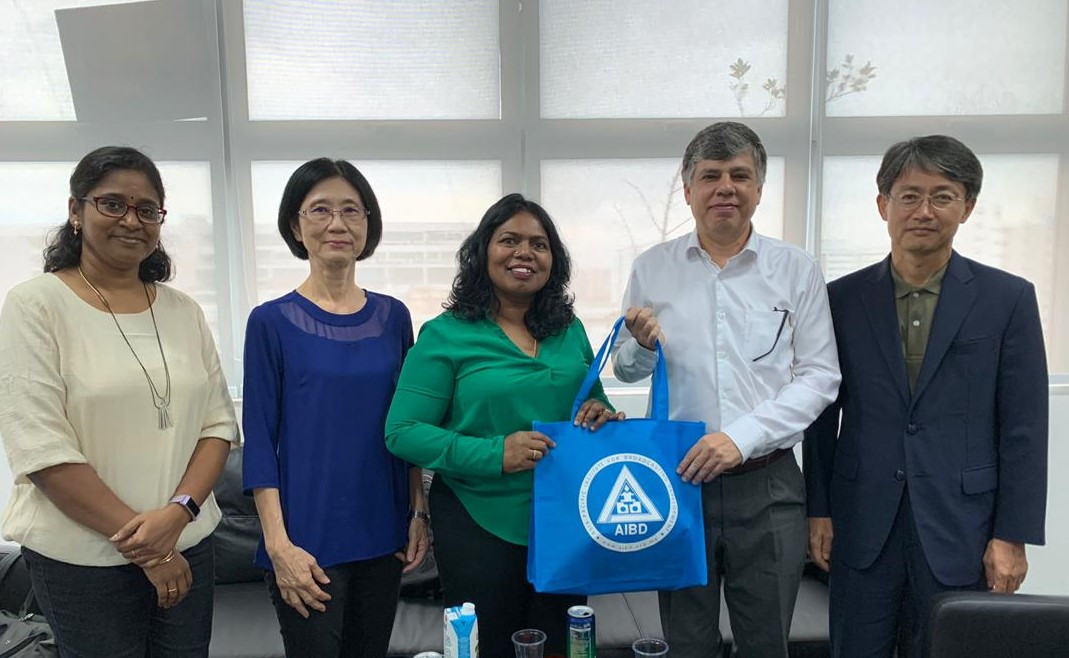
At the Whiteways Systems Private Limited, an affiliate member of AIBD, the officials exchanged ideas on how technology is shaping the broadcasting industry. Ms Philomena said that the theme of AMS 2020- ‘Envisioning Tomorrow’ is to look at the concerns, challenges and way forward for the broadcasting industry in the next decade. “The Summit will cover both the content and technological aspects of the change taking place,” she added. Mr. Aale Raza, the Director of Whiteways said that change is overwhelming and if broadcasters cannot embrace it they would soon become irrelevant. He added that he will be looking forward to taking part in the AMS 2020.
Meeting with the officials at the Channel News Asia, MediaCorp, the Director highlighted AIBD’s key activities and initiatives. Ms Philomena said that MediaCorp was once a very active member of AIBD. “We would like to renew and revive this partnership. CNA has received many of our AIBD awards. There is so much to learn from you and I have no doubt that it will be beneficial for both the parties”.
The team also met with the Broadcast Asia Group and discussed about AIBD’s participation in the BroadcastAsia 2020 in June.
]]>SKILLS AND TECHNIQUES OF SINGLE CAMERA PRODUCTION OPERATION
A good TV programme does not rely on the script and directing only. Photography/ videography also plays an important role to pull the audience. It is important for a cameraman to, not only able to understand the command of TV language but has creativity and the skill to handle a camera /camcorder independently. He may be an experienced cameraman in the News department and studio but situation is different for a single camera production operation where creativity and techniques of shooting in sequence (SIS) are amongst the determining factors of success for the production and the needs of post-production.
A three days In-Country Workshop on Single Camera Production Operation was successfully held on 24th -26th September 2019 in Bandar Seri Begawan, Brunei Darussalam. It was organized by Radio Television Brunei (RTB) with the collaboration of Asia-Pacific Institute for Broadcasting Development (AIBD). It was aimed to enable the ENG cameraman to acquire the skills and techniques of SCP Operations to become professional and creative besides upskilling the cameraman to multi-task in both SCP and MCP operation in the TV station.
A total of 25 participants who are mostly cameraman and technicians from various unit (OB, EFP, ENG, studio, lighting & audio) attended the 3 days workshop.
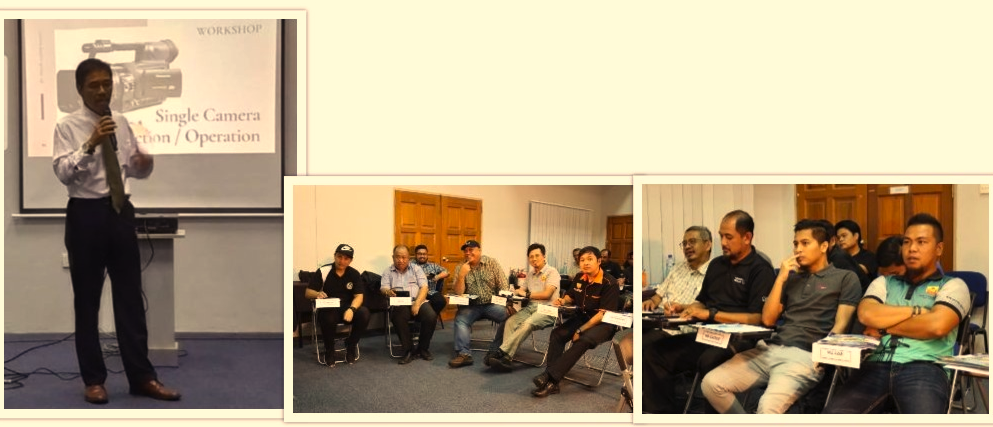
In this workshop, participants learned about the important parts and the switches of the camcorder and had hands-on sessions practicing the technique of shooting.
The characteristic of the lens, such as focal length & depth of field were also taught to the participants. This was essential as understanding characteristic of the lens will help the cameraman to become creative.
The fundamentals of a basic MCP and SCP operation were revisited whereby the participants were reminded about the importance of the preparation for pre-production i.e. to get idea, planning, storyboard, shooting list and to be clear of the use for basic shot of what is establishing shot, detail shots and cutaway shots.
The important rules of Orientation / 180degrees rules, Interview and VOX pop in television production and technique of shooting were also demonstrated in order to make participants really understood what was been taught.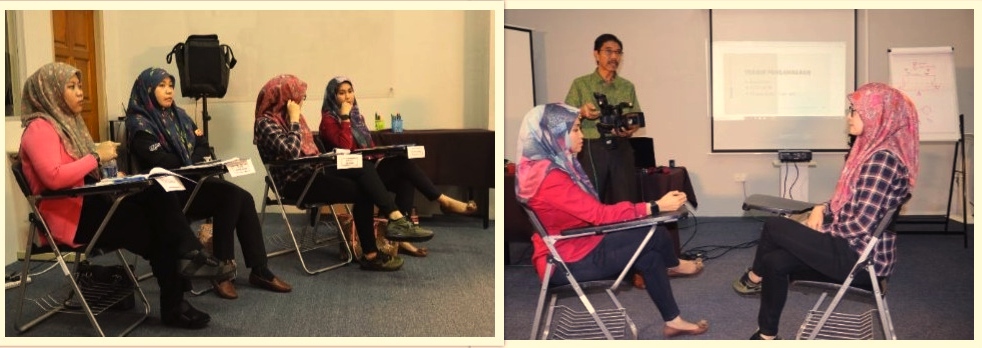
Shooting In Sequence ( SIS )
To understand SIS, the cameraman must have knowledge or expertise in dealing with camcorder and to understand the basic production rule such as:
– What & where to use basic shot / composition (rules of third)
– What is orientation / line of axis (180 degrees rule)
– What is cut away shot. (important during editing rule)
SIS technique can save time, storage and it helped the cameraman to be independent. To showcase what had been learned, the participants were divided into small groups and given a chance to make mini project each using SIS technique.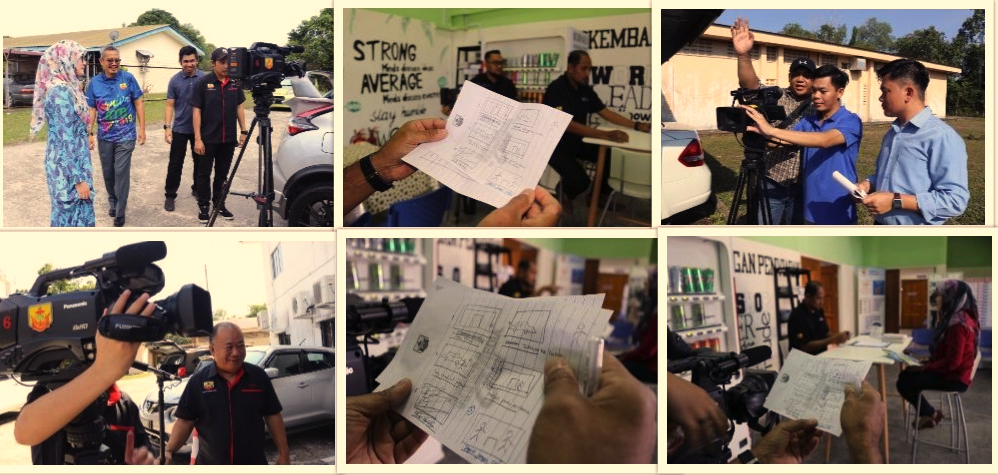
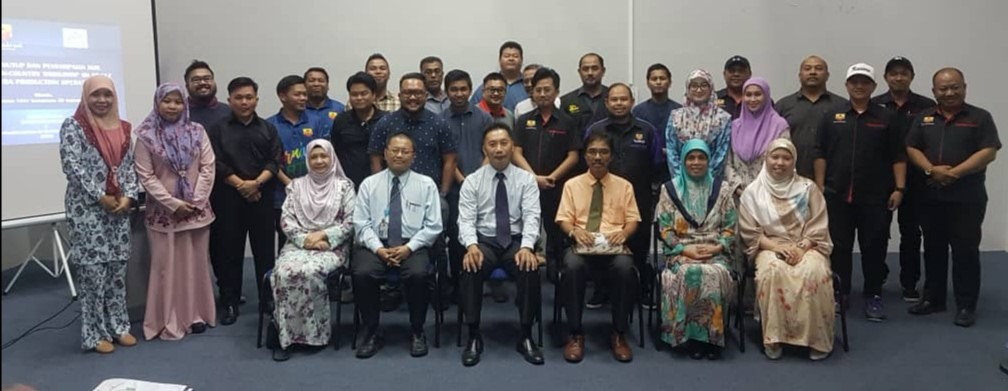
All thanks to the experience of the trainer, Mr Azhar Kamat, the workshop ended with the participants acquiring the understanding of the importance of Pre-production preparation, storyboards and shooting list, the purpose and impact of taking quality shot with minimal storage and most of all know how to operate the camcorder professionally and shoot independently.
The workshop was officially closed by YM Cheong Chee Keong, Acting Deputy Director of Training and Human Resource Department.
ADRENALIN RUSH & A WHOA! ADVENTURE- Novice Rafting & Drum Circle Team Bonding
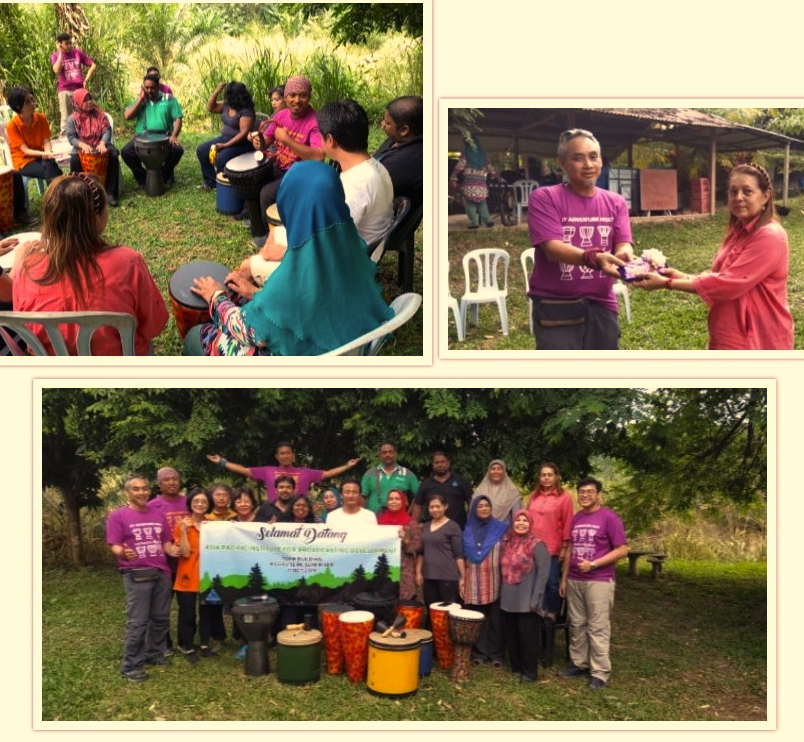
As work stress mounted and routine by day became energy sapping, the staff of AIBD took off to a great one-day team building trip in Kg Ulu Slim, Slim River on 11th October 2019. It aimed to give the staff a way to relax out of Kuala Lumpur and be with team mates to destress, energize and promote a deeper sense of camaraderie.
The team building programme also aimed to inculcate the work values & ethics such as team work, motivation, conflict resolution, risk taking, creativity,boost morale and leadership.
Cheered on by the saying ‘Never be afraid to try something new. Remember amateurs built the Ark, professional built the Titanic`, the majority of the staff voted to go on a white water rafting experience, to let the adrenalin rush and be WHOA by it!
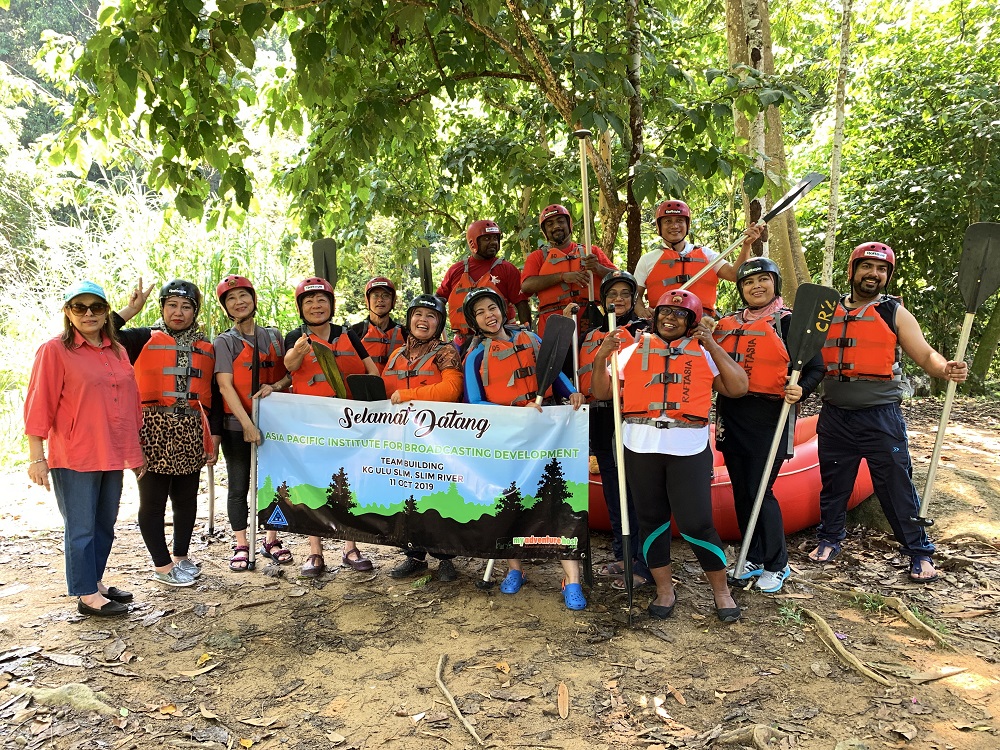
Kg Ulu Slim is just 140kms, about 1 1/2hours from Kuala Lumpur and the 7kms Slim River Rapids Grade3 (intermediate level river) was great fun, the adrenalin rush cannot be explained by words for novice rafters like us.
My Adventure Host team, led by Mr Izz Idris (Izni) assisted us with the logistics. He provided impeccable service throughout the day, along with the incredible warm-welcoming nature of his co-hosts that orchestrated the rafting activities. Our wonderful moments were even captured by his team offsider.
From the basecamp at Kg Ulu Slim, we had awesome 4WD experience to the Put- In Point at Kuala Tibang, about 4 kms from the basecamp. We had a chance to see some Orang Asli (indigenous people) villages along the way. At Kuala Tibang, besides getting our rafting equipment -helmet, paddles and PFD(Professional Floatation Device), a detailed briefing on safety and procedures of white water rafting was given by Ms Eja, the raft instructor and her team of river guides. We were then divided into 4 groups with 2 guides in each raft. Snacks and drinks were provided at pit-stop.
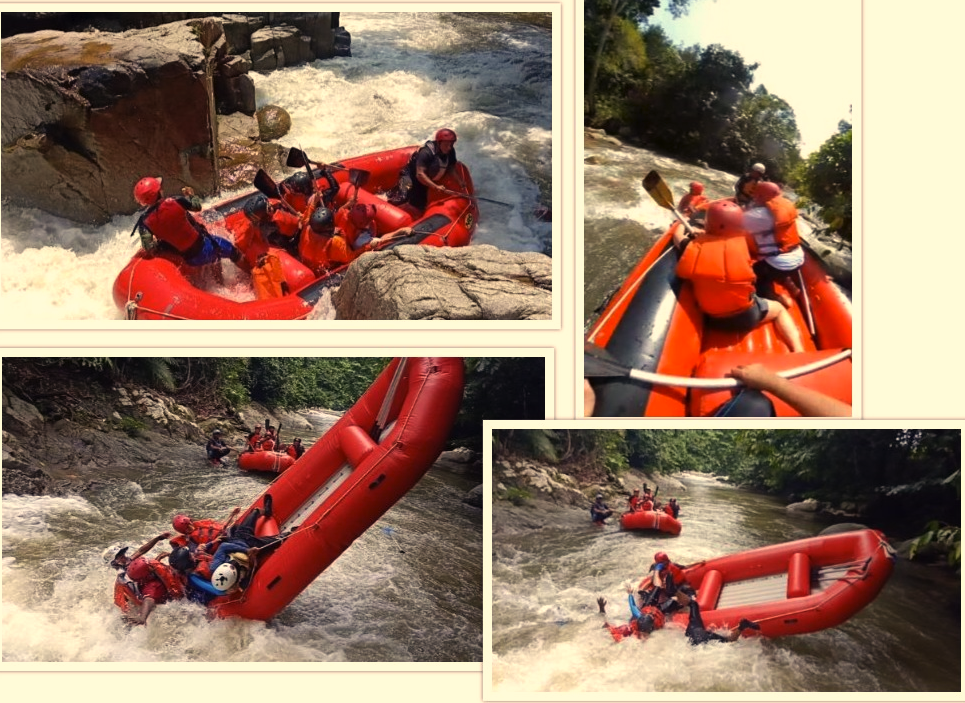
Cool! The river was as so-called`slim` that we had to squeeze through many rocks. Often, we had to jump from left to right-right to left in the raft and falling on top of each other. To reach the Take-out point at Post Bersih, Rule no. 1 learned- teamwork; Rule no.2-trust & obey/follow the instructions of the leader (river guide)- ALL RIGHT, ALL LEFT, ALL FRONT, ALL BACK, ALL IN and NORMAL. Rule No.3: team spirit and calm response when risk arise- when the raft overturned, somebody fell off the raft or succumbed to an over flipped and have to swim the last rapid before the take-out.

Drumcircle Team Bonding Activity
In this activity, drumming was used as the vehicle for creating connections among us and ultimately in the workplace. It uses rhythm to explore and inspire group empowerment, leadership and build better relationship. According to the drumming instructor, Mr Haiqal, drumming builds effective teams and inspires oneness towards a common goal.
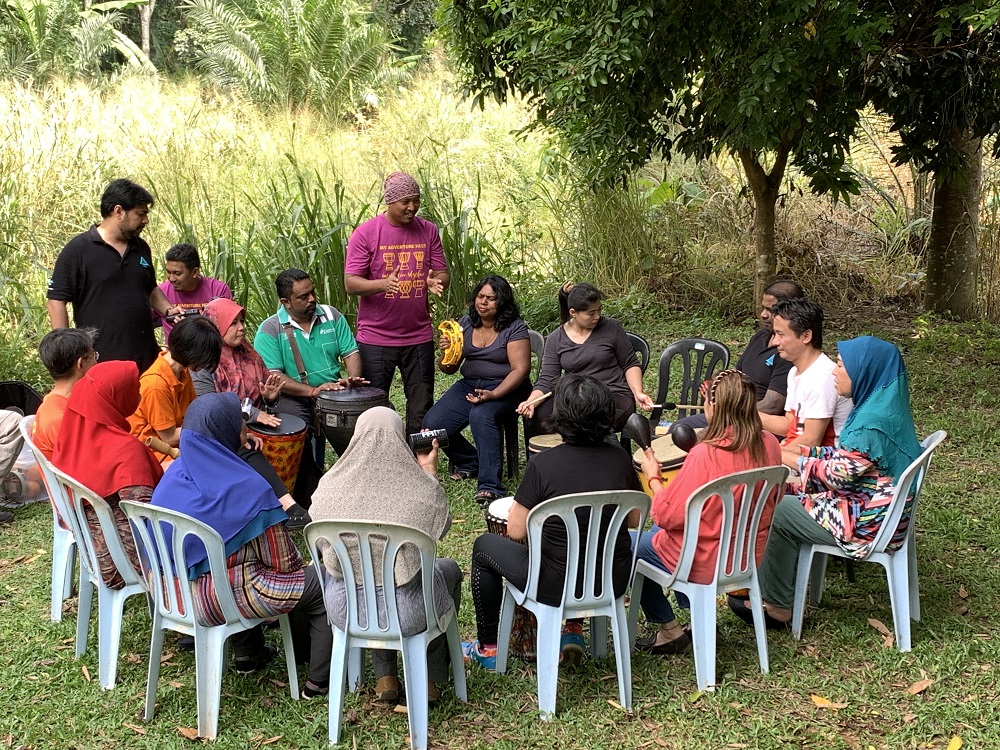
We had a fun time trying to create simple rhythms by playing percussion instruments in a drum circle. We were required to concentrate, listen and communicate through rhythms. Creating spontaneous rhythms and beats helps to reduce stress and releases negative energy besides promoting creativity.
We were amazed at how fast we can create simple rhythm and beat together as a team when we had to showcase our learnings in AIBD GOT TALENT presentation. Lalalala,lalalaah,lalalalah,lalalaah… was such an effective method to motivate team spirit working together besides increasing potential skills that we have.
All in all, in just a day, we really learned that when the going/crisis gets tough, there is no turning back but just follow the leader, stay focus towards oneness in achieving the common rhythm /goal and drop the past if the loads get heavier, just move on. For this moment, we have just supported the local communities to make a living from eco-based tourism.
]]>
Fake News: How Do You Know Which Is REAL or FAKE?
Fake News is fabricated news that is hot but can destroy trust, damage learning culture and create disorder if amplified and spread irresponsibly.
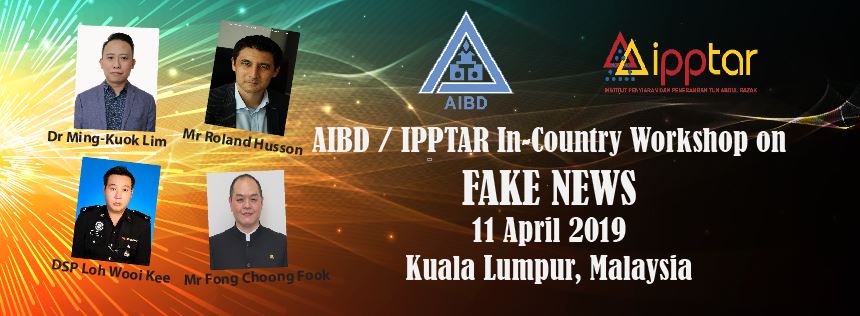
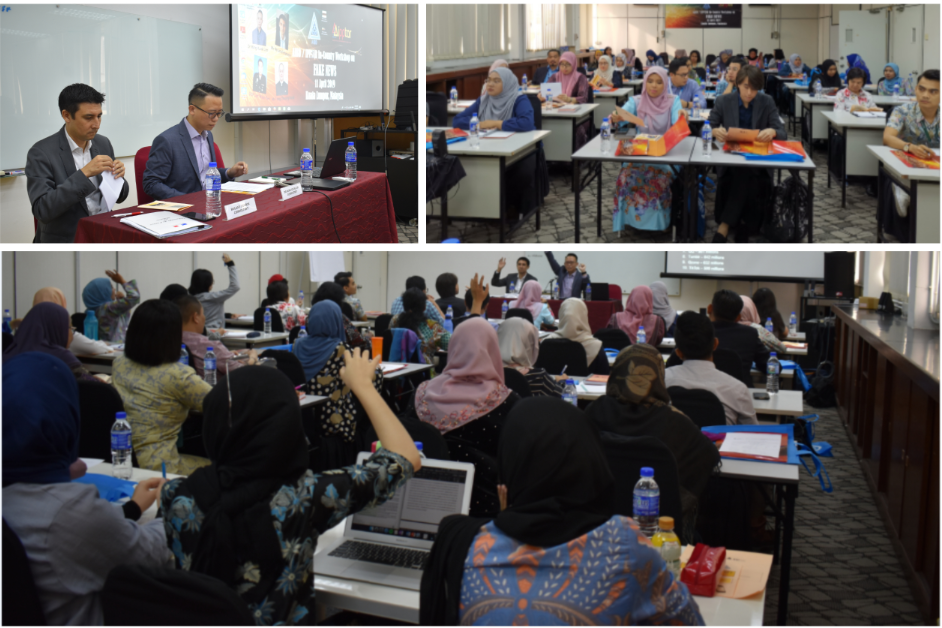
To stem the spread of fake news, on 11 April 2019, AIBD in collaboration with IPPTAR hosted a one day In-Country Workshop on Fake News in Kuala Lumpur. About 25 participants from RTM and 13 students from University Nottingham attended this workshop.
Four renowned speakers were invited to share their expertise on Fake News: Concerns, Challenges and Way Forward. They were Dr Ming-Kuok Lim, Advisor for Communication and Information, UNESCO, Jakarta; Mr Roland Husson, Counsellor for Cooperation and Cultural Affairs, French Embassy Malaysia; DSP Loh Wooi Kee, Legal Advisor, IGP`s Office, PDRM; and Mr Fong Choong Fook, Director LGMS, Cybersecurity.
UNESCO Media Credibility And Fake News
Dr Ming spoke of Facebook as the big market for fake news. He said, ” people do not equate Facebook as the social media gateway for fake news and hateful messages as people believe if you have nothing to hide, you should not worry”. But this is false as information/ metadata can be manipulated for target use. It has become difficult to differentiate between REAL or FAKE. To verify something online, one must be sure to look at the original source by using tools for verifying images / metadata.
He added ” everyone is entitled to his own opinion, but not to his own facts”, and accountability is the core principle and way forward for media credibility.
The participants were shown a fact- checking checklist as a guide to counter disinformation and misinformation.
European Experience On Disinformation
Based on European History, Mr Roland explained ” Disinformation and Prohibition of Disinformation is not new “. It was there before media existed. It was just rumour spreading without manipulation with the use of images as illustration, for example, French-Prussian War, 1870 and Timisoara (Romania, 1989). The French government had Anti-Fake News Law since 1881, which progressively extended and applied to all the new technologies: printed press, image (photography), radio, TV, and now on-line news (by Law 21 June 2004).
What is new? It is the disinformation on-line where new technologies and social media is used to disseminate disinformation. It is also the creation of disinformation by the affordable technologies that were now available; the amplification of disinformation through social and online media (algorithms, advertising models, fake accounts); and the dissemination by users.
Today the French Government is facing the concerns of deliberate and intentional acts of disinformation to gain political influence including on electoral results as like in the French Presidential campaign 2017.
The participants learned there is no single solution to address all challenges related to disinformation but a comprehensive approach is needed. This includes self-regulation with commitment by companies like Google, Facebook, Twitter; closure of fake accounts; transparency in political advertising; demonetization of purveyors of disinformation; includes an annex identifying best practices.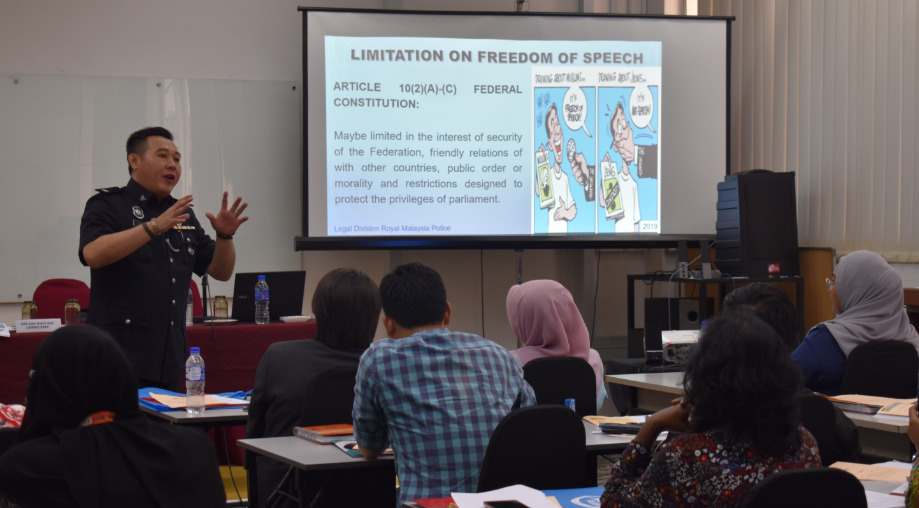
PDRM Perspective To Address Disinformation
DSP Loh explained there were two categories of fake news- Law and Order which involves criminal elements and Damage of Individual`s Reputation (mainly defamation).
Prior to the enactment of Anti Fake News Act 2018, there was Sedition Act, Penal Code (for religious offence, insults and annoyance), MCMC (non-sizeable offences). But with the enactment of Anti Fake news 2018, one legislation governed all offences relating to fake news. When the law was repealed on 16 August 2018, authorities resorted to the original legislations to curb anti fake news situation.
With advancing technology and the freedom of speech, it is now hard to address fake news for social harmony. Civil unrest and racial disorder can be reduced by responsible politicians, MPS, NGOs; individual responsibilities and public education on moral values.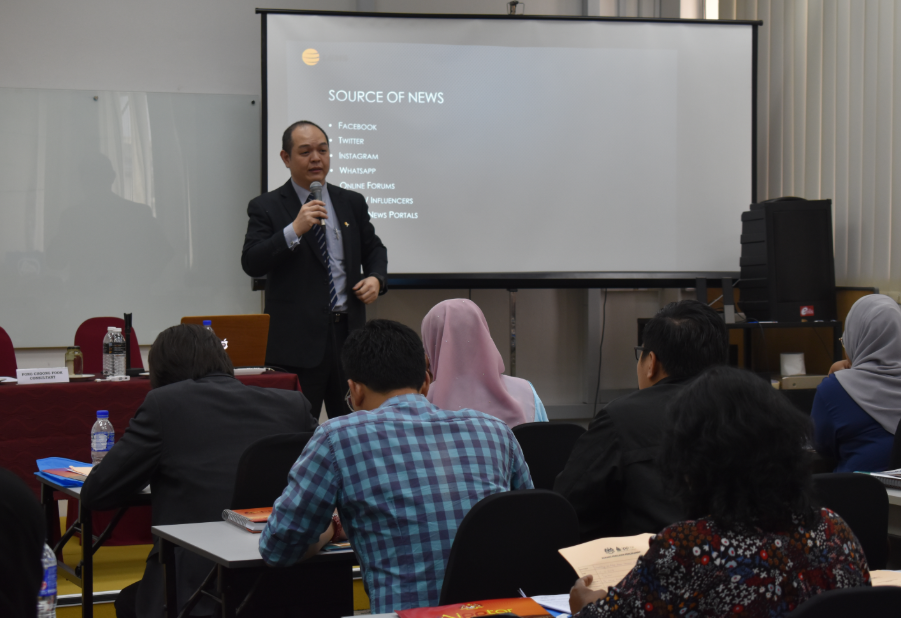
Cybersecurity: The Next Revolution Of Fake News
Mr Fong from LGMS raised the concern- Who Do We Trust given the Source of News are Facebook, Twitter, Instagram, Whatsapp, Online Forums, Blogs / Influencers and Online News Portals? How do we know which is REAL or FAKE?
He shared his insight of What is Deep Fake, the next revolution of Fake News. AI-technology is used as a technique for human image synthesis. It creates an
AI Information War where AI-generated medias are often indistinguishable from real photographs. With Deepfake Pornography, a victim’s face is digitally manipulated into adult film whereas in Deepfake Politics, candidates are shown as making inflammatory statements.
The rise of ‘deepfakes’ could open up a new front in the disinformation war as deepfake videos are easy to create. Video details, face and blinking frequency are challenging to detect.
Mr Fong remarked ” Social Media will remain as mainstream news source. Deepfake can have an adverse impact on the way we consume online content. We remain gullible but have to be more skeptical ” .
The participants were attentive throughout the day and remarked the knowledge gained will be their way forward now. Mr Maradi bin Ka`ab, Head of Research and Publication Cluster, Ipptar together with Ms Philomena Gnanapragasam, Acting Director of AIBD jointly presented the certificates at the close of the workshop.

17 participants from 13 countries across the Asia Pacific region converged in Beijing from 10 till 19 October 2018 for a 10 days workshop. In the AIBD / CGTNC Regional Workshop on Convergent Journalism, they were given deep insights into the emergence of media convergence; trends, experience and success story of China in media convergence; and innovation for media tools and products for handling the challenges of media convergence.
These participants who were reporters, journalists, editors, TV or Radio producers, research officers, Head of Social Media or News Unit; learned that no matter how great storytellers they were and no matter how attractive their stories were, the young people in their countries today are not listening to radio news or watch TV nor read newspaper but rather believe that social media is the truth. Their TV stations, public and private, and mainstream papers are facing hard time to keep business going.
Faced with the challenges of this New Convergent Media on Big Data Platform where contents were driven by Artificial Intelligent technology, these participants converged in this workshop which was mooted by AIBD and CGTNC to find answers. 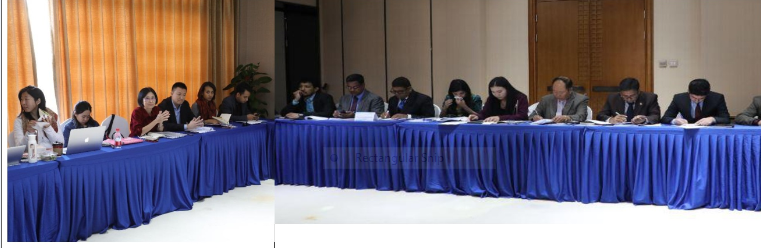
Many renowned professors from Communication University of China (CUC), Beijing were invited to the workshop to share their research findings on media convergence in what is called as China`s nutshell of prosumers (producers + consumers=prosumers).
The lecturers comprised of:
1. Mr Shen Hao, Professor and Director, Big Data Mining and Social Computing Laboratory, CUC who spoke in Session1: Data Value and Visual Communication in the Era of Big Data
2. Mr Cao Peixin, Professor, Faculty of Journalism and Communication, CUC for Session 2: Understanding China`s Media Theory: History and the Present
3. Mr. Cao Sanxing, Professor& Deputy Director, New Media Institute, CUC for Session 3: AI +VR + Blockchain, Innovation and Reformation of New Media in Broadcasting and TV
4. Mr Ye Mingrui, Assoc. Professor & Master Supervisor, Faculty of Journalism & Communication, CUC for Session 4: User Thinking and Media Product Transformation in Convergent Environment
5. Mr Zeng Xiangmin, Professor & Doctoral Supervisor, Faculty of Journalism & Communication, CUC for Session 5: Content Innovation of Media Convergent
6. Mr Fu Xiaoguang, Assoc.Professor & Master Supervisor, Television School, Faculty of Journalism & communivation, CUC for Session 6: Content Production L Logic Under Internet Thinking
7. Mr Ji Deqiang, Assoc.Professor of Communication, National Centre for Communication Innovation Studies, CUC for Session 7: Media Convergence with Chinese Characteristics
8. Ms Liu Shan, Assoc .Professor, School of Information Engineering, CUC for Session 8: Smart Labels Opens a New Era of Media Content Production.
The emergence of prosumers in New Convergent Media
Amongst highlights of the workshop, was Assoc. Prof. Ye Mingrui, who gave an overall view of Chinese Media organizations transforming in a convergent environment. In his paper –The Transforming Media Audience: New Media ? New Audience?– he said with the emergence of the new media, traditional media can no longer tell the audience/consumer the stories or news the way they want them to believe. In the present China`s new era, the role of audience/consumer has changed the digital media. The audience/consumers control the way news or story to be told, they have become the prosumers.
He spoke of the need to revisit the features of media audience in current informational circumstance, analyzing media users ‘behavior in the new media environment, understanding traditional media users and the newly emerged media users, and what kind of personal behavior should be recognized as producers in today`s information convergent environment?
For Assoc. Prof. Fu Xiaoguang, he believed that understanding online behavior from an active user perspective is the effective way to tell a story on internet. He said, “In the past, we just produce a report by locating a topic, prove the point and give a conclusion but today, we design online user behavior and pose a challenge to attract everybody to participate. On the internet you produce consumer behavior and consumers design the content. Audience has thus become prosumers.”
Role of Big Data and AI in New Convergent Media
The participants learned that consumer behavior is determined through collection of Big Data which is analyzed by Artificial Intelligent (AI) technology. According to Prof.Liu Shan, Big Data are structured data, digital satellite imaging, texts and scripts and are everywhere- in mobile handphone, computer, social media and network (FB, You Tube, Twitter, Flicker), website, purchase online, bank card, google site etc. Big Data captures and manages lots of information for use to analyze the content, profile people and product.
Meanwhile Prof. Ji Deqiang, advocated the sharp decline of the direct usage of traditional media, the quick increase of using social media as gateway to a convergent / integrated media environment, and a consumption-driven transformation that pave the way for the media convergence in China and A Digital China Vision 2019. However, he said not a single media system model has grasped the dynamics of media development in contemporary China this far yet.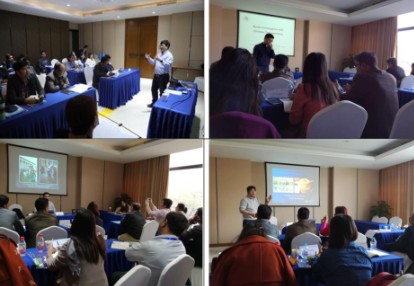
Prosumer– influenced content production in New Convergent Media
The participants had a few enriching on -sites learning. At the All New Media (OMNI) Centre of CUC TV, they were shown how CUC students were taught the course of using AI for big data analysis of social behavior and visualization for prosumer-influenced content production in a convergent environment. All were mesmerized with the innovation, technology and studio facilities for the convergence of internet and mobile media; amongst which were the panorama, virtual and 4K high tech studio (built in 2016), the command and control centre for big data information and real-time news analysis and production with cloud computer system.
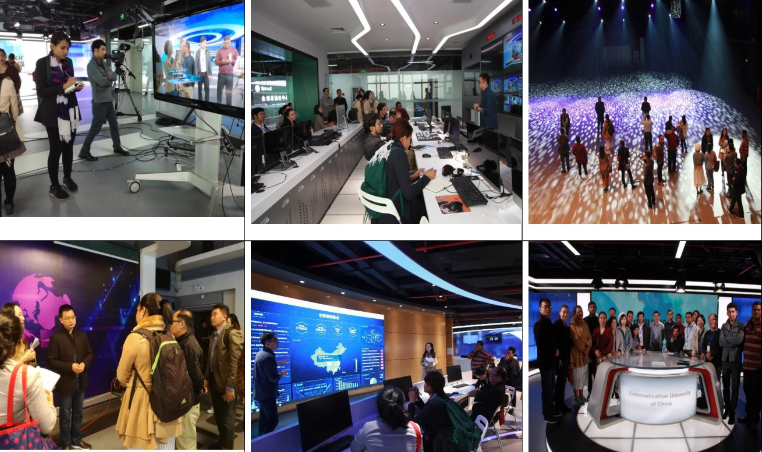
On-site learnings
At the China Daily site visit, the participants were informed that after 37 years in the traditional print media, China Daily has to turn towards the new digitalized media in a convergent platform. Their Deputy Director shared their challenges of how they had trained their conservative journalists to embrace new media to sustain business survival. All the participants seized every opportunity to learn and ask extensively in the classroom and on-site teaching.
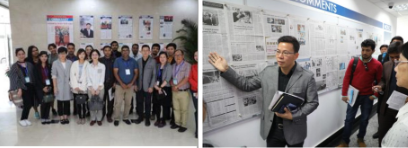
Besides these on -site learnings, the participants were also taken to some arts and cultural visits in Beijing – Yangliuqing Cultural town and the 798 Art District to witness the transformation of the Chinese artistic and creative society in the era of Big Data and convergence environment towards A Digital China Vision 2019.
The workshop ended with Mr Yike Qiao, Deputy Director of Strategic Investment Department, CGTNC, remarking that new media is just a technological platform while content is still the most important component in the past and for the era to come even though its prosumer– influenced content production. He reminded all that media needs big data for easier mass understanding and AI cannot substitute human. There is indeed no denying convergent journalism is the dawn among those who are still the traditional media and soon to be the way forward in the era of Big Data and AI for all.

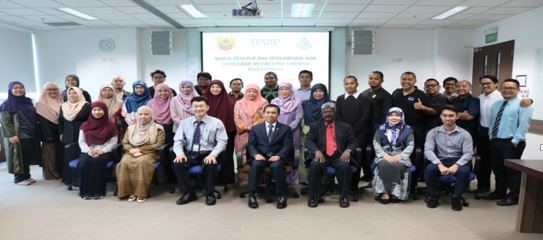
A four days In-Country workshop on Creative Content Development (CCD), which focuses on the big “HOW”, was successfully concluded in Bandar Seri Begawan, Brunei Darussalam. Jointly organized by Radio Television Brunei (RTB), Darussalam Enterprise (DARe) and The Asia-Pacific Institute for Broadcasting Development (AIBD), it was held from 17th – 20th September, 2018. 34 participants who were public broadcasters and freelance producers, local production houses and creative individuals who were involved in creation of TV programs, films and short videos,attended the workshop.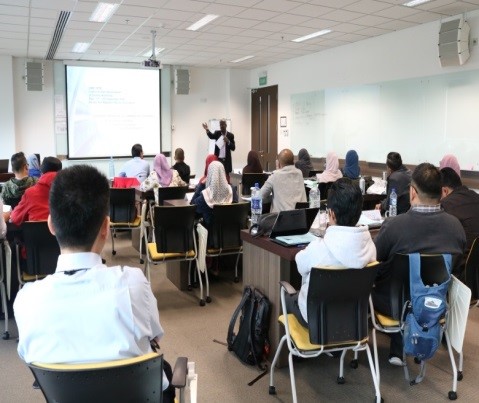
The recently concluded workshop was conducted by a re-known Malaysian Television Producer, Mr Jack Nadarajah with over 30 years of experience in the production of Entertainment Programmes. Mr Jack also served as RTM’s Strategic Director till his retirement in 2017.

It was aimed at encouraging creative individuals to explore and develop ideas to produce television programmes, films, short videos that are commercially viable, marketable and saleable for both domestic and international markets. CCD workshop also acted as a main platform for participants to share knowledge, skills and best practices by industry players in producing content for their target audiences.
The workshop was a follow-up from the 2-days’ RTB/AIBD In-Country seminar on Creative Media (Production Beyond Brunei) held on August 1st & 2nd, 2017. The aim of the previous seminar was focused on creating awareness on the growth of creative media industries in Brunei Darussalam as well as understanding the trends of TV programmes, films, and short videos regionally and internationally.
Successful Television / Film production requires an extensive (pre-production, production, post-production) planning and execution. The participants were exposed to various methods and approaches in creation of new ideas for content productions. Emphasis were also placed on research and demography to ensure that the content creation was really needed and to ascertain the age, background and abilities of those at whom it was targeted.
The participants were made to understand and always remember that knowing the audience is of utmost important and crucial for success while not understanding has led to the basic of many failures. Understanding audience needs is the key factor in developing content for television.
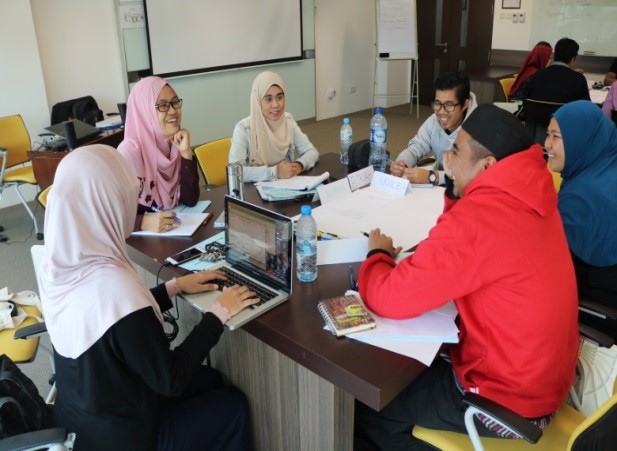
Group Project: Developing Ideas , Storywriting and Camerwork
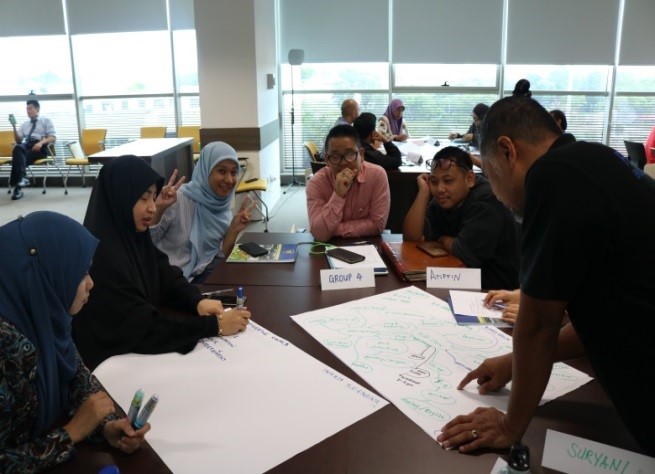
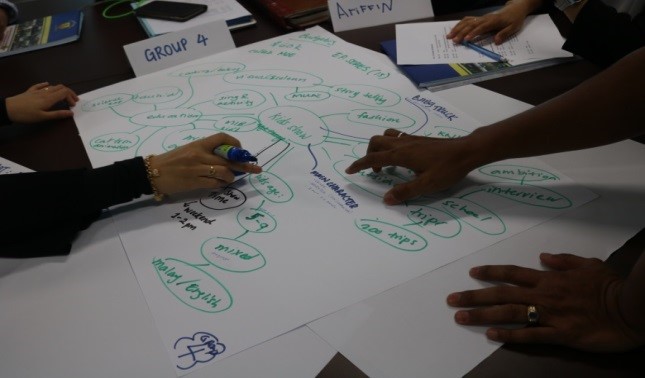
Besides new content creation or expansion of the existing content, participants were exposed to the idea of commercial strategy; a plan for building an audience by broadcasting, maintaining, and publicising consistently effective contents that inform, educate, entertain, or inspire to turn strangers into fans and fans into customers.
RTB Director Haji Muhammad Suffian Bin Haji Bungsu presented certificates to the 34 participants at the closing ceremony of the workshop held at the Design and Technology Building in Anggerek Desa, Brunei.
]]>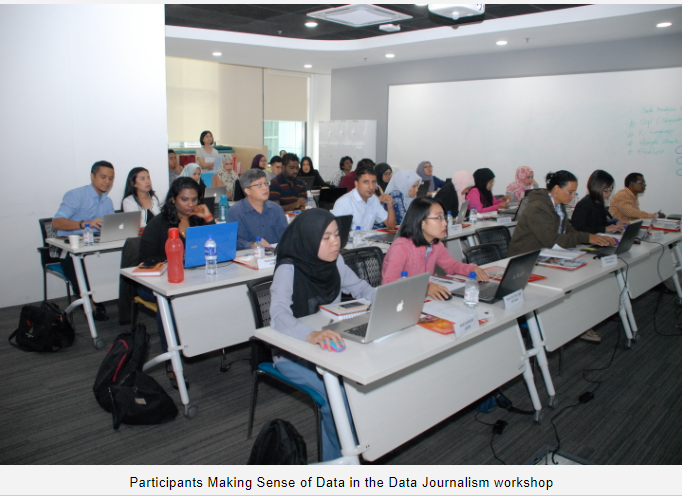
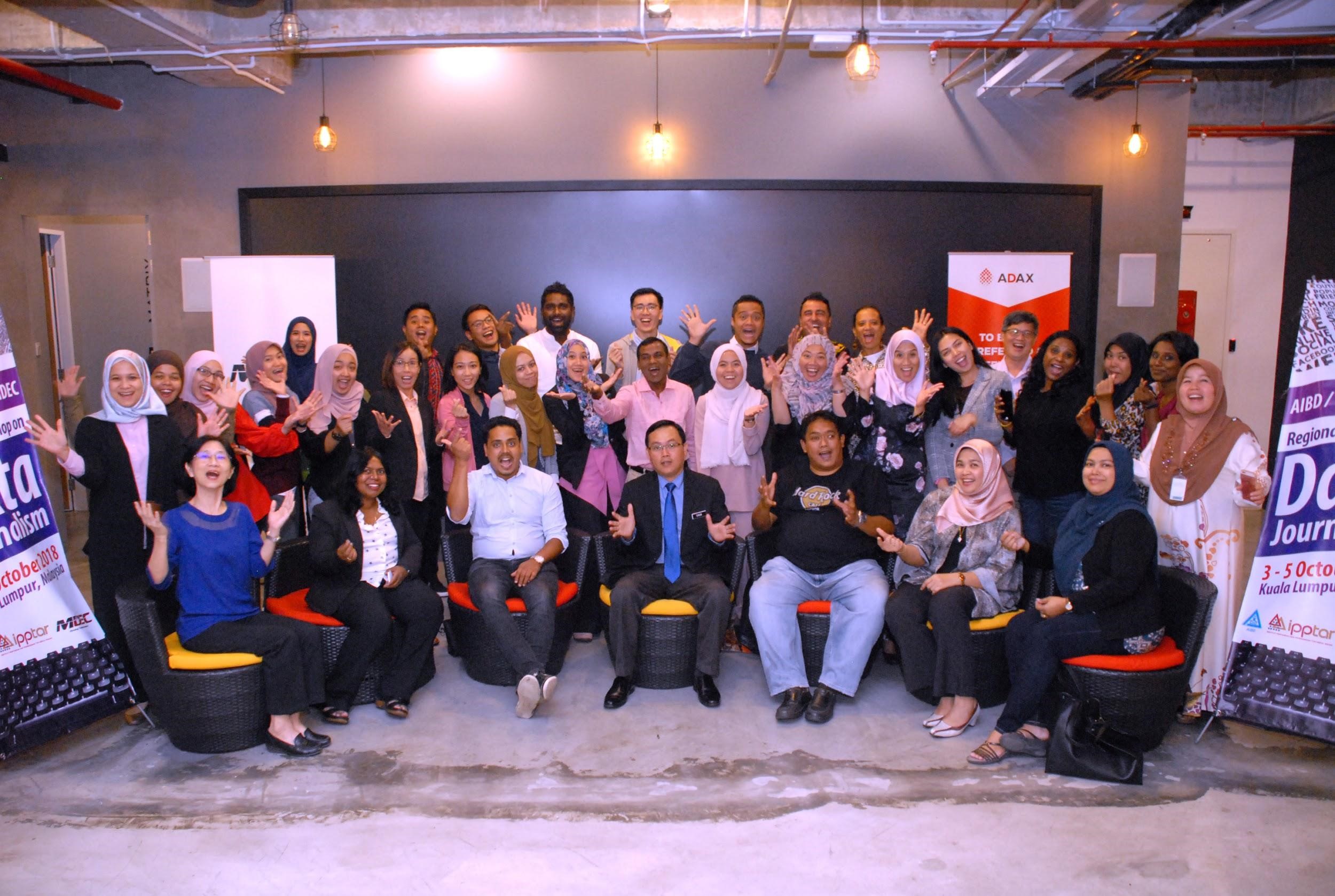
On 3rd October 2018, thirty-one Asia Pacific journalists gathered at ASEAN Data Analytics eXchange (ADAX) hall, Bangsar South, Kuala Lumpur, to participate in a 3 days Regional Workshop on Data Journalism. The workshop was jointly organized by Asia-Pacific Institute for Broadcasting Development (AIBD), Institut Penyiaran dan Penerangan Tun Abdul Razak (IPPTAR) and supported by Malaysia Digital Economy Corportaion (MDEC) .
The main aim of the three-day long workshop was to build the concept of data journalism among the participants, who were mostly from TV and Radio stations based in the Asia-Pacific region. Journalists from Radio TV Malaysia (RTM), Bangladesh, Fiji, Macau, Seychelles, Sri Lanka and Vietnam including the communication professionals at Malaysian government institutions participated in the workshop with great interest and enthusiasm.
Throughout the 3 days workshop, data analysis and creation of multimedia tools were taught intensively to the participants so that they would be able to apply the acquired set of skills upon returning to their newsrooms and respective media organizations. The painstaking focus were on how to access, refine, analyze and visualize the data – in order to tell compelling data-driven news stories as well to improve their regular news reporting skill.
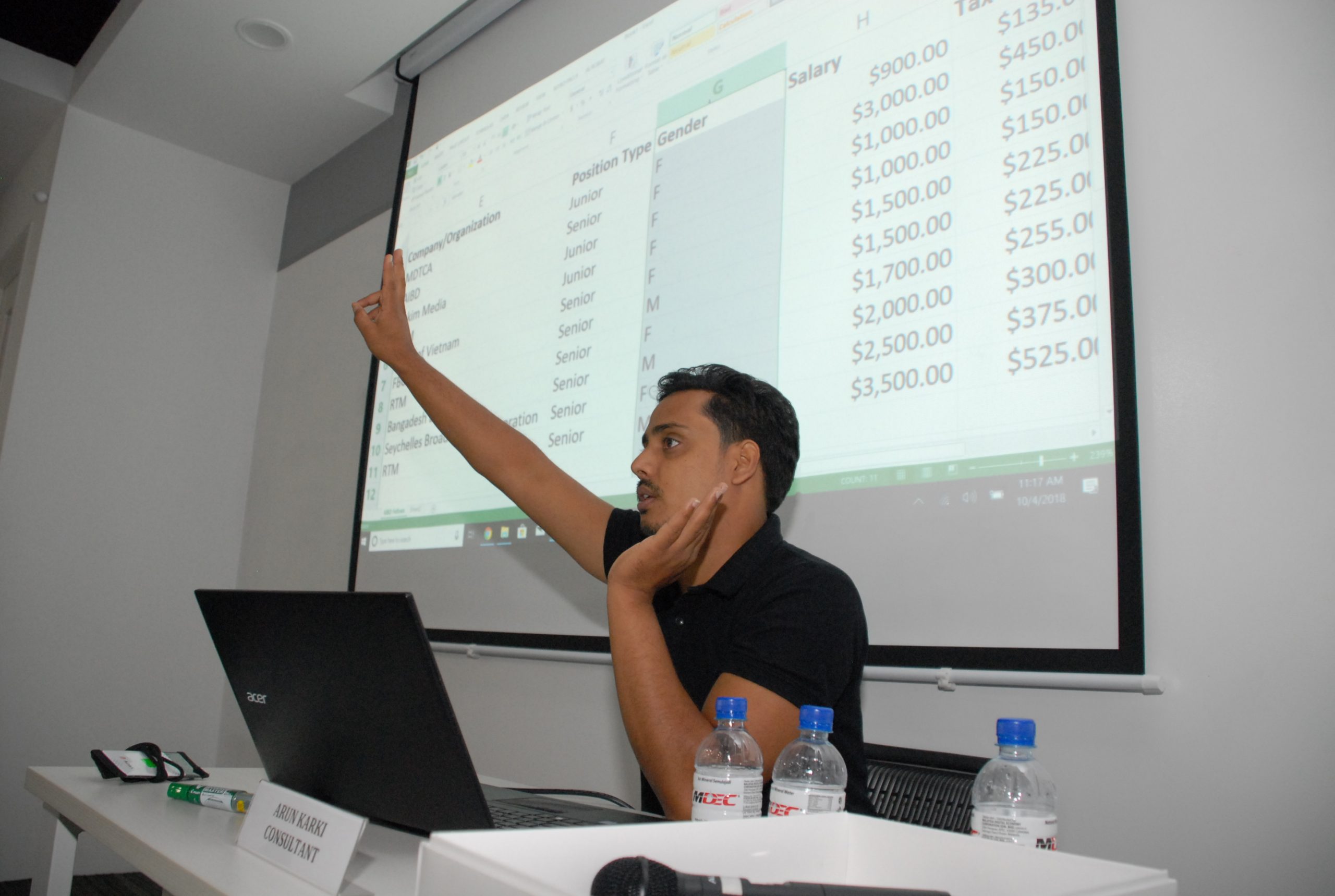
The data journalism workshop was entirely led by AIBD consultant Arun Karki, a data journalist and trainer based in Kathmandu, Nepal who has already trained dozens of journalists in Nepal.
During the workshop, the participants gained hands-on experience with practical exercise sessions that helped them to have a deeper understanding on how to interpret data to generate contents both for mainstream and social media to engage more audiences or viewers.
DAY I: From Evidence to Story
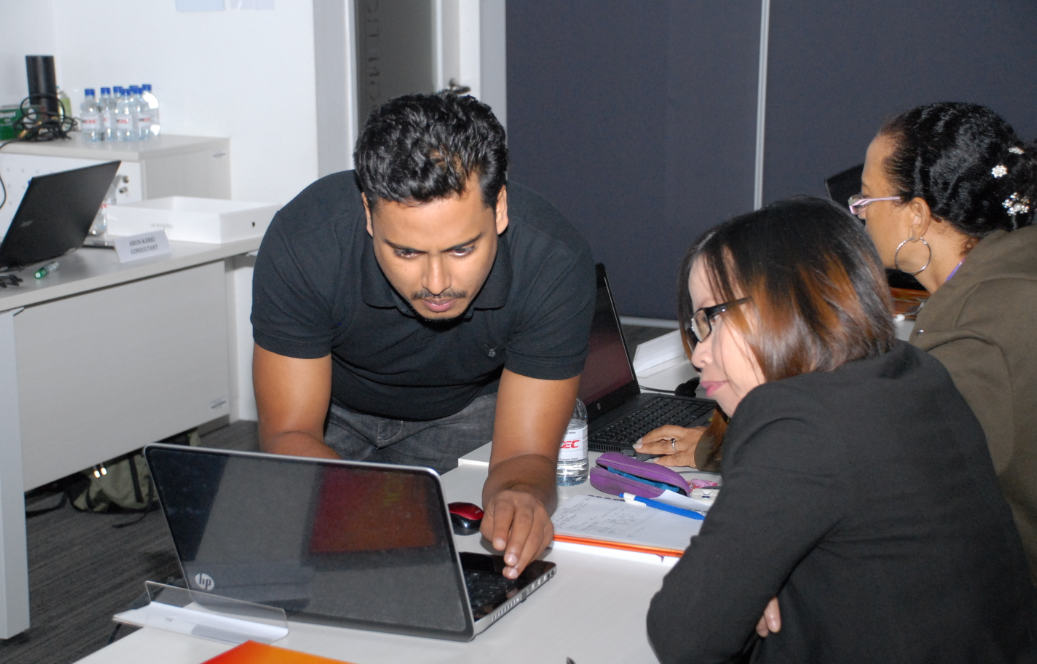
The first day began with the brief discussion on – what inspired participants to get into data journalism. After the fifteen-minute warm up talk, they learned the history of data journalism and its current emerging trend in Asia. They came to know the difference between data and statistics, and importantly why data journalism, an evidence based reporting, is important in today’s fast-changing digital era.
Before practicing or working with any data sets, they acquired the knowledge of ‘Open Data’ – the data available on public domain for the purpose of free use, reuse and redistribute. The participants then checked few online data portals of government and non-governmental agencies where sectorial data is publicly available, which journalists can access and dive deep to get stories.
Then came the next primary focus-the using of web based tools to scrape and convert different format data tables into a ‘open-source’ format – a universal and compatible one. They obtained techniques to extract tables from web portals and convert files into spreadsheet in order to make it analyzable.
The participants also learned Google advanced search techniques to find contents with specific criteria from searches and exploration of data sets and tables on the web.
Likewise, at times when the world is coping with fake news, the participants learned about the ‘Metadata’ – set of data that describes and gives information about other data – which is helpful to verify or fact-check the viral contents.
DAY II: Working with Excel data tables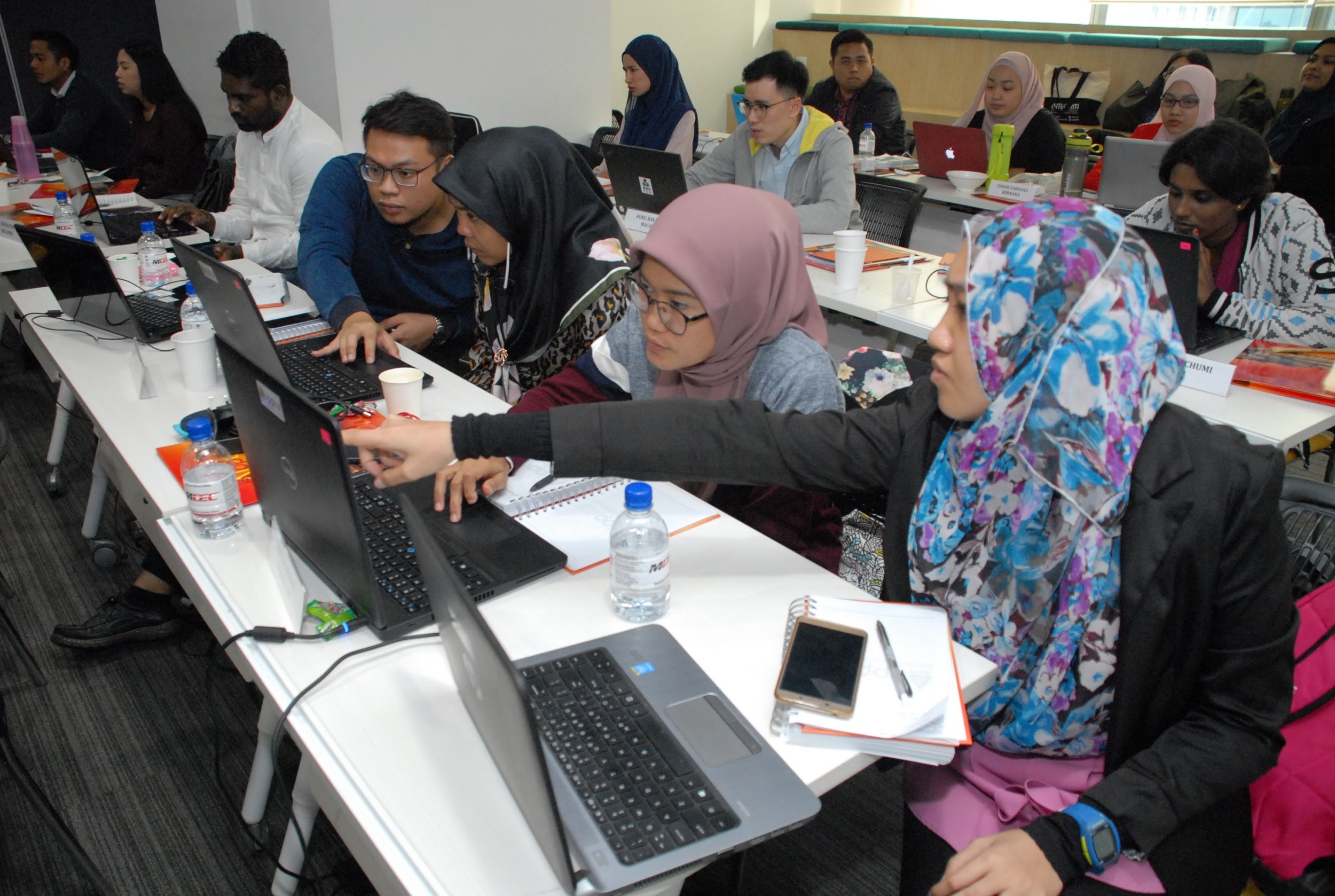
On 4 Oct, participants learned specific techniques to clean and analyze the excel data tables – in a journalistic way – as well as to bulletproof their story leads and statements. Firstly, participants learned to refine dirty or messy data tables. Secondly, it was sorting, filtering and making simple mathematical calculations inside the excel spreadsheet tables by applying different parameters or measureable factors. The participants first worked on self-created excel table in which they learned to use simple formulae, functions and calculations to get different results as per their story angles and requirements.
At the end of the second day, participants gained the solid understanding of four different steps or process of data journalism.
DAY III: Generating data-driven multimedia contents
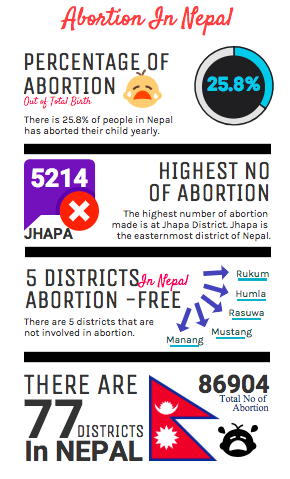
The last day of the workshop turned out to be working with infographics creation and mapping tools. The participants were taught to use Venngage, Infogram, JuxtaposeJS and Google Earth Pro to visualize the data they refined on second day of the workshop. Using such data visualization tools, all the participants were able to create infographics from the given datasets. They also generated interactive mapping contents showing frame comparisons of satellite imageries taken on different date and time.
Before the close of the workshop, the participants were able to showcase their beginners` infographics pieces which were so amazingly informative and creative even to the eyes of the consultant himself. 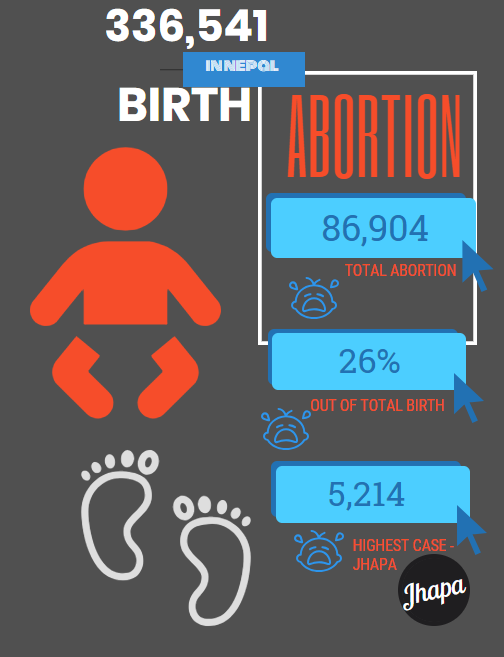
The workshop ended with the presentation of certificates by Mr Chuah Hin Chiew, Head of Academic, IPPTAR and Ms Philomena Gnanapragasam, Head of Programme Department, AIBD together with a few words of thanks and remarks from two workshop participants; Ms Telma Theresa Pool, Principle of Radyo Sesel (SBC), Seychelles and Mr Luqman Hakim Abd Malik, Head of Corporate Communication, Ministry of Domestic Trade and Public Consumers, Malaysia.