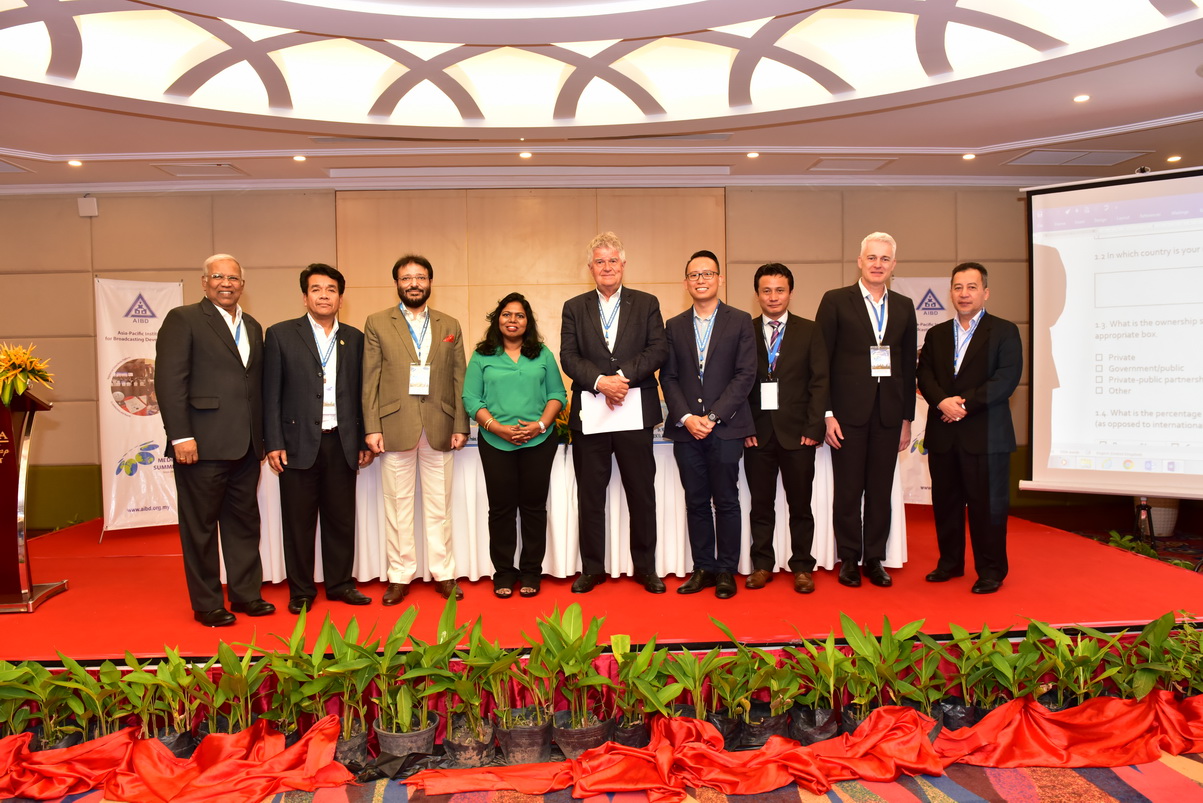
In what was the first ever virtual COVID Response Session for media, more than 150 journalists and experts from 24 countries came together virtually to share and learn from each other. The Asia-Pacific Institute for Broadcasting Development (AIBD), as a regional international intergovernmental body, and India’s National Academy of Broadcasting and Multimedia (NABM) organised the Session.

In her opening remarks, the Director of AIBD, Ms Philomena Gnanapragasam, said ‘no one expected that it (pandemic) will last this long’. More than one-third of the world is under lockdown and a Session like this was needed to discuss and share experiences and new ideas. “Along with the health workers, media too are at the frontline of this pandemic,” she said, adding that timely information can not only save lives but also prevent from getting the disease.
The Chief Executive Officer of India’ Public Service Broadcaster, Prasar Bharati, Mr. Shashi Shekhar Vempati, said the responsibilities of the media, especially that of Public Service Broadcasters, have significantly gone up, not only in providing news and information, but also to keep the citizens engaged at home so that the social distancing and lockdown remain effective.
One of the main speakers, Dr. Liviu Vedrasco, WHO COVID-10 Asia-Pacific Liaison based in Thailand, said humanity has not faced such a crisis in the last 100 years. The closest one, he said, was the 1918 influenza pandemic. In this crisis, the ‘whole of society’ must respond, and without that it would be difficult to contain the pandemic, Dr Vedrasco opined.
He highlighted ‘Five Principles’ as the foundation of a United COVID-19 response system. The first one he said was the ‘Whole-of-Society’, in which all governments, businesses, and civil societies must communicate and come together. The second one; there should be ‘Readiness at all levels’. The third one, according to Dr. Vedrasco is an important one; Critical Interdependencies. He said attention must be given to nine critical sectors (Food, Water, Health, Energy, Transport, Finance, Telecom, Law and Order, and Defence), regardless of the level and size of a country. “Failure of one or more of these services can have major economic, health and social consequences”.
The last two ones, equally important, he added, were ‘severity-based response’ and ‘respect ethical norms’ by protecting the vulnerable and disadvantaged sections of the population.
On the role of media during a crisis like this he suggested three distinct areas; to simplify public health authorities’ messages, report on government response and communities reactions, and bring into public consciousness the positive stories of extraordinary solidarity, passion and generosity.
The risk is real, said Dr. Ming-Kuok Lim, Advisor for Communication and Information, UNESCO Office in Jakarta. “The potential of getting infection and infecting others must be considered when reporting from locations,” he highlighted. In a crisis like this the journalists, he added, must familiarise themselves with all the recommendations provided by health officials. The emotional and psychological health while on assignments can emotionally draining, and therefore, the journalists should be aware of their own mental health, he said.
Speaking from the disaster management perspective, Dr. Surya Prakash, Head of Geo-meteorological Risk Management Division of India’s National Institute for Disaster Management (NIDM), said there is a need for international and national collaborations, command and control systems for effective response and recovery. Since there is a lack of international frameworks to manage this criss, he suggested taking advantage of the SENDAI Framework for Disaster Risk Reduction 2015-2030, where 190 countries are signatory to it.
The Assistant Professor at National of Mental Health and Neurosceinces in India, Dr. Jaya Kumar, stressed on the need to incorporate psychosocial counselling and support in a crisis like this where people are forced to stay indoors with minimum interactions. “There should be psychosocial monitoring and helplines created at centre, state and district level,” he suggested.
The Experience Sharing Session
Media experts from Hong Kong, Korea, India, and France shared their experiences on how their Channels and Countries are doing in its fight against the pandemic.
Showing the visuals of how his reporters reported from the where the virus first surfaced, the City of Wuhan, Mr Haibo Huang said it took two days to prepare his team to be sent to Wuhan when China announced the lockdown. He is the Deputy Head of Phoenix Chinese Channel based in Hong Kong. He said during a disaster like this media outlets must take calculated risk, and prepare for almost everything. He said his Channel sent 2 teams to Wuhan and did comprehensive reporting from various locations.
At Korean Broadcasting System (KBS), Dr. Kim Youngyiil, Project Manager of EBU and AIBD, said they have established a ‘Integrated Newsroom’ to respond to COVID outbreak. He said it is an initiative to fight against ‘infodemic’ with special kinds of programming. “There is special live programming called ‘Let’s Fight the Corona Virus, where it goes beyond numbers and statistics”. He added that behind these numbers and statistics are actual people. “We show real people, real faces and deliver strong, powerful and positive messages”.
In India, as Bollywood actors and Cricketers are very popular, the national broadcasters have used them to deliver important messages. The Director General of Doordarshan News, Mr. Mayank Agarwal, said they also instituted daily call-in programmes with medical experts to answer people’s queries and a special COVID-19 tracking shows. The Additional Director General of Doordarshan, Mr P.K Subhash, besides airing information and education campaign materials they have re-introduced some of the very popular TV serials of some 20-30 years back. “We have got huge positive response and our viewership has reached 50 to 60 million,” he added.
In France too, more than 75 percent of the airtime is dedicated to corona virus through information, education and entertainment, said Mr Frederic Alliod, who is a regional attache’ for Film, TV, Radio and New Media in Cambodia, Laos, Myanmar, Thailand, and Vietnam.
In New Zealand, the Prime Minister herself along with relevant officials give press conference every day at a given time, leaving not much room for misinformation, said Dr. Amal Punchihewa, a media consultant (engineer) and an adjunct professor.
The Session was also live streamed on Facebook for those who could not register on time. In some organisations it was projected on a large screen so that more people could follow the Session.

AIBD has been conducting series of COVID Response Sessions for our member organisations. One of the main objectives of the Sessions is to bring together so that the best practices, experiences, knowledge and resources could be shared among the members. The Session is scheduled to be held on 30th April, at 2 PM Malaysian Time. Speakers from Australia, China, Latin America and Russia will be share their experiences as well. Besides sharing ideas on COVID crisis management, the Session, will also discuss about content sharing among others.
In what was the first ever virtual COVID Response Session for media, more than 150 journalists and experts from 24 countries came together virtually to share and learn from each other. The Asia-Pacific Institute for Broadcasting Development (AIBD), as a regional international intergovernmental body, and India’s National Academy of Broadcasting and Multimedia (NABM) organised the Session.

In her opening remarks, the Director of AIBD, Ms Philomena Gnanapragasam, said ‘no one expected that it (pandemic) will last this long’. More than one-third of the world is under lockdown and a Session like this was needed to discuss and share experiences and new ideas. “Along with the health workers, media too are at the frontline of this pandemic,” she said, adding that timely information can not only save lives but also prevent from getting the disease.
The Chief Executive Officer of India’ Public Service Broadcaster, Prasar Bharati, Mr. Shashi Shekhar Vempati, said the responsibilities of the media, especially that of Public Service Broadcasters, have significantly gone up, not only in providing news and information, but also to keep the citizens engaged at home so that the social distancing and lockdown remain effective.
One of the main speakers, Dr. Liviu Vedrasco, WHO COVID-10 Asia-Pacific Liaison based in Thailand, said humanity has not faced such a crisis in the last 100 years. The closest one, he said, was the 1918 influenza pandemic. In this crisis, the ‘whole of society’ must respond, and without that it would be difficult to contain the pandemic, Dr Vedrasco opined.
He highlighted ‘Five Principles’ as the foundation of a United COVID-19 response system. The first one he said was the ‘Whole-of-Society’, in which all governments, businesses, and civil societies must communicate and come together. The second one; there should be ‘Readiness at all levels’. The third one, according to Dr. Vedrasco is an important one; Critical Interdependencies. He said attention must be given to nine critical sectors (Food, Water, Health, Energy, Transport, Finance, Telecom, Law and Order, and Defence), regardless of the level and size of a country. “Failure of one or more of these services can have major economic, health and social consequences”.
The last two ones, equally important, he added, were ‘severity-based response’ and ‘respect ethical norms’ by protecting the vulnerable and disadvantaged sections of the population.
On the role of media during a crisis like this he suggested three distinct areas; to simplify public health authorities’ messages, report on government response and communities reactions, and bring into public consciousness the positive stories of extraordinary solidarity, passion and generosity.
The risk is real, said Dr. Ming-Kuok Lim, Advisor for Communication and Information, UNESCO Office in Jakarta. “The potential of getting infection and infecting others must be considered when reporting from locations,” he highlighted. In a crisis like this the journalists, he added, must familiarise themselves with all the recommendations provided by health officials. The emotional and psychological health while on assignments can emotionally draining, and therefore, the journalists should be aware of their own mental health, he said.
Speaking from the disaster management perspective, Dr. Surya Prakash, Head of Geo-meteorological Risk Management Division of India’s National Institute for Disaster Management (NIDM), said there is a need for international and national collaborations, command and control systems for effective response and recovery. Since there is a lack of international frameworks to manage this criss, he suggested taking advantage of the SENDAI Framework for Disaster Risk Reduction 2015-2030, where 190 countries are signatory to it.
The Assistant Professor at National of Mental Health and Neurosceinces in India, Dr. Jaya Kumar, stressed on the need to incorporate psychosocial counselling and support in a crisis like this where people are forced to stay indoors with minimum interactions. “There should be psychosocial monitoring and helplines created at centre, state and district level,” he suggested.
The Experience Sharing Session
Media experts from Hong Kong, Korea, India, and France shared their experiences on how their Channels and Countries are doing in its fight against the pandemic.
Showing the visuals of how his reporters reported from the where the virus first surfaced, the City of Wuhan, Mr Haibo Huang said it took two days to prepare his team to be sent to Wuhan when China announced the lockdown. He is the Deputy Head of Phoenix Chinese Channel based in Hong Kong. He said during a disaster like this media outlets must take calculated risk, and prepare for almost everything. He said his Channel sent 2 teams to Wuhan and did comprehensive reporting from various locations.
At Korean Broadcasting System (KBS), Dr. Kim Youngyiil, Project Manager of EBU and AIBD, said they have established a ‘Integrated Newsroom’ to respond to COVID outbreak. He said it is an initiative to fight against ‘infodemic’ with special kinds of programming. “There is special live programming called ‘Let’s Fight the Corona Virus, where it goes beyond numbers and statistics”. He added that behind these numbers and statistics are actual people. “We show real people, real faces and deliver strong, powerful and positive messages”.
In India, as Bollywood actors and Cricketers are very popular, the national broadcasters have used them to deliver important messages. The Director General of Doordarshan News, Mr. Mayank Agarwal, said they also instituted daily call-in programmes with medical experts to answer people’s queries and a special COVID-19 tracking shows. The Additional Director General of Doordarshan, Mr P.K Subhash, besides airing information and education campaign materials they have re-introduced some of the very popular TV serials of some 20-30 years back. “We have got huge positive response and our viewership has reached 50 to 60 million,” he added.
In France too, more than 75 percent of the airtime is dedicated to corona virus through information, education and entertainment, said Mr Frederic Alliod, who is a regional attache’ for Film, TV, Radio and New Media in Cambodia, Laos, Myanmar, Thailand, and Vietnam.
In New Zealand, the Prime Minister herself along with relevant officials give press conference every day at a given time, leaving not much room for misinformation, said Dr. Amal Punchihewa, a media consultant (engineer) and an adjunct professor.
The Session was also live streamed on Facebook for those who could not register on time. In some organisations it was projected on a large screen so that more people could follow the Session.
Amidst COVID-19 pandemic the role of Public Service Broadcasters (PSBs) has once again come to the limelight. It has not only become the source of credible information but also of education and entertainment. With lockdown in place in many countries, and avalanche of misinformation, the PSBs have become the ’go-to-source’ for accurate information and voice of ‘reassurances’ in a difficult time.
It is the ‘Rebirth’ of PSBs, exclaimed the Chief Executive Officer of India’ Public Service Broadcaster, Prasar Bharati, Mr. Shashi Shekhar Vempati. The unintended affect of all this, he said, is that PSBs have become the most viewed channels and most ‘responsible’ in India. “Doordarshan is in the top of the charts in viewership,” he claimed.
“There have always been a challenge to bring back families to watch television together, which was the case in the past,” he said, adding that now, with this crisis, families are coming together, bonding together.
But, for how long, questions Dr. Kim Youngyiil, Project Manager of EBU and AIBD. After this pandemic, ‘there will be economic downturn, advertising revenue for television will go down, and as it is there is numerous challenges from private media and tech giants’, he said. “What shall we do after this- to keep our prestige,” he lamented.
Dr. Amal Punchihewa, a media consultant (engineer) and an adjunct professor based in New Zealand said the value of Public Service Media has gone up during this crisis and more efforts must be put in to remain relevant to the public. In recent years, many PSMs are focusing on education, which according to him is a good step forward. He said there should be ‘interclusion’ of services to sustain and remain relevant for many more years to come.
If there is one thing that is spreading faster than the corona virus, then it will be misinformation, rumours and fake news. This was the general consensus among the panelists and experts during the virtual COVID Response Session. “There is a parallel epidemic- grappling with sheer volume of misinformation,” remarked Mr. Shashi Shekhar Vempati, Chief Executive Officer of Prasar Bharati, India’s Public Service Broadcaster.
The Chief Finance Officer of Prasar Bharati and President of AIBD General Conference, Mr. Rajeev Singh, said the role of media has become even more crucial. “Besides its traditional functions of informing and educating, it now have to dispel all wrong notions, apprehensions and misinformation”.
Dr. Ming-Kuok Lim, Advisor for Communication and Information, UNESCO Office in Jakarta said whenever there is a new situation or unknown situation, there will be misinformation. He said there is more of misinformation, where people share unwittingly with others, than disinformation. Disinformation is when people deliberately manufacture wrong information and share for various reasons.
He urged journalists to ensure that the information they are producing should be factually correct. He suggested that media outlets should have fact-checking facility built into their system. “It is a process you have to start building it because when a pandemic like this strikes, at such speed, there is no time”.
There is avalanche of rumours and fake news creating ‘COVID Infodemic’ in the society, said Dr. Liviu Vedrasco, WHO COVID-10 Asia-Pacific Liaison based in Thailand. He said the media should help dispel this and reach out quickly so that it doesn’t distract from the response.
What are media outlets doing?
At Korea Broadcasting System (KBS), Dr. Kim Youngyiil, Project Manager of EBU and AIBD, said one of the reasons for instituting ‘COVID-19 Integrated Newsroom’ was to fight wrong information and rumours circulating in the society. “It is geared towards delivering actual information in a speedy manner,” he said.
The Director General of Doordarshan News, Mr. Mayank Agarwal, said they have formed a WhatsApp Group involving DD News, All India Radio, and Prasar Bharati News Service, to bust misinformation and rumours. All the doubtful materials are screened and fact-checked, he said.
The Asia-Pacific Institute for Broadcasting Development is conducting a year-long research called ‘Angkor Anti-Fake News’ project. More than 60 questionnaires were collected from member organisations representing almost 20 countries. The outcome will be launched during its General Conference scheduled to be held in August in Laos. Based on the findings and recommendations various trainings and workshops will be planned to train journalists and news organisations.
For the first time since 1998 a strategic plan document is in the offing for the Asia-Pacific Institute for Broadcasting Development (AIBD). It is being drafted by experts from the elected SPT member countries during 18th General Conference and Associated Meetings in Paro, Bhutan last year. The elected member countries are Cambodia, China, Fiji, India, Iran, the Philippines, Korea, and Thailand.
Based on the resolution of the General Conference, the Strategic Plan Team (SPT) Experts’ Group Meeting took place from 19th to 21st February at Kuala Lumpur, Malaysia. The six experts were from Cambodia, India, the Philippines, Korea, and Thailand. The experts from China, Fiji, and Iran could not make it to the meeting.
During the opening, the new President of AIBD General Conference, Mr. Rajeev Singh, from India said the broadcasting industry was going through rapid transformation and AIBD’s role must also change to meet the demands of its members. He urged the experts to brainstorm every key aspect of changing media landscape and come up with a good document, which will guide AIBD and ultimately benefit its members.

The Director, Ms Philomena Gnanapragasam, presented the Institute’s SWOT (Strengths, Weaknesses, Opportunities, Threats) Analysis so that the experts could have clear insight while drafting on the document.
The Special Advisory Officer to AIBD, Mr. Jung Soeb BAE, presented an overview of the Strategic Plan Team. Mr Bae said several attempts were made to revisit and revise the 1998 SPT document but to no avail. “I was entrusted this responsibility ever since I joined the Secretariat on secondment. With the help of experts from my country, Korea, I came up with a document in 2018. However, due to various reasons it wasn’t endorsed by the GC,” he said.
Mr Bae added that the 1998 document was drafted during the initial cyber age. “Now, we are in the fourth industrial revolution”. He said that after so many years a roadmap is being made by the members, for the members.
The Director General of Philippine Broadcasting Service and Vice-President of AIBD GC, Mr Rizal Giovanni Aportadera Jr, said the session was worth every minute spent on sharing and inputs. “We are happy with the outcome, considering the time given. We hope that this effort would greatly benefit the Organisation”.
“Learnt a lot, and thoroughly enjoyed the esteemed company of some of the best brains in the region,” said Mr. Siva Kumar, Assistant Director of Programmes (Sports and International Relations), All India Radio, India. He was the moderator of the meeting.
The rapporteur of the meeting, Mr. Sungwoong Kim, a Research Fellow and Policy Analyst from KISDI (Korea Information Society Development Institute), said “I hope our efforts can be a valuable legacy in AIBD history”.
Ms Wanpen Upton, Executive Director of Foreign Service, Government Public Relations Department of the National Broadcasting Services of Thailand (NBT), said that it was a great experience for her having joined a talented team ‘mapping out proposed AIBD future direction’.
The document will be further reviewed and will be presented during the 19th General Conference in Laos in August for endorsement.
The 1998 SPT Document
The 1998 document, known as the ‘Strategic Plan for the Asia-Pacific Institute for Broadcasting Development’ was endorsed by the 24th Governing Council (as it was known then) in Tehran, Iran. The SPT members were from China, Fiji, Germany, Malaysia, and Pakistan.
The document provided a holistic roadmap for AIBD, keeping in mind the needs and requirements of that time.
]]>The Korea Radio Promotion Agency (RAPA) has agreed to support a pre-summit workshop during the Asia Media Summit (AMS) in Kathmandu, Nepal next year. This was announced during the meeting held between the officials of RAPA and AIBD in Seoul, Korea on 24th October, 2019. The Secretary General of the Association, Mr. Choi Sang Kyoo, said they would be happy to be a part of the AMS. 
Thanking the RAPA officials the AIBD Director, Ms Philomena Gnanapragasam, said the workshop will greatly benefit the members. “When it comes to technology advancements, most of our member organisations look towards Korea. Such a partnership is relevant and timely,” she added.
On the AIBD/MSIT/RAPA project ‘Support the Improvement of the Broadcasting Environment’ the Secretary General apologised that the 2020 project will not take place due to limited budget from the government. However, he promised that they would consider more than one country for the 2021 project. The Director said that the project is a good initiative. “It was announced during our General Conference and most of our member countries are looking forward to receive the support,” she said, adding that the technological know-how of Korea will greatly help AIBD members, which are mostly public service broadcasters.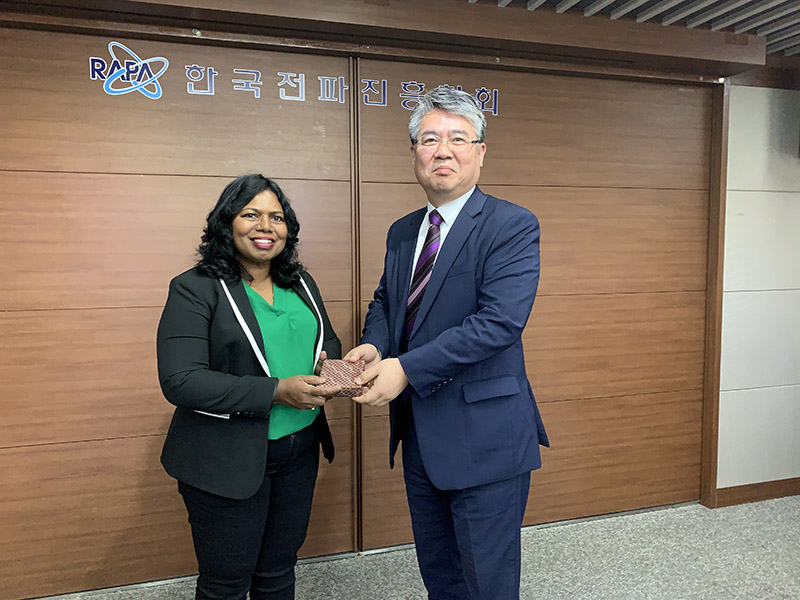
The meeting also saw discussions on future partnerships between the two organisations.
The RAPA is an agency working closely with the Ministry of Science and ICT (MSIT) of the Republic of Korea. They promote commercialization and dissemination of new technologies using radio wave among others.
]]>The three-day AIBD Sub-Regional Workshop on Sports Journalism is underway in Kuala Lumpur, Malaysia. The Workshop began today. More than 15 participants from Myanmar, Malaysia, and Vietnam are attending the Workshop.

Background
Sports reporting was never considered a serious journalism until very recently. In a newsroom setting the sports department would most often be considered as ‘soft department’, where journalists didn’t have to chase hard or investigative stories. The assignments would be simple and mostly based on events taking place in a ‘x’ country or a ‘y’ region.
However, sports coverage has now become an important focus of news due to its growth, interest, and the increase in wealth, power, and influence of sports news. And, as sports coverage becomes globalised there is an increasing demand from the audience to know about the management of the sports events and coverages, especially by the officials.
For instance, in recent years; the FIFA scandal, match fixing issues in games, corruption in awarding major sporting events by sports bodies and even racism- have led sports journalists to probe and go beyond what used to be just an event coverage or a report.
Therefore, sports journalism like any other forms of journalism requires special attention, especially in developing countries, where more and more regional and international sporting events are organised.
Besides, one of the beauties of sports is that it transcends national territorial boundaries. It not only promotes peace, culture, and diversity but also brings peoples together.
Aim
While most of the newsrooms in our member countries do have sports department/section set-up to take care of the sports news and other related coverages, they have not become fully professional yet. And some of our smaller member countries do not even have that. As and when required reporters are assigned depending on the nature of the sporting events.
Therefore, this three-day workshop not only aims to teach the participants the craft of sports reporting on various platforms but also the nuances of sports journalism and its importance.
They will be given practical lessons on live commentary and identifying benefits and characteristics of each form of sports journalism including differences in style, approach, and content.
Objective
To help journalists gain practical knowledge and skills in sports reporting and also help set-up a newsroom system to have adequate coverage or a sports bulletin.
Expected accomplishments
EA1; participants can learn sports journalism as a craft- research, reporting, interviewing and writing.
EA2; participants would be able to know various forms of sports journalism- TV, Radio and Online.
EA3; participants would be able to learn different styles of sports writing/reporting- as news, as entertainment, and commentary.
EA3; participants would also be able to understand the business of sports
Consultant
V. Sivakumar- Veteran Sports Journalists and Assistant Director of Programmes (Sports and International Relations), All India Radio (AIR), New Delhi India. Mr. Sivakumar has covered the last two editions of Olympic Games held in Rio de Janeiro and London, the Asian Games held in Incheon, South Korea, and Guangzhou, China, the 2010 Commonwealth Games held in Delhi and the previous Games held in Melbourne along with many other Indian National Games and international cricket matches organized in India. He has also produced many sports commentaries.
Mr. Sivakumar also has experience in planning and executing the coverage of national sporting events held in India and abroad. As an Assistant Director of Programmes (Sports and International Relations), Mr. Sivakumar, is involved in rights acquisition of international sports events like the Olympic Games, Asian Games, Commonwealth Games among others.
]]>The AIBD Director, Ms Philomena Gnanapragasm, met with the UNESCO Assistant Director General for Media and Information, Mr Moez Chakchouk, here in Kuala Lumpur, Malaysia last week. The meeting saw discussions on building partnerships between the two agencies to carry out various activities in the region.
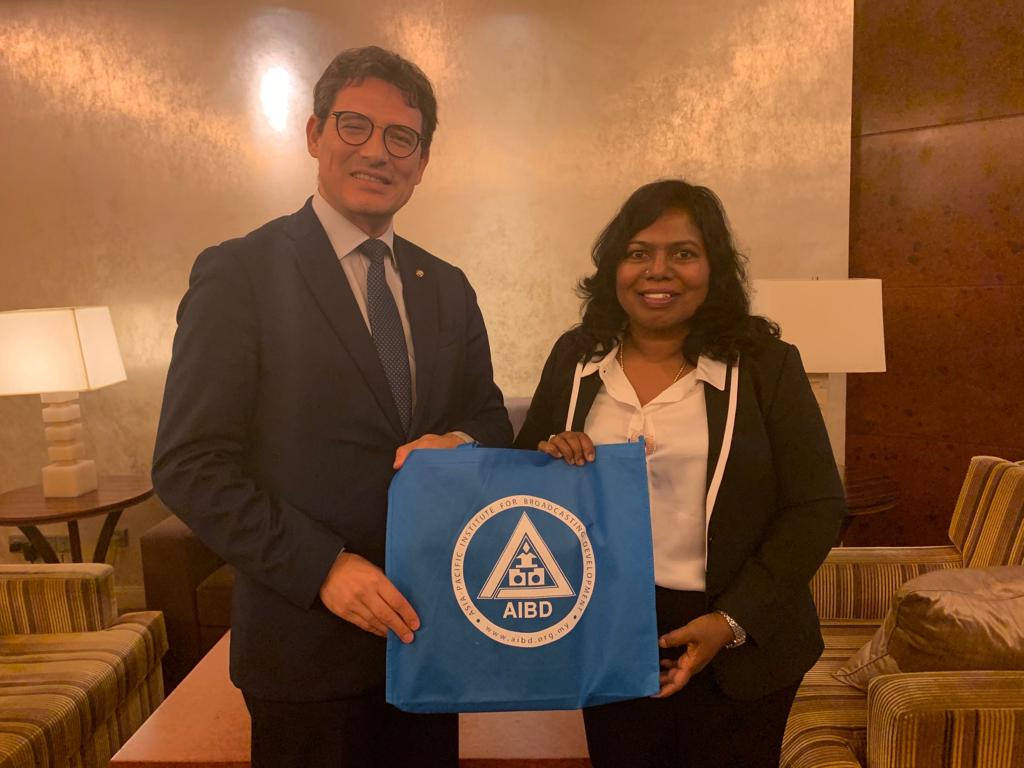
Some of the key areas discussed were on disinformation or ‘fake news’, Media and Information Literacy (MIL), safety for journalists and climate change among others.
Speaking on ‘fake news’, Ms Philomena highlighted the big initiative undertaken by AIBD with its member countries. She said that AIBD has launched the ‘Angkor Anti-Fake News’ Initiative in Bhutan recently. “Under the Initiative, with the help of UNESCO, we have embarked on a year-long research project with two universities in Malaysia and conduct various trainings and workshops in the region,” she said, adding that questionnaire for the research has already been sent out to the member organisations.
Mr Chakchouk said he was pleased to learn that and UNESCO remains committed in supporting the Initiative, as well as other activities carried out by AIBD. “It is very timely and well chosen. If we want to combat disinformation we need to improve the quality of journalism,” he added.
The Assistant Director General said that there are lot of opportunities to work together and reach out to as many countries as possible, especially in the Pacific and Africa. One of the mandates of AIBD as an intergovernmental organisation, Ms Philomena said, is to build capacity of its member organisations. And since both UNESCO and AIBD are on the same path, she said, the two must join hands to work together to raise awareness on key media issues, and enhance media and information literary in the region.
The Director also briefed the Assistant Director General on the information ministers’ conclave in Samoa and the next Asia Media Summit in Kathmandu, Nepal.
]]>Heads of public service media in Asia Pacific have agreed to support AIBD’s activities to deal with the spread of disinformation/fake news, among them the conduct of a year -long research project that will examine the impact of disinformation on its member countries, which are mostly public service broadcasters. It is alsoan attempt to understand ‘fake news’ as a research concept and impact on society from the Asian broadcasters’ perspective.
In a special meeting AIBD arranged after the closing ceremony of the 16th Asia Media Summit on 3 June 2019 in Cambodia, Mr Fayyaz Shehryar, AIBD President, said fake news is a menace plaguing Asian societies and destroying democracy.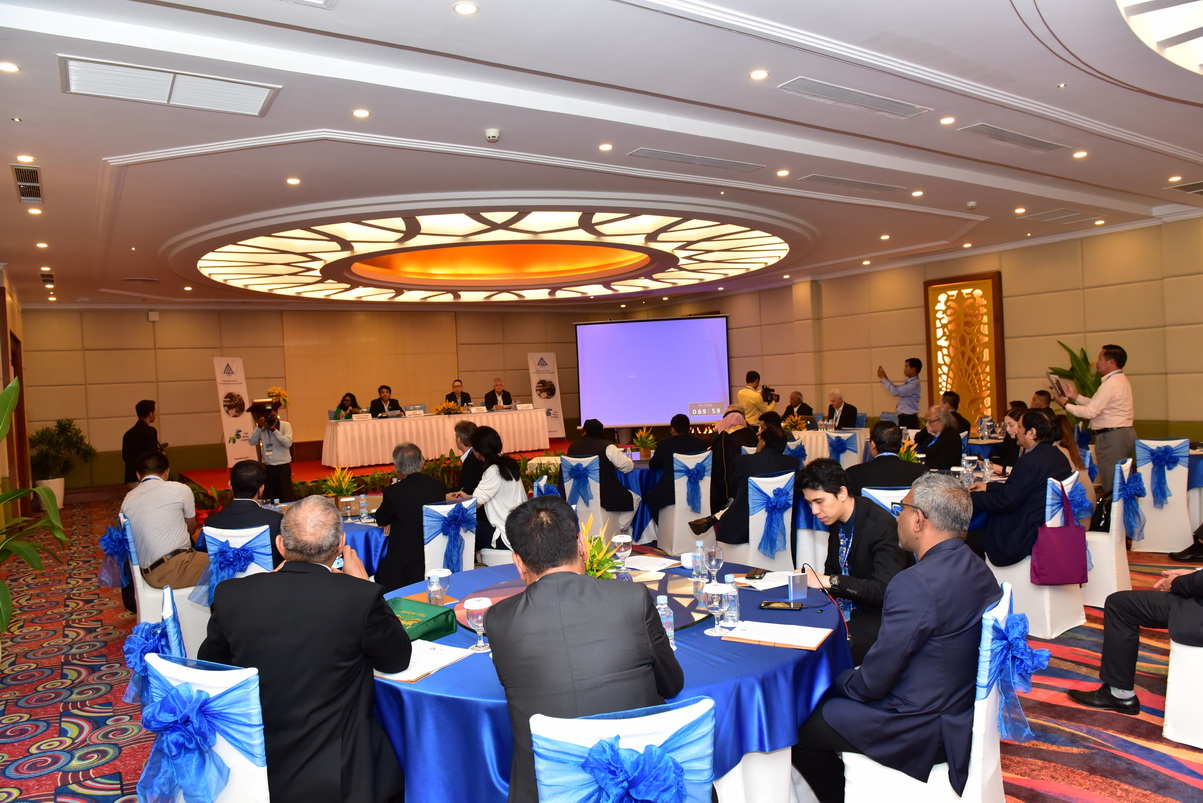
Aside from the research project, he said that AIBD is also working on a proposed conclave of some 26 Information Ministers this year who will discuss, among others, measures to address disinformation.
In a special ministerial meeting on the first day of the Summit on 12 June 2019, Information Ministers from Bangladesh, Cambodia, Myanmar and the Philippines agreed to hold a special meeting of Information Ministers from Asia Pacific. Senior officials from Korea and Samoa also supported this proposal.
According to AIBD Officiating Director Philomena Gnanapragasm, with support from UNESCO two Malaysia-based universities are involved in the research project. These are Taylor’s University and Berjaya University College.
The survey now in progress is meant to collect baseline data and insights that can help public service broadcasters in dealing with ‘fake news’ and engaging with the audience about ‘fake news’.
She also said AIBD will conduct more training programmes to fight disinformation or fake news.
Mr Has Sam Ath, Under Secretary of State, Ministry of Information, Cambodia, recalled that during the 2018 AIBD General Conference held in Colombo, Sri Lanka he suggested more activities to deal with fake news.
Another measure some public broadcasters raised during the meeting was stronger regulations to prevent disinformation.
Dr Ming Kuok Lim, Advisor for Communication and Information, UNESCO Office in Jakarta, Indonesia, said in terms of policy, “ our position is if a law is to be made, it should be carefully and clearly defined so that it may not be used to stifle freedom of expression and clamp down criticisms or things government may not like”.
He informed participants that UNESCO is pursuing awareness raising, capacity building and policy advice in dealing with disinformation.
What can broadcasters do to counter disinformation/fake news?
Dr Lim suggested that media practitioners can produce public service announcements, and undertake training and outreach programmes. He also said that UNESCO has published a manual to help media deal with fake news.
Mr Klaus Bergmann, Director of International Relations, Deutsche Welle, Germany, and Chairman of EBU International Broadcasting Assembly, shared Europe’s experiences in combating disinformation.
In his presentation, he said that under German law, providers of social networks are obliged to delete within 24 hours hate speech/fake news and publish deleted items within a month.
“Public prosecuting authorities investigate reports on unlawful language submitted by media. Media identifies unlawful comment; we preserve evidence; we document content in a pdf file. Then we report dossier to authorities through email and the prosecution will investigate. After this media companies will report protection measures and conviction”, he said.
He also said that the European Broadcasting Union (EBU) composed of 72 public services broadcasters in 56 countries welcomes any campaign against fake news, developing techniques to deal with challenges in new media landscape.
Public service media needs political independence and regular funding to successfully fight disinformation”, he said.
Mr Riyaz Sayed-Khaiyum, CEO of Fiji Broadcasting Corporation (FBC), Fiji, said issues surrounding fake news are complex and undertaking a research to better understand its nature and impact on society is a ‘good start”.
He also said FBC is launching a 30-minute broadcast programme, using light humour to recognise fake news.