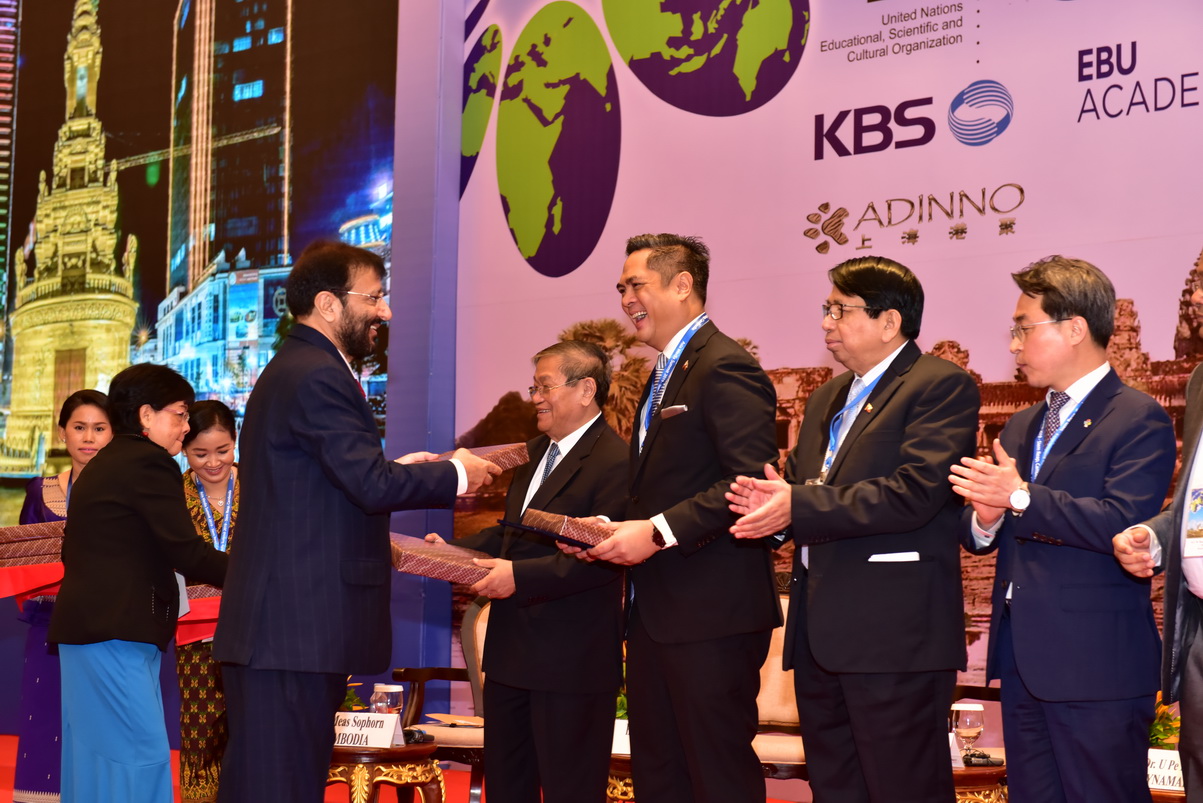
The speakers presented these perspectives at the 5th plenary session titled ‘Monetisation in traditional media/new media: competing or complementing’ at the Asia Media Summit held on 13 June 2019 in Siem Reap, Cambodia.
Nepal has agreed to host the 17th Asia Media Summit in 2020, Mr Suresh Kumar Karki, Executive Director of Radio Nepal, announced this during the 45th AIBD General Conference in Bhutan on 23 August 2019.
The venue will be in Kathmandu, Nepal’s capital, rich in natural beauty and historical destinations as well as home to some UNESCO heritage sites.
Through an audio-visual presentation, GC participants had a preview of what Nepal has to offer.
Mr Karki said Nepal’s Ministry of Information, Communication and Technology and Ministry of Tourism have consented to jointly host the Summit.
In a simple ceremony, Mr Karki signed a Memorandum of Understanding with AIBD officials as host for the next AMS, ensuring close coordination with the Institute in ensuring a successful summit.
He suggested that the theme of the conference should focus on the role of media in national development, particularly in promoting tourism in developing countries.
Other possible themes for the AMS in Nepal were discussed during the GC. One is the applicability of public service broadcasting, which is altruistic in character, and hedonistic broadcasters, which focus more on eliciting revenues. Two is on broadcasting for the physically challenged population in the region, and, three is on Asian impact on world broadcasting.
Members were encouraged to submit other summit topics to the AIBD secretariat.
Mr Karki urged members to participate in the AMS in Nepal, which will coincide with Visit Nepal’s Year 20/20 to promote tourism in Nepal.
]]>Technological advancements continue to transform broadcast media industry and content creation techniques. Digital content platforms have understood that the future lies in the hands of creative content. We have been talking about improved picture quality of content for some time. Ultra High Definition Television content production are very much in place in some developed markets. Recent major sports coverages were done using both UHD-1 and with high frame rates (HFR) as well as High Dynamic Range (HDR) wide colour gamut (WCG). Integrated Broadcast-Broadband (IBB) technology engines can now support UHD and HDR. Future workflows will cater to various audience segments and device profiles. Media production organisations are deploying technologies to maximise the utilisation of production facilities as the production equipment becomes obsolete in a shorter time. With the standardisation and adoption of SMPTE 2110 future facilities are expected to be more agile.
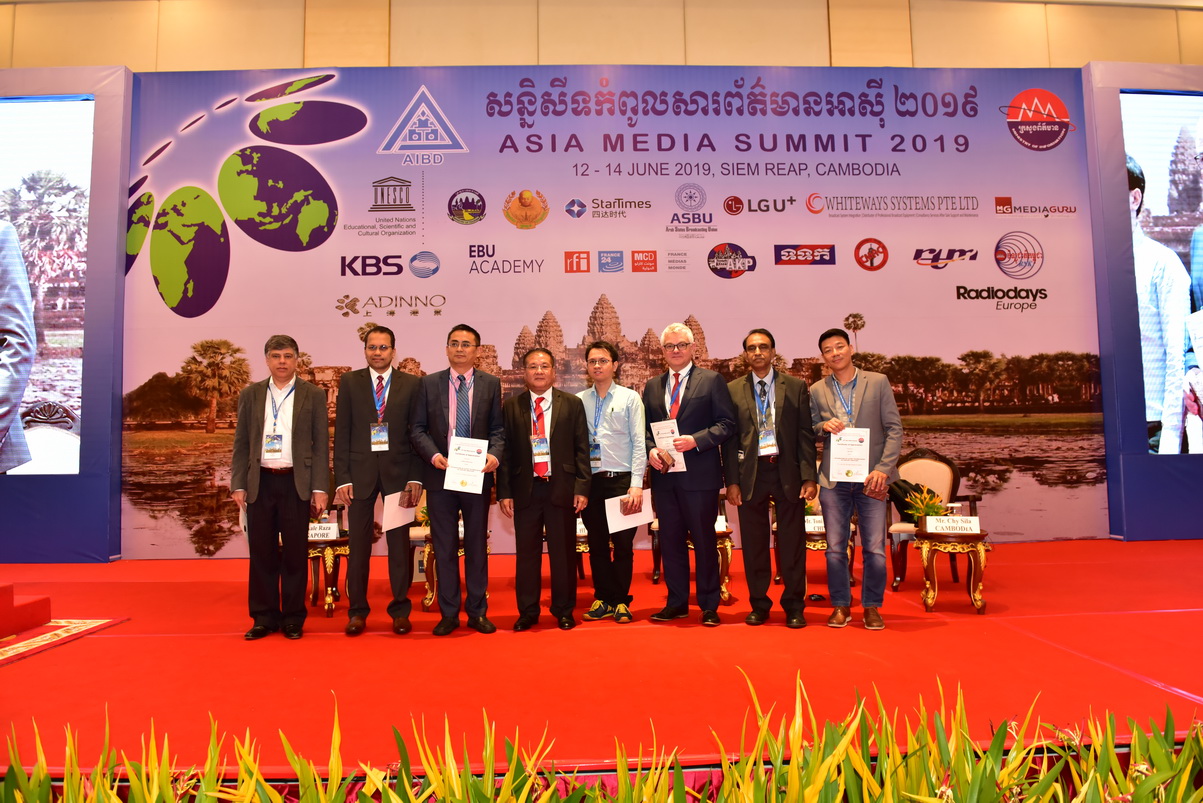
In the 16th Asia Media Summit (AMS-2019), one technology session was dedicated on the topic “Integration of Latest Technologies in Content Creation”. Five distinguished speakers from diverse technology arena presented their view points in the latest trends in content creation. Mr Ale Raza , Director of Whiteways Systems Pte Ltd Singapore moderated the session facilitating the speakers to disseminate balanced technology updates in media content creation. This session addressed the opportunities and challenges posed by AR, VR, UHD, HDR, HFR, WCG and IP in production and immersive media experience in both audio and video.
The first speaker of the session Mr Bala Murali Subramaney, Chief Technology Officer Astro Radio Sdn Bhd Malaysia talked about the availability of latest technologies in radio set up and trends for implementing them in real situation. He presented case studies on radio studio set up required in News Department and another case study of ‘On Air Studio’. Mr Bala explained that from a creative perspective, the radio station of the future’s emphasis will be in delivering ‘watchable’ radio content. The talent (announcer) will be both heard and seen on multiple social media platforms. Compelling multimedia video content from the on-air studio – created, produced, packaged and delivered effectively – will become the focus of radio stations. He also told that the heart of the radio studio operation is the mixing console. A thorough understanding of the console’s operations is critical. The future console will be compact yet intelligent & easy to use and will have fewer buttons, faders and fully automated. There will be less human interaction with Radio Console and it will free up time for the announcers to focus on delivering other compelling content. Also there will be provision for enabling the announcers to incorporate web-content into their shows on-air and on-line. Mr Bala detailed on the automation system of the future which will be driven by the Radio Automation Software having ability to integrate to other systems via TP/IP, DMS, Dante, Ravenna and other protocols. VOIP System with Virtual screen , 4G and 5G Data based – Studio Telephone Hybrids, WhatsApp, Viber, WeChat and Messenger based calls into radio studio will be regular feature in future.
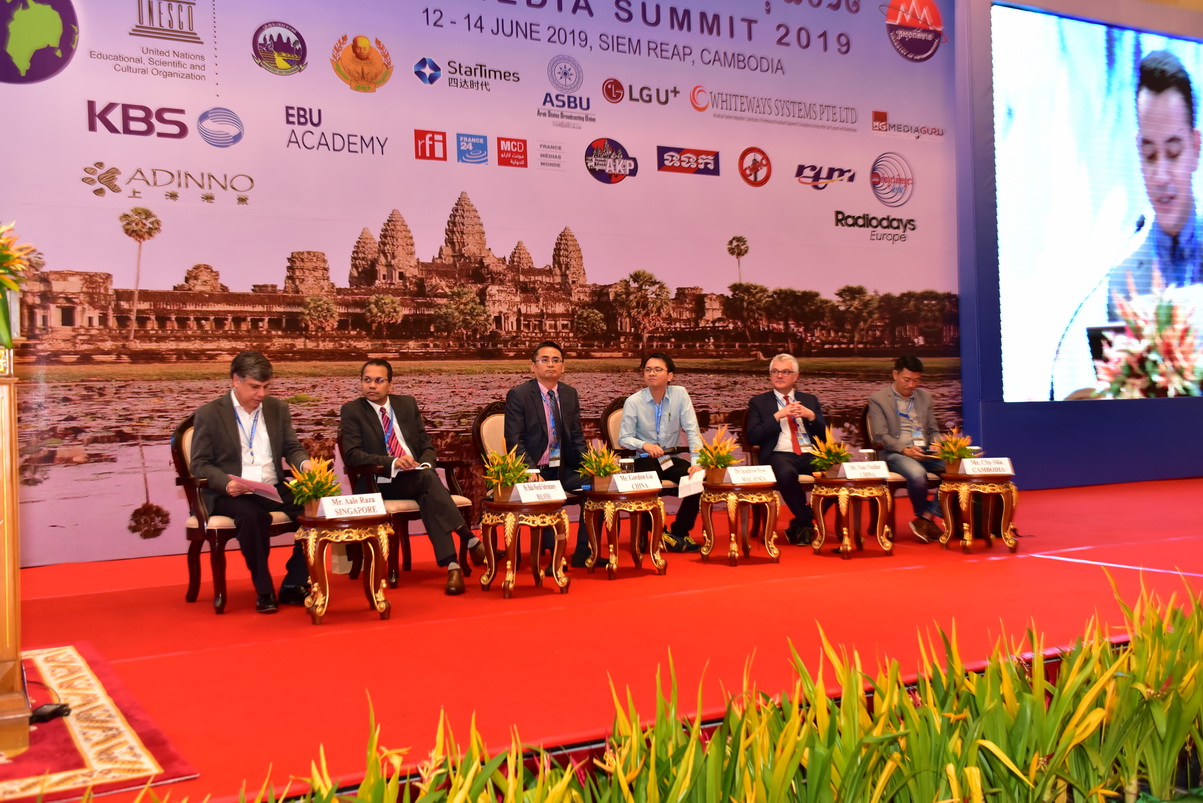
The second speaker Mr Gordon Gu, Chief Executive Officer ADINNO INC talked about 4K content creation and related production equipment like 4K Encoder, 4K OB-VAN, 4K All in one internet Box, 4k Event Production Wireless Transmission and Monitoring System Platform. He explained that SEEi-4k Encoding transmission server adopts real-time 4K UHD HEVC encoding technology, which has lower power consumption compared to software encoding scheme, and uses HEVC / H.265 encoding, which reduces the bit rate by nearly 50% compared to H. 264 encoding of the same quality video stream, and achieves better video picture quality with the same bandwidth. 4K encoding transmission server is a product tailored for new media processing applications. It supports the encoding processing capacity of 4K/60P Main10 HEVC/ H.265 at the broadcasting level, and the power consumption is less than 35W. 4K encoding transmission server supports additional 4K acquisition function having interfaces HDMI, DP and 4-way 3G-SDI. He described 4K/HD OB VAN which can meet 4-12 channel HD or 3 channel 4K ultra HD, the production system can undertake conferences, outdoor activities, variety shows, small recording and live broadcast requirements for TV shows such as sports events. 4K All in one internet Box is One Box machine to complete the video broadcast, broadcast switch, recording, subtitle superimposed, multi-screen and other functions. Mr Gordon also introduced SEEi.TV 4K OTT platform through which consumers expect a flawless viewing experience and instant access to high definition video content on any screen.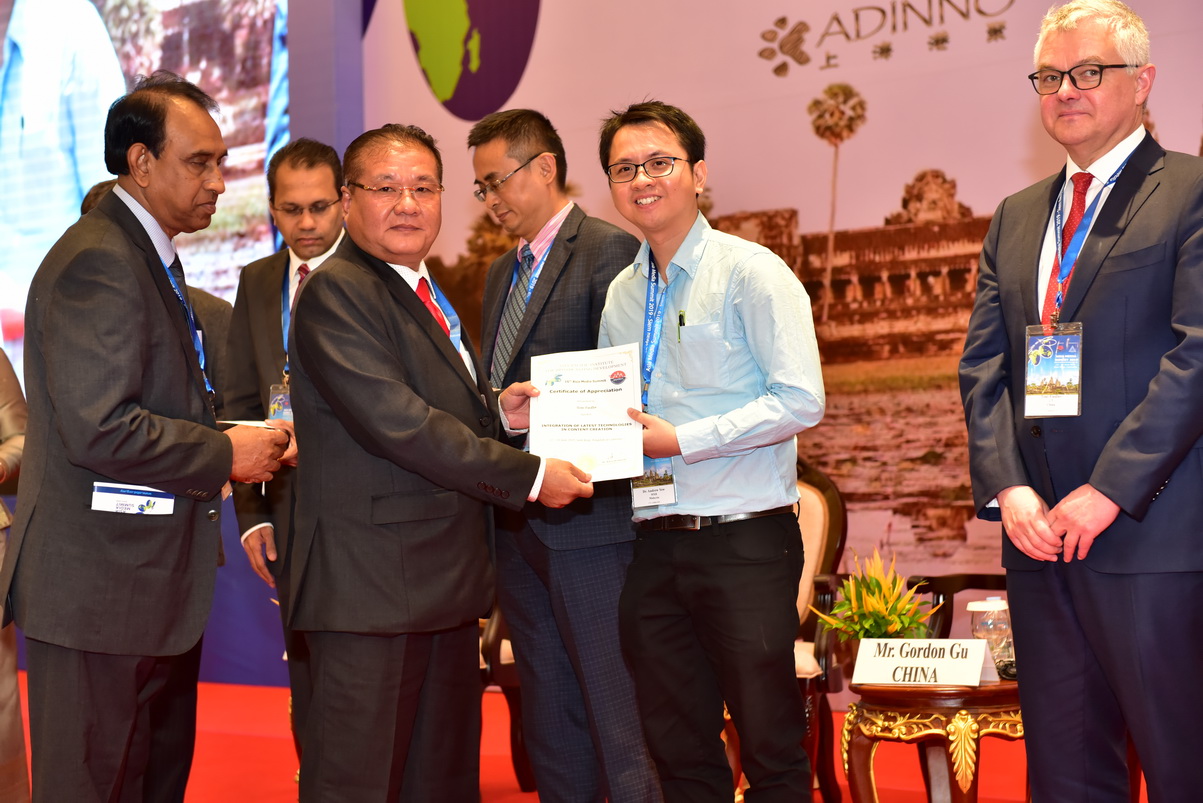
Mr Toni Fiedler, General manager- Fraunhofer Institute of Integrated Circuits (IIS) presented features and developments in MPEG-H Immersive Audio System and standardization. Mr Toni mentioned that Fraunhofer IIS is the main inventor of mp3 and co-developer of (xHE-)AAC, MPEG-H Audio and EVS. He provided the latest developments in standardization about MPEG-H audio system and its merits. Broadcast is in Transition from HDTV to UHDTV and Broadcasters and Telcos compete for frequency spectrum for upgrading the TV Standards to 4K / 8K Video and 3D Audio. MPEG-H is a choice in all relevant TV standards worldwide. Introducing MPEG-H with UHDTV make use of rich features step by step for producing 2.0 / 5.1, second language, mix preset, 3D Audio, multiple objects and interactive objects. He explained that speed of adoption is up to the broadcaster and additional equipment can be integrated when needed and surely huge variety of creative features in the content will attract TV viewers.
Dr Andrew Yew, Co-founder & Chief Technology Officer- Ministry Asia Sdn Bhd Malaysia spoke on the creation of content in Augmented Reality (AR), Virtual Reality (VR) and Mix Reality(XR). While explaining the Principles and Technologies of Content Creation for XR, he told that XR is a concept whereby the reality of the user is mediated and augmented by different technologies, hardware and software. It is a paradigm shift in human-computer interaction that is revolutionising every industry. The user experience that can be achieved is virtually limitless, making it a challenge to craft truly effective applications. In his talk, he described the principles behind optimizing user experience design for XR applications and the corresponding methodologies for creating XR content.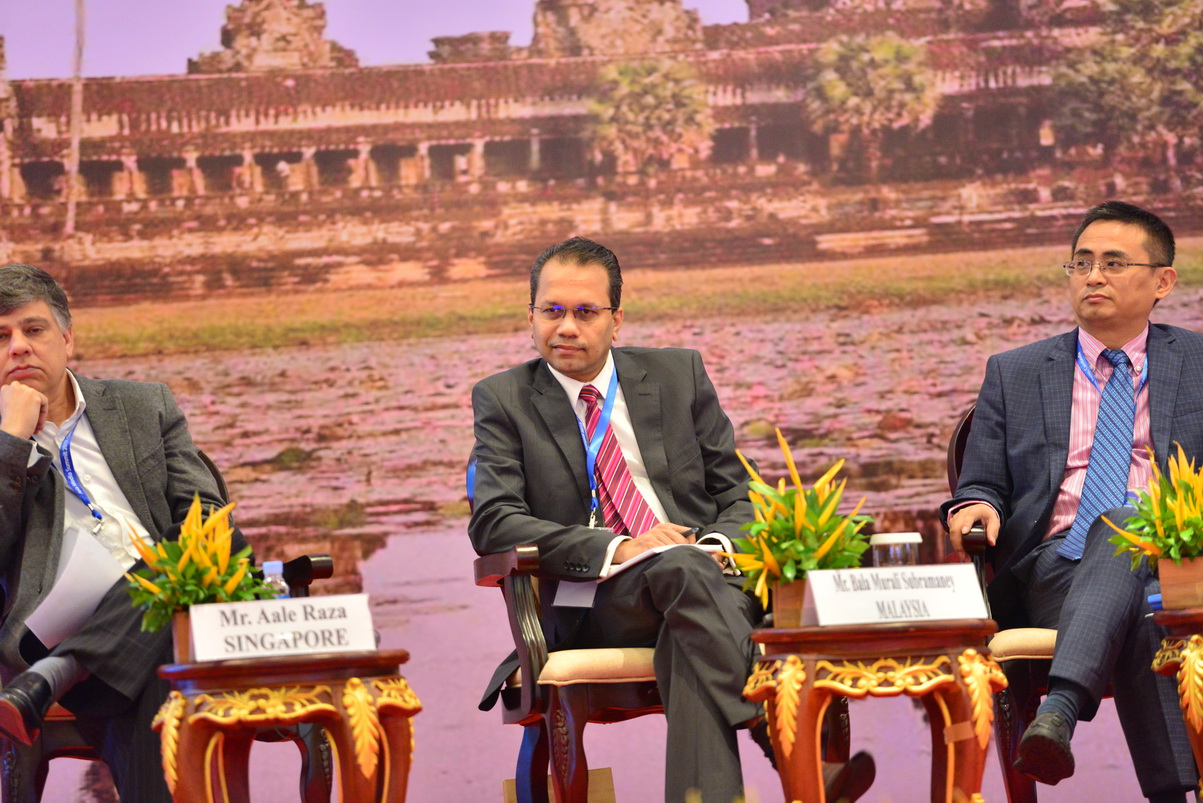
Mr Chy Sila, CEO and Founder of Sabay Digital Corporation- Cambodia, in his talk provided details about what his company is doing as content creator. Sabay is a premier digital content producer in Cambodia, with an aim to educate, inform and inspire the Cambodian population with awesome daily online content. He said the Sabay Group is made up of many smaller parts, providing varied digital products and services across the board. Cambodia is an exciting country with a dynamic youth community eager to play an active role in the digital era. Sabay Digital Corporation was formed to help meet this demand, with new services and products including online content and mobile entertainment. Sabay is a forward thinking pioneer and has been the first to introduce online gaming, unified SMS content and original online entertainment (news, movies, music and TV) in the Kingdom of Wonder. Sabay Web was created for providing combination of breaking news and unlimited entertainment focusing on important news related to youth. The primary objective of the webpage news.sabay.com is to provide main contents such as entertainment, life, society, technology and sports. Mr Chy Sila mentioned that Sabay.com is aimed to be a melting pot of ideas, opinions, gossip, experiences, where the youth gather to gain and share information and knowledge. Sabay.TV, Internet TV channel, currently hosted at sabay.tv, is producing domestic content. Their goal is to bring a cutting edge and topical programming to inform, inspire and entertain the new generation of Cambodia. He also talked about the Cambodian Network Exchange (CNX) which is a not-for-profit, open and neutral Internet Exchange that serves to enhance the Internet environment for local and international IP traffic in Cambodia. Today CNX and Data Center contribute with massive cost savings for content distribution to SDC
]]>The age of technology is right here and everyone is trying to get their content streamed on the digital platform. Audiences are enjoying content on both broadcast and online delivery mode. There are challenges in delivering high bandwidth content such as live television online while assuring Quality of Experience (QoE) but obviously some progress have been made. It is evident that Direct To Home (DTH) services through satellite are being used to deliver UHD content with assured quality. In 2020 satellite is likely to be used to deliver UHD-2 (8k or Hi-Vision) content of Tokyo Olympic coverage. Digital Terrestrial Television services are also making significant improvements to its delivery. ATSC 3.0 has been adopted in the Republic of Korea and North America, China is coming up with enhanced version of its DTMB and DVB introduced single illumination and DVB-I for online delivery. On the other hand, user interface (UI) is extremely important for audience to discover, interact and share to enhance their experience with content. Probably the remote control with button that we have enjoyed so long will become insignificant and soon there will be revolutionized interfaces using voice commands for content searches and interactivity. Thus hybrid technologies like Hbb TV offering seamless navigation on both broadcast and online delivery would be prominent.
In the 16th edition of Asia Media Summit (AMS-2019), Siem Reap, the Kingdom of Cambodia there was a session on Technologies for Distribution of Media Contents. In this 60 minutes session a number of distinguished speakers from various organizations from Cambodia and abroad put forward their ideas, views and opinions on the subject and discussed elaborately. Mr Som Ratana, Vice-Rector of the Royal University of Phnom Penh, and an Advisor to the president of National Assembly of the Kingdom of Cambodia moderated the session and facilitated the speakers very efficiently and effectively.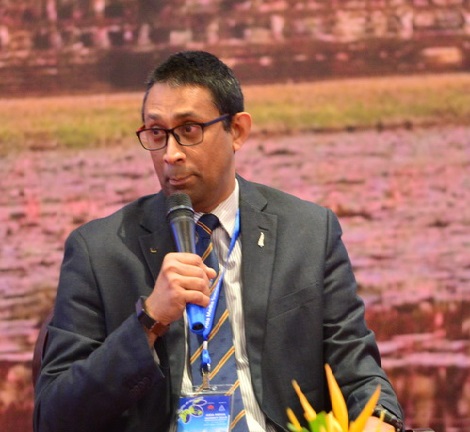
The very first speaker Dr Amal Punchihewa, Distinguished Lecturer of IEEE Broadcast Technology Society Technologies and from ADP Consultancies New Zealand talked about transformation and realities in distribution and delivery of media contents. He provided an overview to technologies that are relevant to distribution and delivery of media contents. He emphasized the difference between delivery and distribution in today’s context. Satellite was initially used to distribute television signals to transmitter stations. Then direct to home satellite signal (DTH) gave audience an alternative way to receive television signals. In recent times there are many advances in television signals with more pixels (SD-HD-UHD), better pixels with high dynamic range (HDR) and wide colour gamut (WCG). Broadcasters and industry have standardised how to capture signals and deliver them to the viewers. The consumer industry has been responding by supplying television receivers capable of UHD-1, HDR and WCG. Broadcasters are seamlessly combining their over the air delivery (DTTB, DTH) with over the broadband (OTT) using processing engines such as HbbTV based on HTML 5 browsers. Catch up services are offered in the form of OTT and access to many devices have been made available. Using interactivity and user data some insights can be derived to provide better quality of experience (QoE) that is beyond the quality of service (QoS) for the delivery network. The main point of his presentation was the recent evolution of switched-multi-CDNs. This is a culmination of many years of research done over last 10 years on objective quality metrics for QoE, video quality evaluation and network management. When a number of broadcast members share selected CDNs, that cost can be shared among members gaining cost reduction. Not only financial gain, but also multi-CDNs provide improved availability and reliability with increased quality.
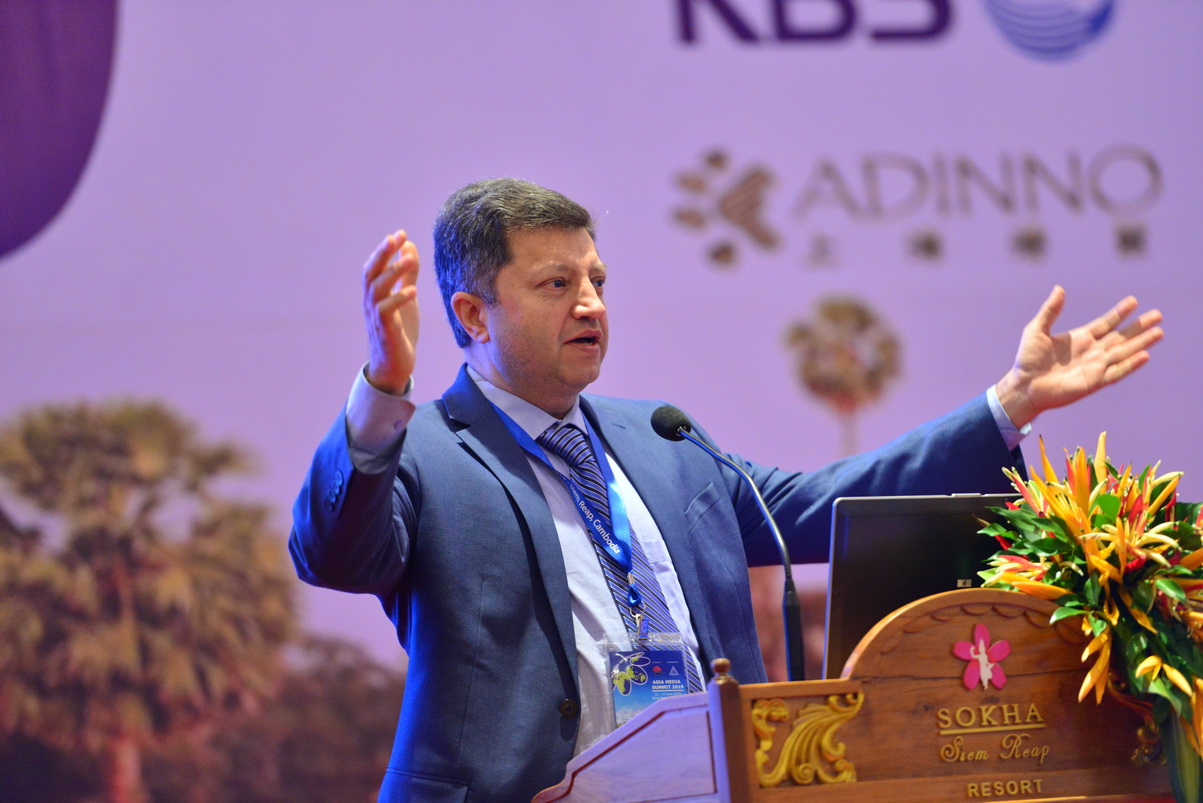
Dr. Syed Ismail Shah, Head, ITU Area Office Jakarta, the second speaker talked about Artificial Intelligence Systems for Program Production and Exchange. Globally, broadcasters are grappling with the rapidly evolving standards available to deliver consumers increased quality and choice. Transition to these new technologies is complex and costly, and requires careful planning. However, there are opportunities offered by new technologies like Artificial Intelligence (AI) which is driving new broadcasting technologies. Use of AI increases productivity, efficiency and creative opportunities during program production. In areas of Technological Benefits using AI/ML Dr Ismail explained Workflow Optimization, Bandwidth / Quality Optimization, Automated Content Creation, Optimization of Asset Selection-Metadata Creation,Dynamic Product Placement and Advertising for Broadcast and Content personalization. On the area of automated content creation he explained the use of social media data from people geographically located near to where a known incident or event may have occurred. Automatic search for trends and notable information for news production from a massive amount of Twitter data (tweets) and subsequently judge the authenticity of such posts. Techniques like Recursive neural networks (RNN) are used to determine the presence of any target terms typically associated with news-worthy breaking events like “fire” or “accident” captioning. Conventional captioning systems use humans who work in a quiet room to simultaneously provide a clean speech stream from the original noisy or inarticulate speech that serves as input to the automated recognition algorithms for live captioning. For automatic recognition of program audio without the need for the added human re-speaking, Deep Neural Network (DNN)s have been adopted to develop an acoustic model that estimates vowels and consonants of input speech to increase recognition.
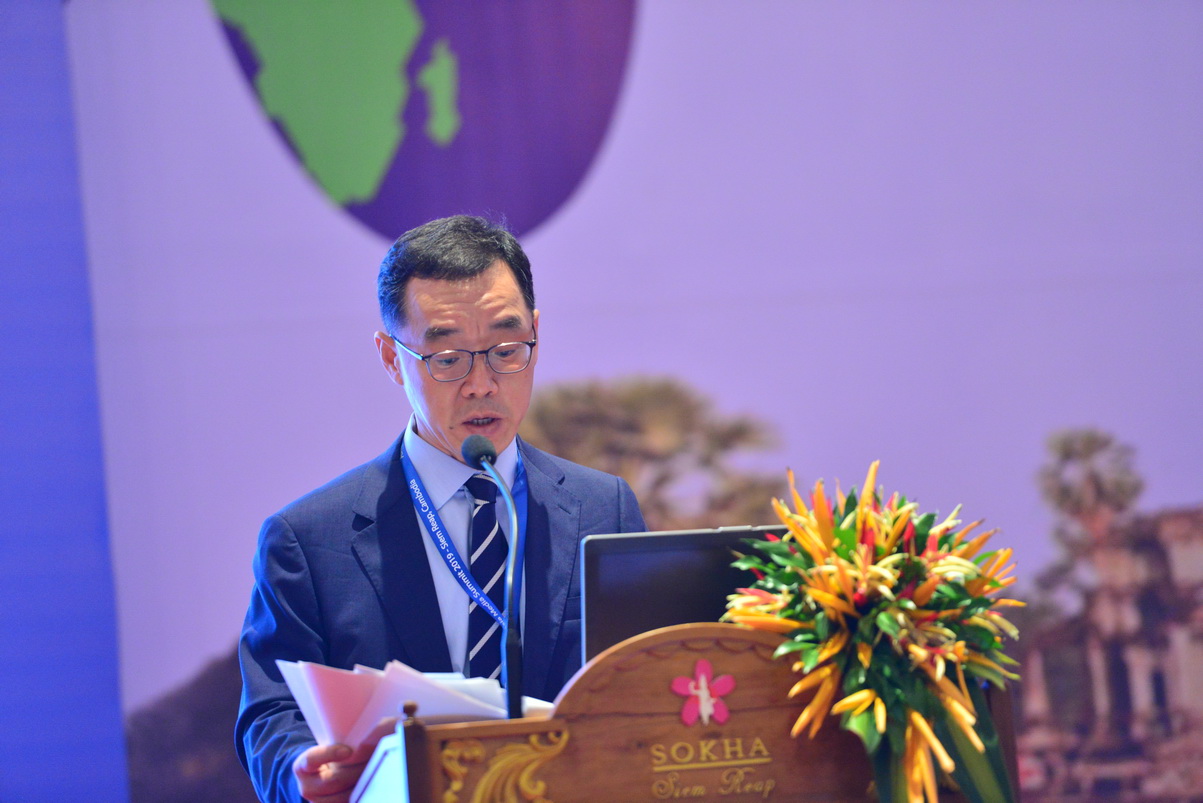
Mr Shin Seung-han, Director of the Regional Media Policy Division of the Korea Communications Commission started his presentation talking about the difficulty facing the traditional media industry due to the convergence between broadcasting and communication, and the terrestrial UHD broadcasting and commercialization of 5G. Due to the accelerated convergence of broadcasting and communication, and changes in media usage, YouTube and Netflix are growing fast in Korea. As a result, the competitiveness of traditional media companies is deteriorating. He mentioned that there are more than 24 million YouTube users in Korea, and the duration of viewing time was 25.1 billion minutes. YouTube has a higher share than other OTT services. Also, the number of Netflix subscribers increased 11 times in the past 2 years. Competition in the media industry is getting tougher. Mr Shin provided the details on the development process of terrestrial TV in Korea citing that in May 2017, terrestrial UHD broadcasting started in the Seoul capital city area for the first time in the world, and was expanded the service to metropolitan cities and Gangneung and Pyeongchang. We are planning to complete nationwide terrestrial UHD broadcasting network by 2021. He told that Korea adopted ATSC 3.0 as the technical standard for terrestrial UHD broadcasting. ATSC 3.0 supports three times higher megabits per second than ATSC 1.0, which was initially applied to digital TV, it can provide immersive broadcasting based on improved image quality, and customized additional services through interworking with IP-based communication service. Mt Shin also talked about the future prospects for terrestrial broadcasting that UHD will bring. The sense of immersion will be an important factor that will determine the competitiveness of content. The image quality will be 8k or better, and convergence with VR, AR and hologram will be possible.
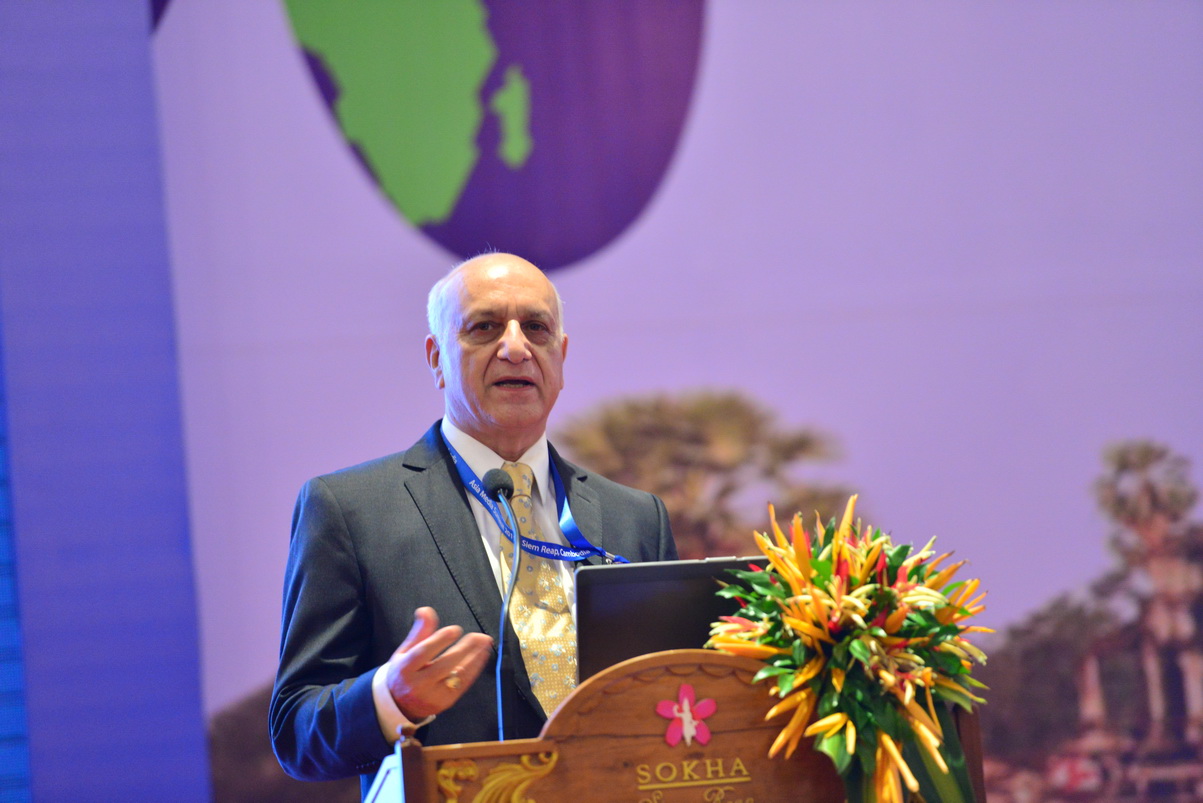
Mr Sharad Sadhu, Technical Consultant, on behalf of DRM Consortium, presented on the topic “Excitement of Digital Radio in FM Band”. The digital radio system in the FM band, DRM FM, offers an exciting opportunity for FM radio broadcasters. It has been positively demonstrated that the DRM FM digital radio slots can be inserted in the guard-bands between two analogue FM radio carriers without disturbing or impacting operation of the ongoing analogue FM radio services. Each of the 96 kHz wide DRM FM frequency slots can provide up to three quality stereo radio services plus multimedia components as against one service from each analogue FM slots. It has been clearly established that even in the existing congested frequency spectrum in the FM band, DRM FM digital radio services can well be added and operated. He explained that prospective broadcasters must understand the potential and flexibility of the system in order to allow them to optimise and configure their DRM networks in accordance with their particular market conditions. Multiple radio services provided by DRM FM can be employed to reduce the congestion in the FM band existing in major cities and offer new revenue opportunities for existing FM broadcasters. DRM FM digital radio channels can be utilised to meet other requirements of existing FM operators; reduced or no interference, good quality signal, reduced pressure of FM analogue on FM spectrum. He said that the current FM radio operators may be able to use their analogue FM service transmitting equipment for the new DRM FM service. DRM FM is, therefore, a flexible solution that permits broadcasters to provide listeners with significant improvements in service reliability, audio quality and, most importantly, usability.
The emerging trend of high resolution display has led to the development of Ultra High Definition (UHD) also referred to as 4K televisions. UHD displays exhibit 4K resolution and are called as 4K panels. 4K means 4,000 pixels in various digital formats mainly used for the purpose of shooting motion pictures. As their names imply, 4K UHD has a considerably higher resolution than 1080P HD video. 4K resolution is exactly 3840 x 2160 pixels, whilst 1080P consists of 1920 x 1080 pixels. This massive difference brings about some important advantages for 4K when one compares it to the quality of a 1080P video.
Ultra High Definition Technologies for television are rapidly developing. Compared with existing high definition and standard definition television systems, UHD-1 or loosely known in television industry as 4K is advancement in technology that offers better viewing experience. More technical or appropriate term in television industry would be first generation Ultra High Definition television. The technical parameters of UHD-1 systems include higher image resolution, higher image frame rate (HFR), higher image dynamic range (HDR), wider color gamut (WCG), and advanced sound system technologies. The intent of a combination of all these enhanced parameters is to provide a more “immersive” and better experience for the viewer. Some broadcasters and producers of high value programs are already taking advantage of the latest “UHD” equipment in the market.
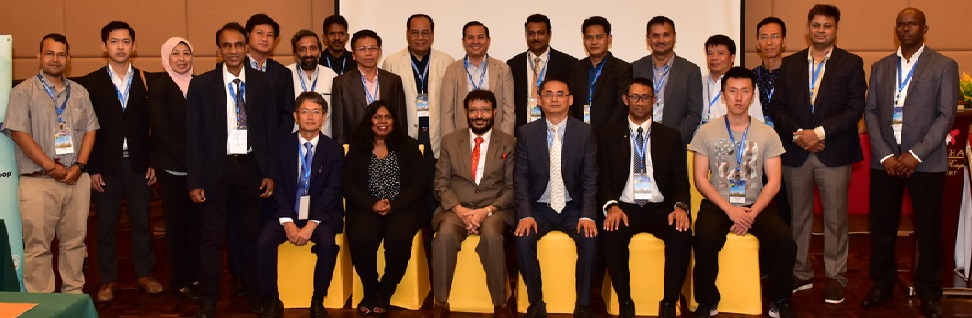
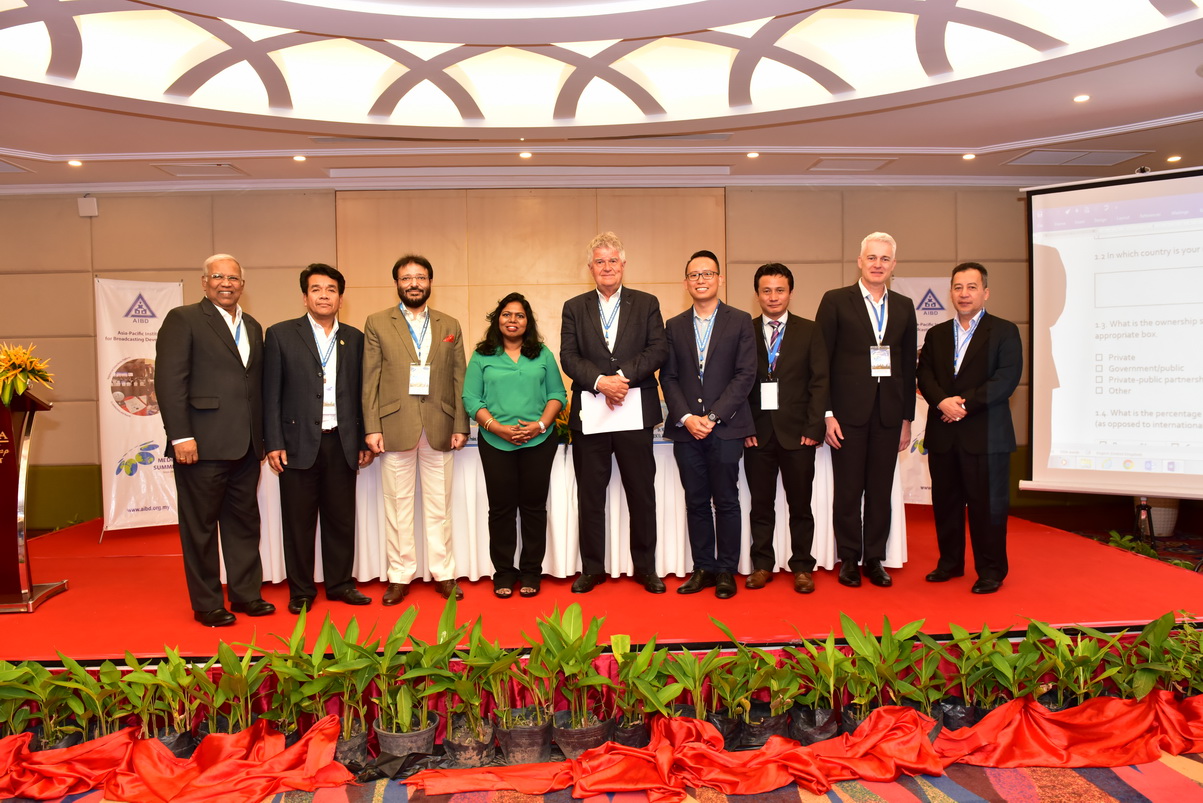
In view of the development that are taking place in 4K UHD Television arena, AIBD in collaboration with M/S ADINNO conducted one day pre-summit workshop on “Trends in 4K Technology” on 11 June, 2019 at Siem reap, Kingdom of Cambodia. The workshop highlighted the production and distribution of 4K content and how the image quality is enhanced with UHD cameras and production equipment. Dr Amal Punchihewa, Distinguished Lecturer of IEEE Broadcast Technology Society and Mr Gordon Gu, CEO of ADINNO were the expert consultants. The experts talked on technical parameters of UHD, including UHD-1 and UHD-2, end to end solution for UHD content, production, distribution, streaming and/or broadcasting and display devices.
On the first session ‘UHD Demystified’ Dr Amal introduced UHD Television to the participants with various standard, parameters, their impact on picture quality etc. Concepts of user experience (UX) and Quality of Experience (QoE) were explained to them in relation to end to end media value chain. He told 5G and 8K are two next-generation technologies that are pushing forward the envelope of innovation for video experiences. In the near future, 5G is expected to play a role in the delivery of mobile video content. Possibility of delivering live, catch-up TV and VOD content in pristine 8K to TVs and mobile devices using 5G networks.
Dr Amal briefed about High Dynamic Range (HDR) and Standard Dynamic Range (SDR), Influence of HDR on capture and display and HDR eco system as a whole. He discussed UHD-1 delivery of DVB-T2 and ATSC 3.0 systems and also satellite for UHD-1 delivery. Before the practical demos in subsequent sessions the basics of UHD 4K was well elaborated.
The subsequent sessions of the day was covered by ADINNO expert Mr Gordon Gu along with his colleague Mr ChaoJun Du with the theme “New Opportunity – New Media & 4K/8K-4K Universe UHD channel cover European market and more”. ADINNO Inc, located in Beijing, Shanghai, Bay area USA, is the leading 4K/HD end to end solution provider to worldwide Mobile/Fixed operators & Cable TV/ IPTV etc. offering 4K UHD based Contents and Production and OTT/ IPTV platform.
Mr Gordon talked about 4K UHD HDR and SDR and HFR/WCG citing that the technical parameters of UHD systems include higher image resolution, higher image frame rate (HFR), higher image dynamic range (HDR), wider colour gamut (WCG), and advanced sound system technologies. The intent of a combination of all these enhanced parameters is to provide a more “immersive” and better experience for the viewer. Mr Gu covered the following area elaborately.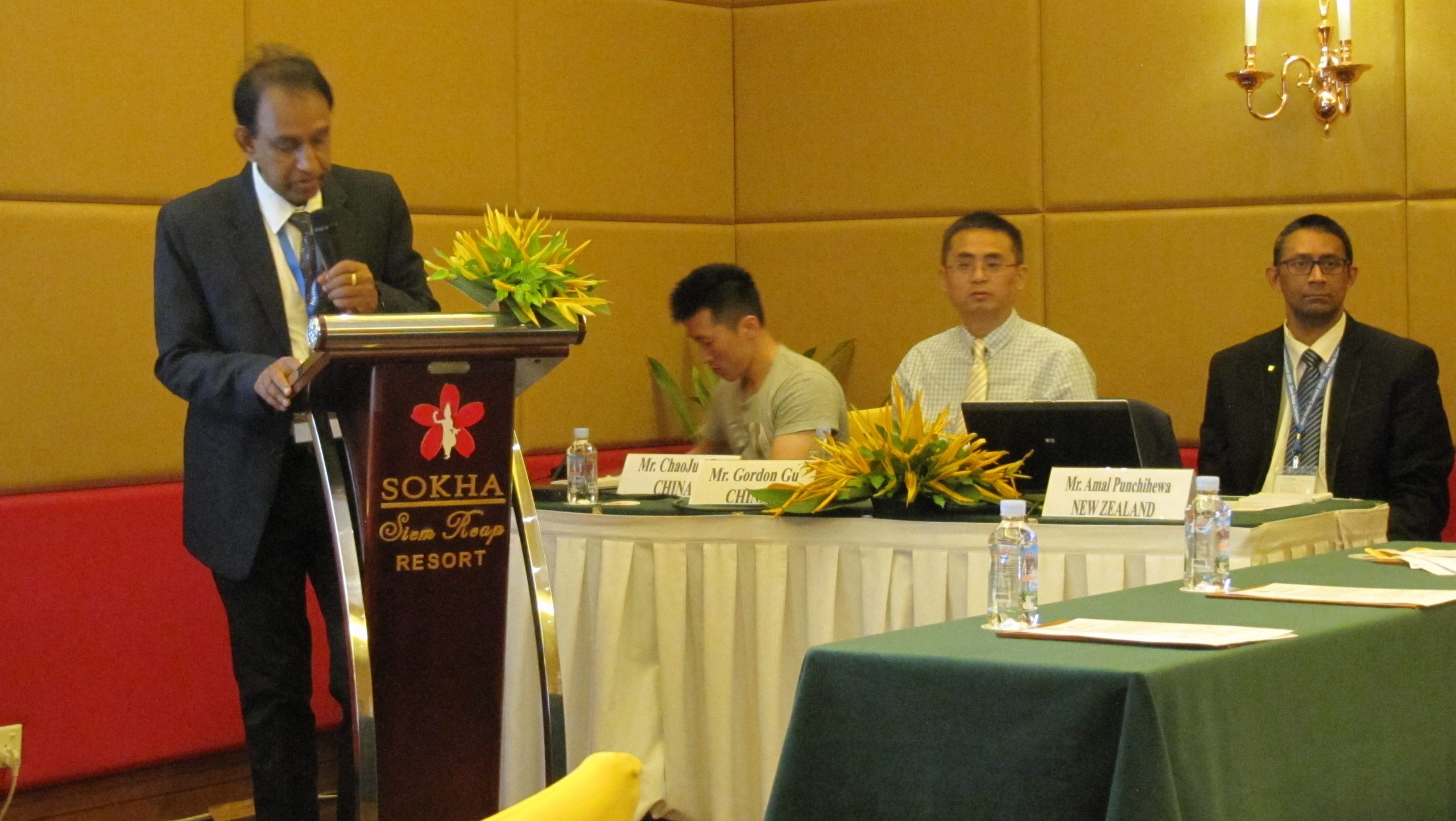
4K Contents: One of ADINNO’s investment portfolio-4KUniverse Inc. is the first one offering 4K 7x24H channel in USA with Holleywood 4K UHD video/film, Partners with SES/ Amazon Fire TV/ European Swisscom,etc.
4K Production: The 4K based live production solution include the economic live 4K OBVAN, All-in-one IP production system, etc.
4K OTT/ IPTV: The 4K SEEI.TV offers the OTT/IPTV Combined total solution, including OTT/IPTV cloud, Intelligent CDN design and deployment, APP/H5/Player for end user’s Mobile phone/ PC/ laptop/ STB-smart TV/ Smart projector application, supporting Broadcast Matrix (TV Station, Cinema, Radio, Internet Video Web, such as Facebook Youtube etc).
For the better understanding and visualization of 4K studio and 8K studio production, Demos were set up in the classroom and experts explained every element in details benefiting the participants. Twenty one participants from 10 countries Cambodia, India, Laos, Malaysia, Maldives, Mozambique, Nepal, Srilanka, Vietnam and Thailand attended the workshop. Overall satisfaction level of the participants were very high as per feedback received.
]]>
Your excellency, Minister Khieu Kanarith
Your excellency, Minister Pe Myint
AIBD President
Representatives from all countries
Ladies and gentlemen
I am KO Sam-Seog, standing commissioner of the Korea Communications Commission. I am very pleased to present for the second year in a row at Asia Media Summit.
Last year, I spoke on “President Moon’s Media Policy Direction,” and explained the role of media in the revolutionary change Korean society experienced. Today I’d like to talk about Korea’s media policy in the digital revolution age and share examples from Korea’s experience.
In Korea, terrestrial analog broadcasting ended in 2012, resulting in full digital switchover. In 2017, Korea launched the world’s first terrestrial UHD broadcasting service.
In telecommunications, from 2nd generation CDMA, 3rd generation WCDMA, 4th generation LTE-A and to 5th generation communications, Korea was the first to commercialize many technologies.
And by responding swiftly to the changes in the broadcasting and communications environment, Korea continues to lead the global market in the digital revolution.
In February 2018, Korea started pilot 5G service at the Pyeongchang Winter Olympic Games. In December last year, it launched B2B service of 5G. This April, it was the first in the world to successfully commercialize smartphone-based B2C 5G service.
As of May 2019, there were approximately 700,000 5G service subscribers. In June of 2019, that number is expected to exceed 1 million. The average data usage per person is about 22 gigabits.
5G’s characteristics are ultra fast, ultra low latency, hyper-connectivity.
5G’s highest throughput is 20 times faster than 4G, and response time is over 10 times faster. Ten times more people and devices can connect through 5G.
The World Economic Forum, OECD, and other prestigious global organizations forecast that 5G will impact all industries, including automobile, medical, distribution, media, providing convenience across the economy and industry. They predict that it will transform the structure of economy and society in a positive and fundamental manner.
5G will enable the digital revolution age, creating 5 “hyper” phenomena:
First, hyper connectivity – it will connect people and things in the IoT
Second, hyper convergence – convergence across industry will dismantle the barrier between industries.
Third, hyper intelligence – embed intelligence into all things and realize big-data based AI
Fourth, hyper real – provide service more realistic than reality through AR and VR,
Finally, Hyper gap – The trend of winner takes all will intensify, and an overwhelming gap will form between those who participate in the 5G digital revolution and those who cannot, as well as between individuals and companies
These phenomena will present a completely new future across our economy and society. And the broadcasting and media sector is no exception.
Along with the digital revolution, the global media environment is also changing rapidly. Strategic partnerships and acquisitions between broadcasting, communications and media companies will strengthen the competitiveness of content and platforms.
Furthermore, global OTT companies like YouTube and Netflix are drawing upon their significant capital to enter global markets. Facebook, Amazon, Google and other global companies are strengthening their online marketing and content share of the market.
In particular, Netflix and YouTube’s growth poses a large threat to traditional media. Netflix’s annual growth rate is approximately 30% and as of 2019 Q1, the platform had approximately 150 million paid subscribers.
Youtube’s monthly active users amounts to 1.5 billion, and it has approximately 5 billion daily views.
Like other countries, in Korea, YouTube is overwhelmingly ahead of other OTT online platforms.
As opposed to the growth of new media, the share of TV, newspapers and traditional media in the advertising market is consistently decreasing. This phenomenon is observed not only in Korea and the US, but is common to the global market.
Along with the change of the media market, user consumption patterns are also changing.
With the proliferation of the Internet and smartphones, the convergence of broadcasting and communications is accelerating. With the advent of multimedia and multi channels, new media will replace traditional media.
In particular, younger generations prefer the Internet and mobile services, and there is a movement from real-time (linear) to non real-time (non-linear) content consumption.
The individualization of content helps explain this trend. In the digital revolution era, there will be an explosive growth of using Internet-based new media over traditional media.
To respond to this rapidly changing digital revolution, Korea is pursuing the following policies and strategies:
First, spread “Hallyu” content.
Second, establish a Korean content platform.
Third, strengthen status as a leading country in 5G.
First, Korean wave “Hallyu” content is receiving the global spotlight.
Starting last year, the boy band BTS began a world tour including the US, Japan, Southeast Asia, Europe, South America, holding over 50 concerts across the world.
This year, BTS held a concert in the world famous Wembley football Stadium in the UK, with 60,000 fans in attendance. The concert was also streamed live through a pay service called V LIVE by the Korean Internet company Naver.
Additionally, Korean director Bong Junho’s movie “Parasite” was the first Korean movie to win the Top Award at Cannes Movie Festival.
These examples show that Korean content like music and movies, are competitive in the global market.
As I explained before, Korea is continuously striving to expand Hallyu content based on the strength of Korean content.
First, Korea is focusing on the global expansion of K-pop, drama, games, music and other Hallyu content.
Additionally, by converging media and commerce, Korea is continuing to expand its global influence through content.
For example, Korean studio CJ ENM has a video commerce business, where it has infused fun and storytelling into commerce videos and spread them through social media. I believe it is an interesting and noteworthy business model.
Because of the competitiveness of Hallyu content, Netflix is utilizing Korea as an outpost to circulate content. Additionally, Korea plans to utilize capital from global firms like Netflix to promote the Hallyu content market, if necessary.
Korea is also striving to create a Korean content distribution platform.
CJ and the Korean Ministry of SMEs and Startups have hosted a K-culture festival called KCON every year since 2012. This is not simply a K-pop concert, but includes drama, movies and other cultural content, as well as IT, fashion, beauty and other Hallyu related themes. It is a cultural platform that fuses together exhibition and concert.
Recently Korean telco SKT and three terrestrial broadcasters joined hands to release an OTT service in July to enter the global market. This service will be like a Korean Netflix.
Lastly, the Korean government will not simply stop at being the first in the world to commercialize 5G. The government is actively pursuing a nationwide strategy to make the “world’s best 5G”.
By preparing the necessary infrastructure early on and expanding the introduction of new services, Korea’s strategy is to promote the market in the early stages. To this end, the government released its 10 core industries and 5 core services. Among these, the media-related industry and service will the first stepping stone on the path to 5G promotion.
Taking a closer look at the details, the Korean government plans to support “killer content” in 5 major areas.
360 degree multi-view relay which is immersive and realistic;
Multilateral hologram video calling;
VR shopping platform, which is an area in high demand in our daily lives; and
Through this, our goal is to promote the 5G content market in the early stages.
In the private sector, there are various preparations already underway for diverse 5G services centered on the work of Telcos. For example, realistic media, autonomous vehicles, disaster and emergency response, smart factories and more have potential applications for 5G
Some of these possibilities were showcased at major events such as CES and MWC at the beginning of this year.
The future digital revolution that 5G enables, however, is not all rosy perfect. While the digital revolution has potential to greatly benefit our lives, including in the media use environment, there is a darker side. Therefore, in order to lessen this shadow to the digital revolution, the government emphasizes the importance of policy to reduce the digital gap and protect users.
In the digital revolution age, the gap between countries, and also between domestic users will widen. Additionally, AI based algorithms repeatedly expose users to only their preferred content, which can cause a lack of diversity. Digital sex crimes, fake news, personal data leakages, and cyber terror are other examples of the darker side to this future. There will be increased polarization between leaders and latecomers among firms, between the haves and have nots.
Furthermore, as the shared economy takes place, the advent of new technology and services like Uber will lead to new conflicts between existing and new groups. To resolve these issues, companies own voluntary efforts are important. But I believe the government also needs to respond proactively.
President Moon’s administration aims to pursue an innovative strategy in this era of hyper-connectivity that emphasizes innovation and growth, while maintaining a focus on the people. It is proposing a nationwide strategy to this end.
Furthermore, even great technology and services may not necessarily be adapted by individuals and society. There needs to be policy understanding and consideration as to who, why, how of the digital revolution is accepted or rejected, expanded or resisted. Without this, a truly digital revolution is not feasible.
The Korean government proposes that this type of policy consideration and effort be shared with countries in the Asia Pacific region.
Thank you for your kind attention.
]]>Heads of public service media in Asia Pacific have agreed to support AIBD’s activities to deal with the spread of disinformation/fake news, among them the conduct of a year -long research project that will examine the impact of disinformation on its member countries, which are mostly public service broadcasters. It is alsoan attempt to understand ‘fake news’ as a research concept and impact on society from the Asian broadcasters’ perspective.
In a special meeting AIBD arranged after the closing ceremony of the 16th Asia Media Summit on 3 June 2019 in Cambodia, Mr Fayyaz Shehryar, AIBD President, said fake news is a menace plaguing Asian societies and destroying democracy.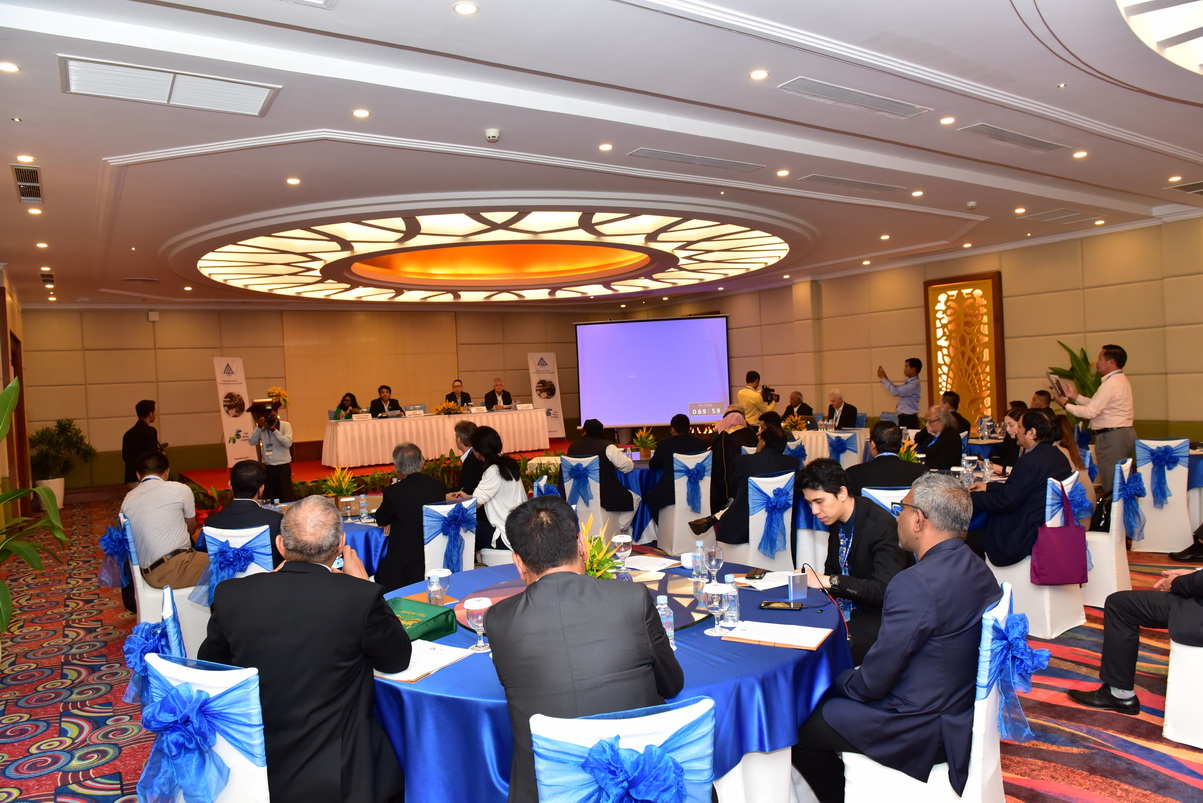
Aside from the research project, he said that AIBD is also working on a proposed conclave of some 26 Information Ministers this year who will discuss, among others, measures to address disinformation.
In a special ministerial meeting on the first day of the Summit on 12 June 2019, Information Ministers from Bangladesh, Cambodia, Myanmar and the Philippines agreed to hold a special meeting of Information Ministers from Asia Pacific. Senior officials from Korea and Samoa also supported this proposal.
According to AIBD Officiating Director Philomena Gnanapragasm, with support from UNESCO two Malaysia-based universities are involved in the research project. These are Taylor’s University and Berjaya University College.
The survey now in progress is meant to collect baseline data and insights that can help public service broadcasters in dealing with ‘fake news’ and engaging with the audience about ‘fake news’.
She also said AIBD will conduct more training programmes to fight disinformation or fake news.
Mr Has Sam Ath, Under Secretary of State, Ministry of Information, Cambodia, recalled that during the 2018 AIBD General Conference held in Colombo, Sri Lanka he suggested more activities to deal with fake news.
Another measure some public broadcasters raised during the meeting was stronger regulations to prevent disinformation.
Dr Ming Kuok Lim, Advisor for Communication and Information, UNESCO Office in Jakarta, Indonesia, said in terms of policy, “ our position is if a law is to be made, it should be carefully and clearly defined so that it may not be used to stifle freedom of expression and clamp down criticisms or things government may not like”.
He informed participants that UNESCO is pursuing awareness raising, capacity building and policy advice in dealing with disinformation.
What can broadcasters do to counter disinformation/fake news?
Dr Lim suggested that media practitioners can produce public service announcements, and undertake training and outreach programmes. He also said that UNESCO has published a manual to help media deal with fake news.
Mr Klaus Bergmann, Director of International Relations, Deutsche Welle, Germany, and Chairman of EBU International Broadcasting Assembly, shared Europe’s experiences in combating disinformation.
In his presentation, he said that under German law, providers of social networks are obliged to delete within 24 hours hate speech/fake news and publish deleted items within a month.
“Public prosecuting authorities investigate reports on unlawful language submitted by media. Media identifies unlawful comment; we preserve evidence; we document content in a pdf file. Then we report dossier to authorities through email and the prosecution will investigate. After this media companies will report protection measures and conviction”, he said.
He also said that the European Broadcasting Union (EBU) composed of 72 public services broadcasters in 56 countries welcomes any campaign against fake news, developing techniques to deal with challenges in new media landscape.
Public service media needs political independence and regular funding to successfully fight disinformation”, he said.
Mr Riyaz Sayed-Khaiyum, CEO of Fiji Broadcasting Corporation (FBC), Fiji, said issues surrounding fake news are complex and undertaking a research to better understand its nature and impact on society is a ‘good start”.
He also said FBC is launching a 30-minute broadcast programme, using light humour to recognise fake news.
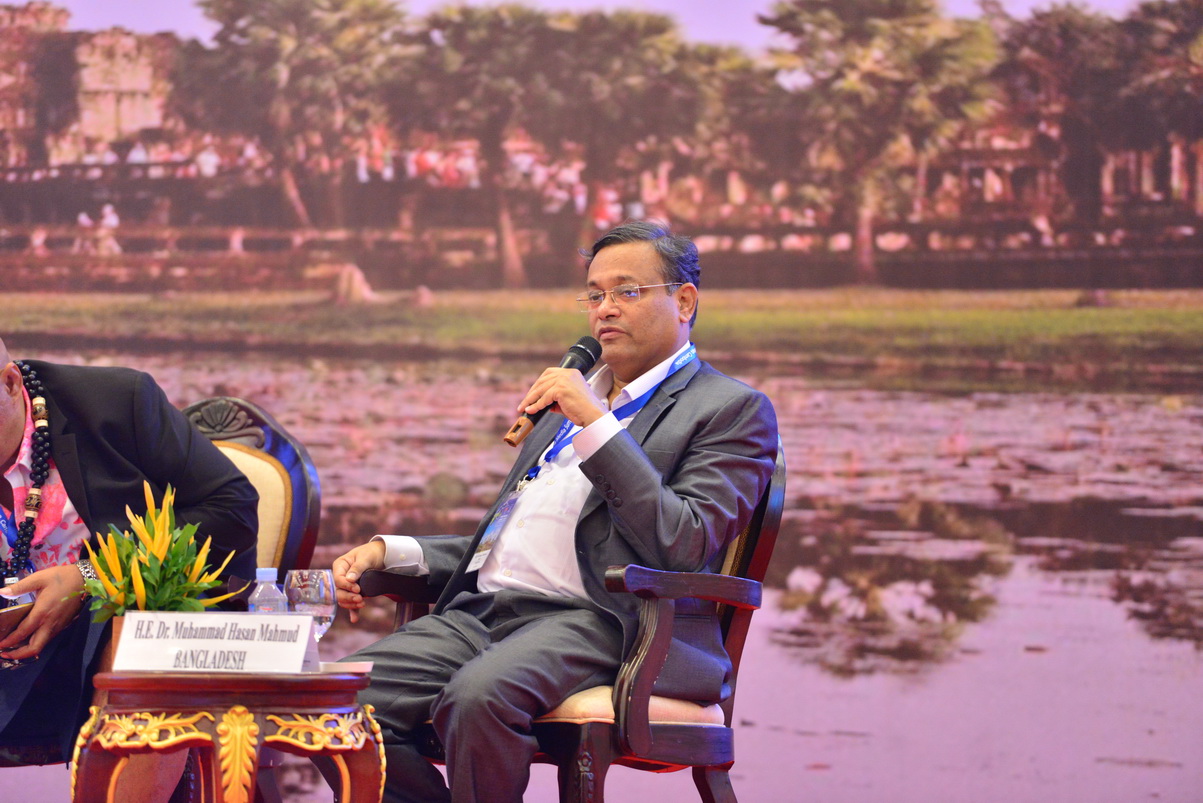
The information minister of Bangladesh, Dr Muhammad Hasan Mahmoud, urged broadcasters to deal with the digital revolution by investing more in research, innovation, and training.
He also proposed to strengthen measures to protect freedom of expression and called for collaboration among states across borders to fight cybercrimes.
In his presentation during the 16th Asia Media Summit’s plenary session on “How We Can Adapt to the Digital Revolution”, the minister said a digital Bangladesh is now a reality in the country that requires investing in infrastructure and human resource capacity building.
“We face some challenges to cope with the impact of digitisation. Digital technologies keep upgrading and this becomes more expensive. We also need highly skilled workers. We also must study the infusion of artificial intelligence that replaces human presence”, he said.
Mr. Lealailepule Rimoni Aiafi, vice-minister for ministry of communications and information technology(MCIT), Samoa, also spoke at the plenary session, pointing out the challenges and opportunities facing the media industry in the country.
He said amid the digital revolution, media has to deal with limited capacity and capability developments programmes for journalists, shortage of well-trained technicians, the rapid growth of online social media, fake news and hate speech.
“We also need to address cybercrime like identity theft, scams on social media through social engineering”, he added.
He said Samoa has a large, diverse and dynamic media industry composed of public and private broadcasters, print outlets and online media which enjoy freedom of speech as a fundamental right. He added they are protected, but with limitations.
Samoa launched a government-wide area network called the Samoa National Broadband Highway (SNBH) in 2014 and the Tui-Samoa submarine cable in 2018 that promises to deliver faster, reliable and more affordable internet services.
“All these government developments will bridge the digital divide in Samoa and enable digital revolution towards sustainable digital economy, not only to build local and international market but also to provide the platform for education and awareness, resulting in well informed citizens”, he said.
]]>
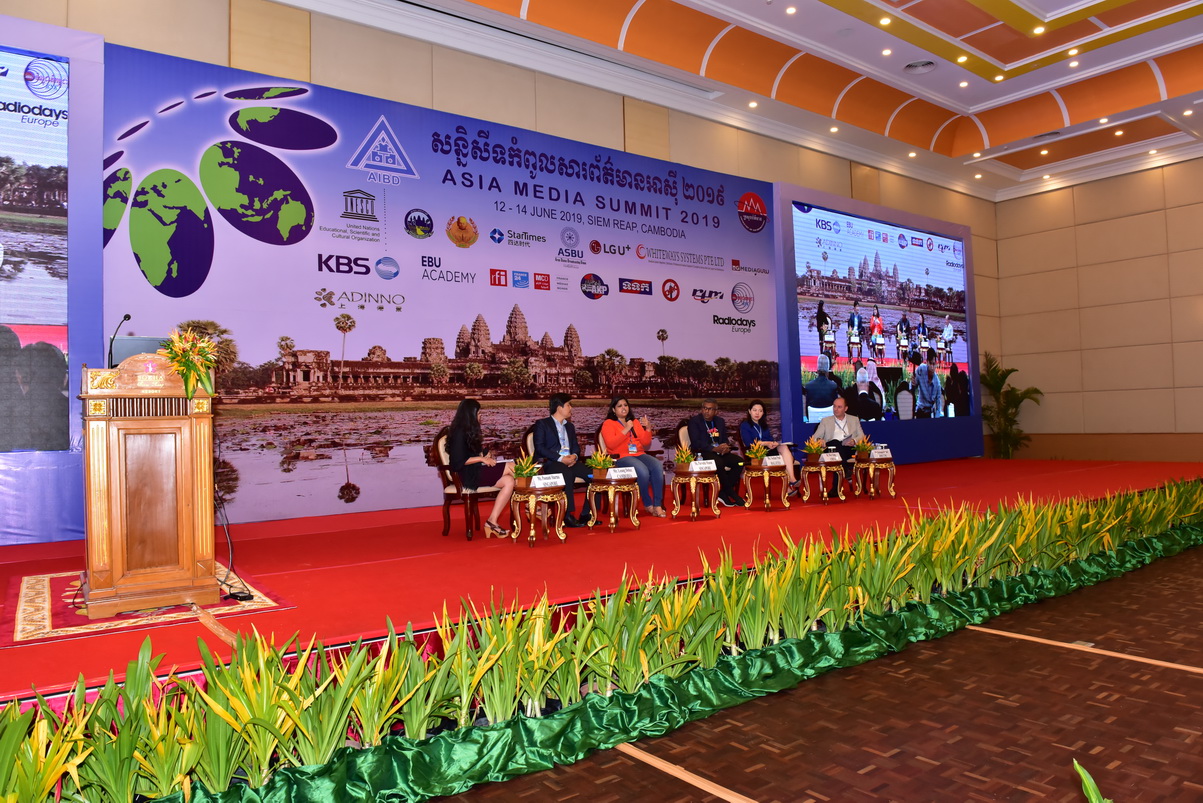
Google pursues partnerships and collaboration across products and platforms in the monetisation process for both traditional and new media, according to Ms Parvati Menon, Head of Partner Sales APAC, Google Singapore.
Speaking to participants at the 16th Asia Media Summit in Cambodia, Ms Menon said Google finds opportunities with new media entities that have a new way of telling stories as well as with traditional media, which boast of a legacy to support them.
“If you look at Google, we have partners that span across various services. It’s not that we choose parties often aligned with this, who want to engage us. In customising or helping achieve specific goals, there is constant dialogue. Is it about a business that will grow in the few years and is a partnership the best approach”? she questioned.
Understanding how to monetise is a big challenge particularly in the changing media landscape, she said, adding that in advertising, ‘it is about buying audiences rather than content’, advertisers may be looking for extended reach.
“We have seen consortiums where traditional and new media organisations go together to support programmes. It is not who has the price journalistic content, but how this material can reach to an extended audience. We want traditional broadcasters to understand this and there are solutions”, she said
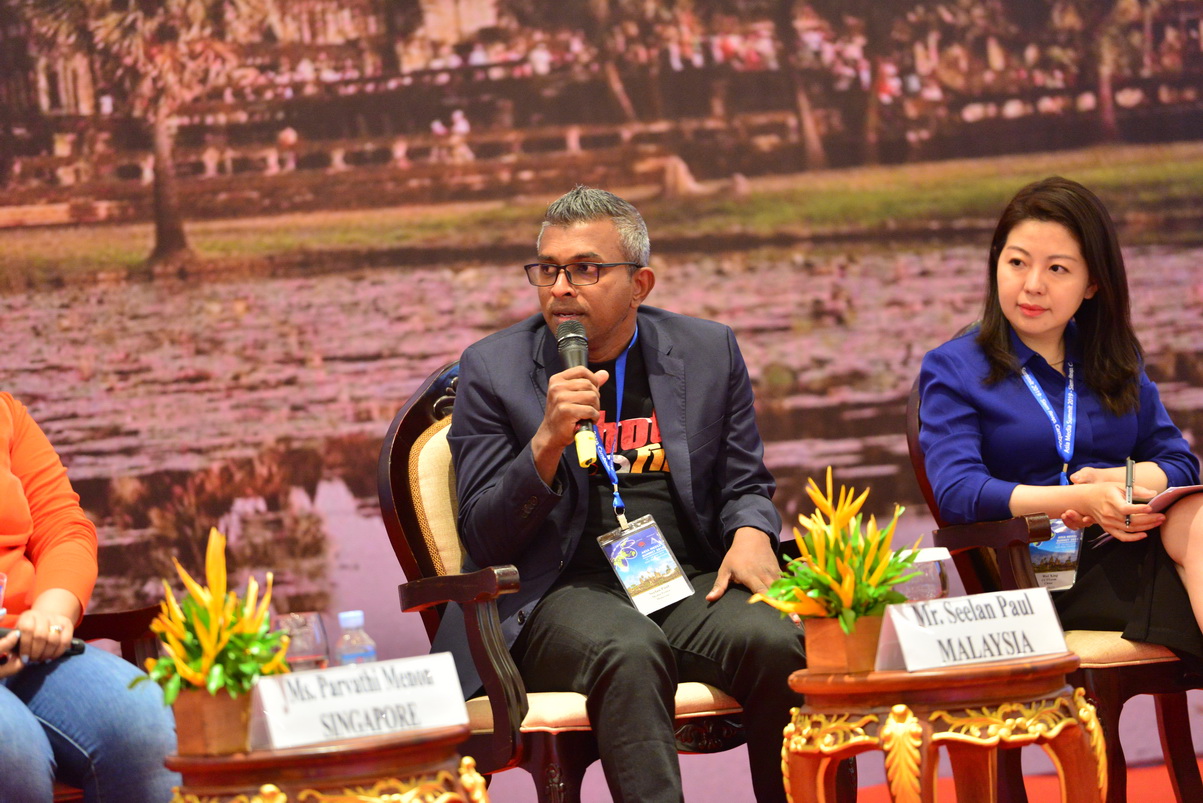
Another speaker, Mr Seelan Paul, Chief Executive Officer, RIPPLE, Media Prima Malaysia, said their media business strategy is to ensure they are in platforms where their audiences are developing content that they can monetise.
Media Prima is Malaysia’s leading full-integrated media company with a complete repertoire of media-related businesses in television, print, radio, out-of-home advertising, content and digital media.
In radio, he said “people don’t just listen to us; they also watch us in the studio. We develop not just audio but also visual content. We are no longer an audio platform, but a hybrid platform for us to be able to monetise”.
He added that to monetise they use the YouTube platform and branded content for clients who want to tap niche audiences.
Mr Leang Delux, Chief Executive Officer, Thmey Thmey Online webpage in Cambodia, spoke about the objectives of their operations, saying they have programmes that inspire, educate, innovate and chase what’s trending as well.
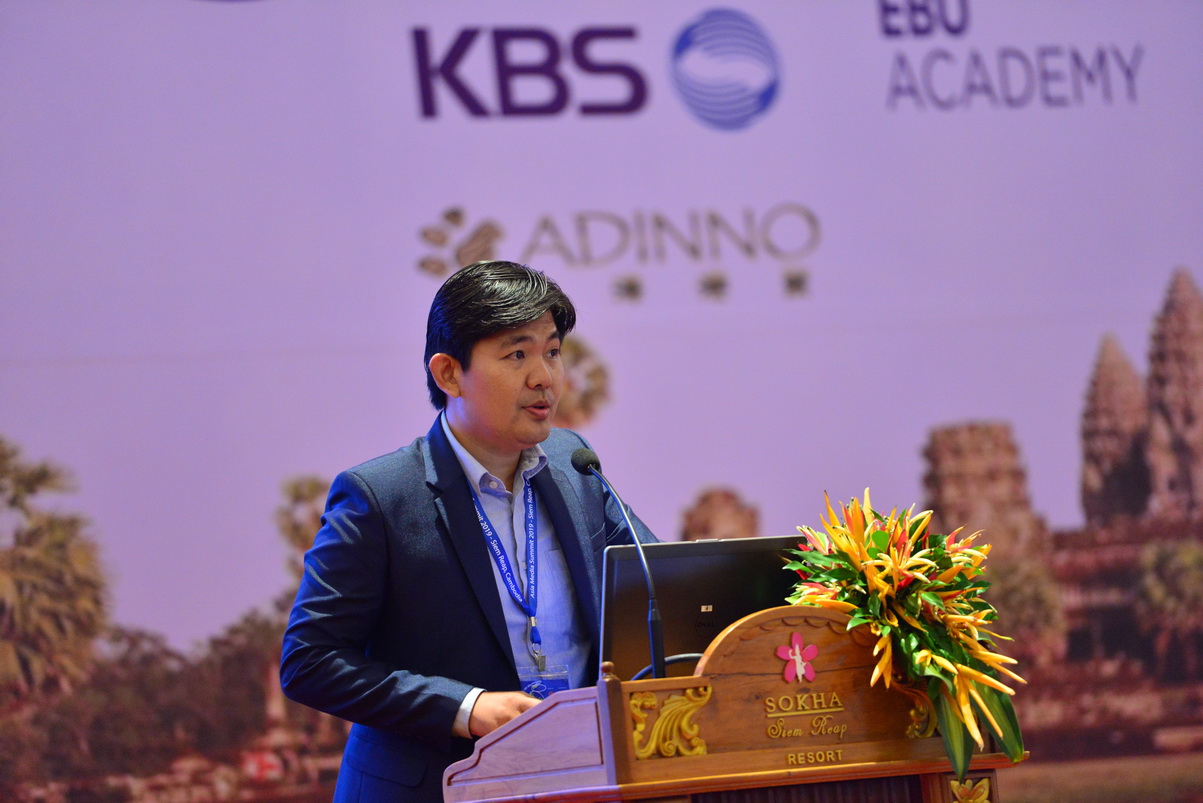
“We inspire with our content that focuses on model farmers, outstanding students and innovative people. We educate using deep interviews and meeting with experts, and we innovate by using cartoon, poems, and short videos, among others”, he said.
In generating revenues, Mr Delux said the company produces public relations pieces, banners and video spots. It also offers consultancy services and project and events management, and trainings.
The Deputy General Manager of CCTV.com, China, Ms Wei Xing, spoke about the concept of omnimedia era and media integration, which was the subject of an important speech by Chinese President Xi Jinping in early 2019.
She said that China is constructing the omnimedia communication pattern characterised by the integration of different types of media at the national level.
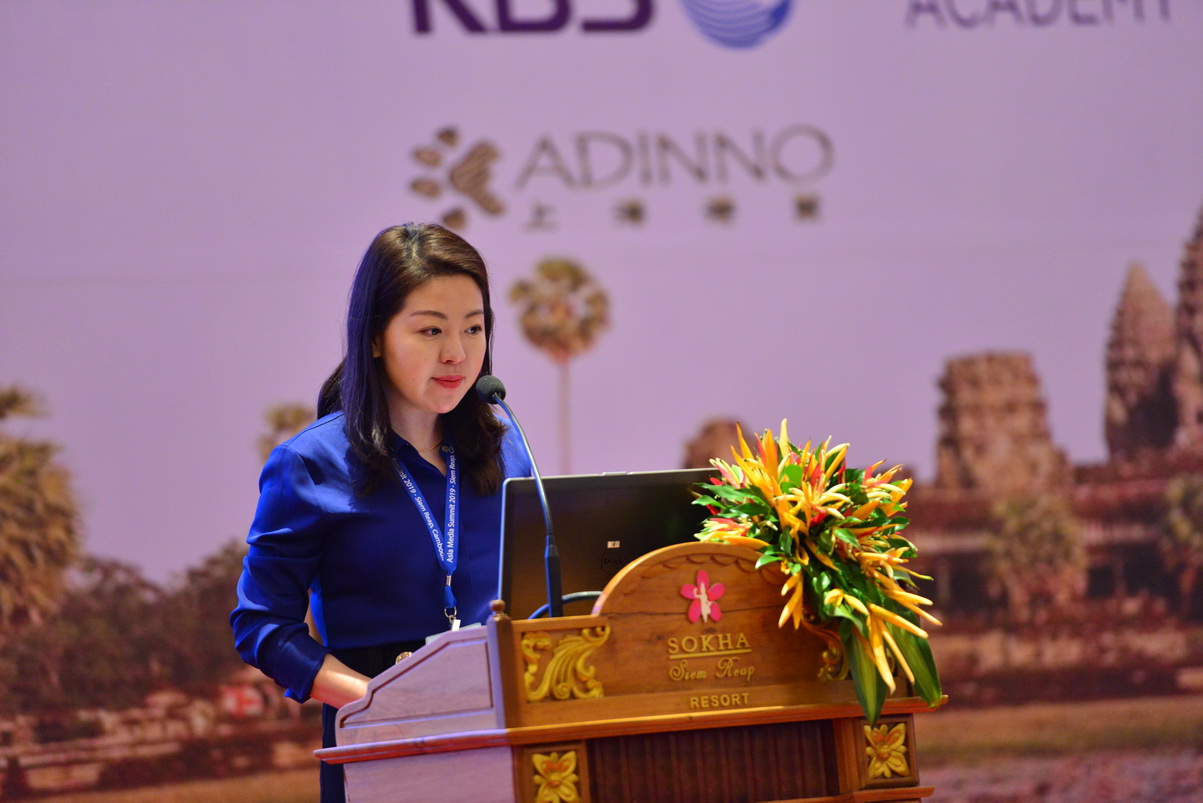
“The concept of omnimedia will assist the traditional and new media in breaking out of a zero-sum game framework, discover incremental markets, build up new markets and establish new profit models based on media integration”, she pointed out.
In the omnimedia era, she stressed that “the profit models of traditional and new media are not simply in complementary or competitive relationships, but rather as an integration of mutual growth, not as an arithmetical question of addition or subtraction, but rather a “chemical reaction”.
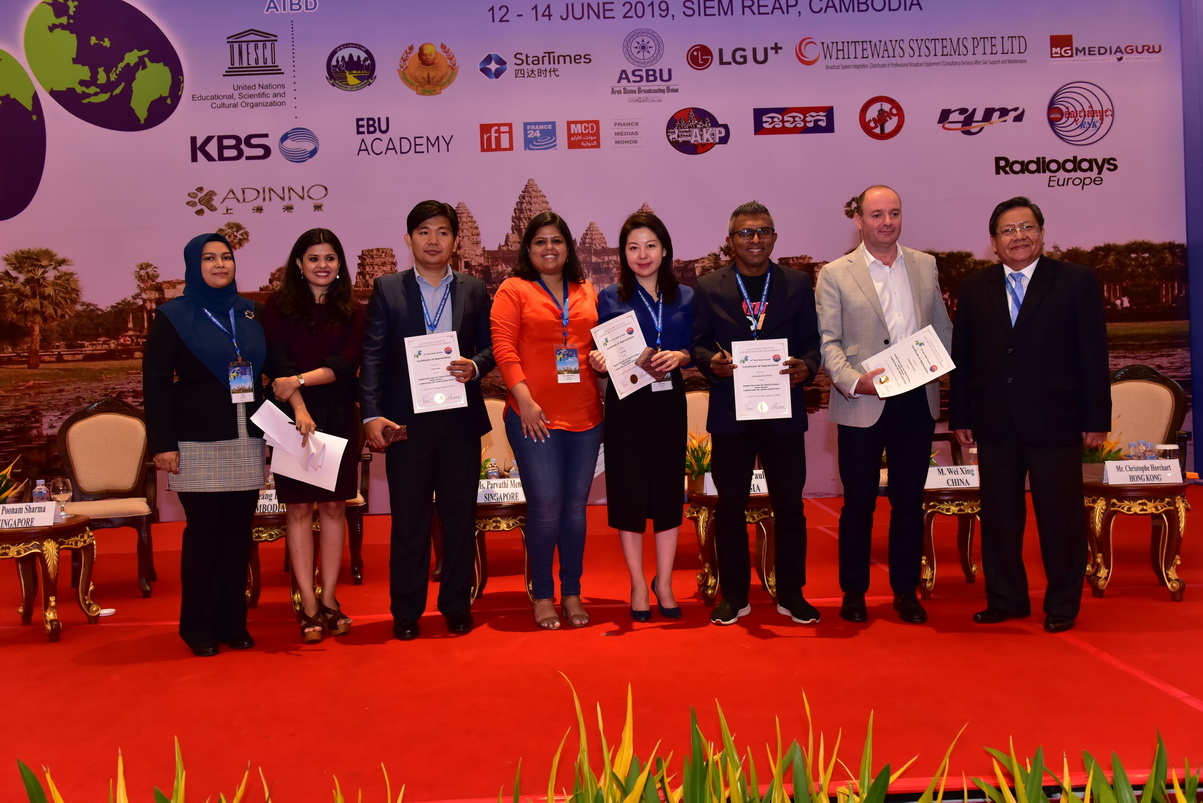
The speakers presented these perspectives at the 5th plenary session titled ‘Monetisation in traditional media/new media: competing or complementing’ at the Asia Media Summit held on 13 June 2019 in Siem Reap, Cambodia.
Dr. Khieu Kanharith, Cambodia’s Minister of Information, described the 16th Asia Media Summit a success, saying it gave participants opportunities to evaluate how best to take advantage of digitisation and other new technologies that can serve society better.
Speaking at the closing of the Summit on 13 June 2019, Minister Khieu Kanharith said the conference was “a great achievement in sharing knowledge about the potential advantages in doing the media digitisation, problems solving on concerned matters, as well as to promote a closely cooperation in the region, in order to harness together the growth of the digital media development”.
He cited the insights on media digitisation presented by Cambodian Prime Minister Hun Sen during the inaugural ceremony of the Summit.
He said the Cambodian leader identified some of the advantages of digitisation, among them, enhanced broad quality, speed of data transmission, data archiving, efficient use of radio frequency, reduced production cost.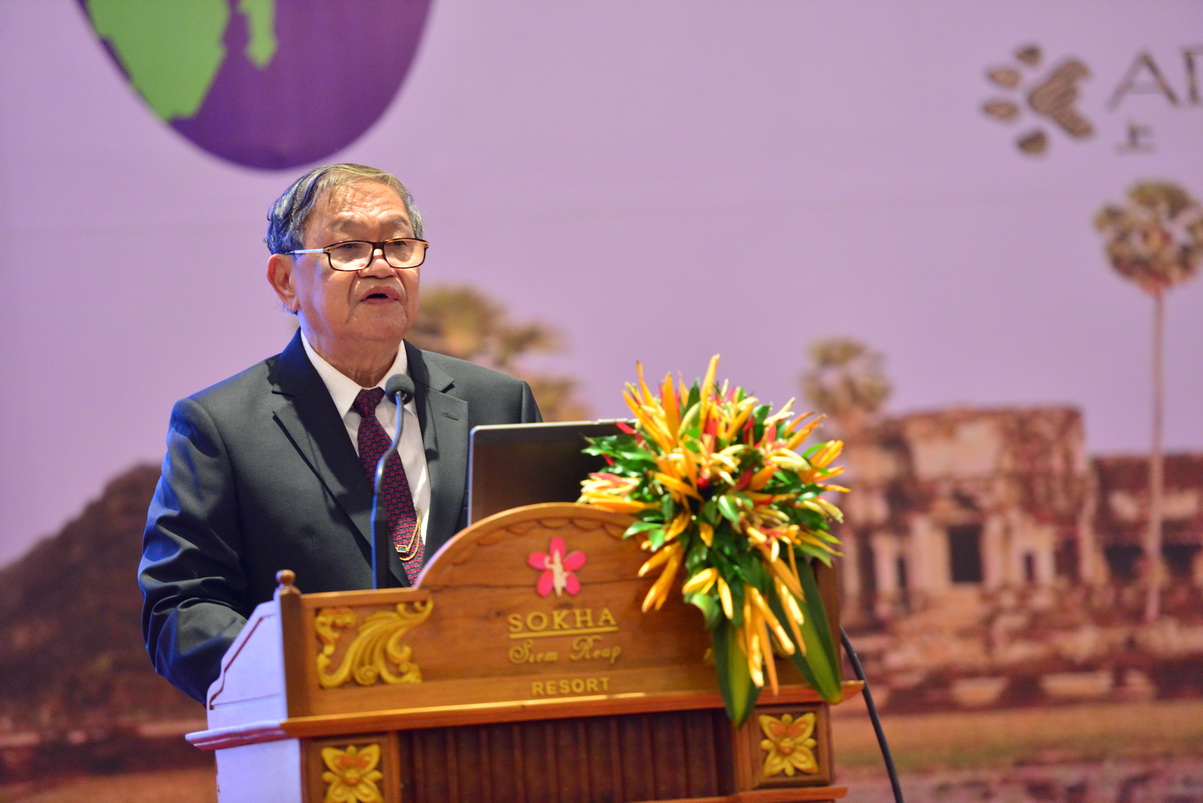
According to Dr Khieu, Prime Minister Hun Sen also said that media digitization has made developing countries to become digital government, allowing their governance, services serving and services receiving, and business affairs, to offer more quality, effectiveness, and efficiency. It also connected people to people internally and globally.
The Information Minister thanked participants, speakers and sponsors who contributed to the summit to be more proactive on media cooperation and made the media industry more aware of evolving new technologies and its effects as well as of the need to better adapt to advanced technologies for a better world.
Broadcasters face enormous problems to adapt to new technologies
For her part, AIBD Officiating Director Philomena said broadcasters face enormous and complex problems as they confront the impact of the Fourth Industrial Revolution, but expressed hope about what the future holds as they adapt to new technologies.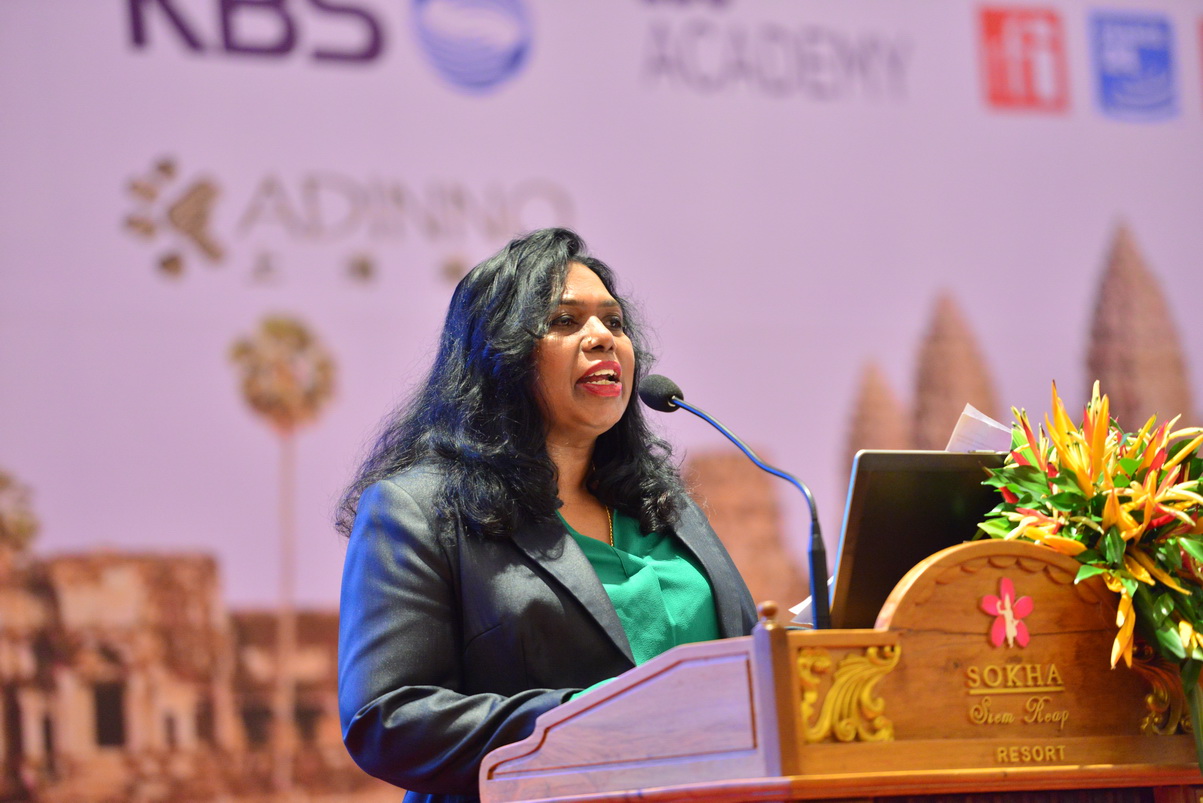
In her closing remarks, she highlighted various issues the summit examined including new trends in new technologies and how broadcasters can maximise their use in improving programming, expand audience reach and meet other organisational goals.
She also cited discussions on trust and credibility of media amid the digital revolution, and the spread of disinformation or fake news, its impact on governments, media, private sector and society.
“We heard several approaches to combat disinformation or fake news, from strengthening regulations and ethical standards, thorough verification process of information, to media literacy initiatives”, she said.
She also thanked all AIBD members and partners, participants and speakers – more than 600 local and foreign delegates- for keeping AMS strong and relevant.
“Our special gratitude too to the government of Cambodia, the Ministry of Information for their generosity and hospitality in hosting the pre-summit workshops, the AMS and cultural visits”, she said.
]]>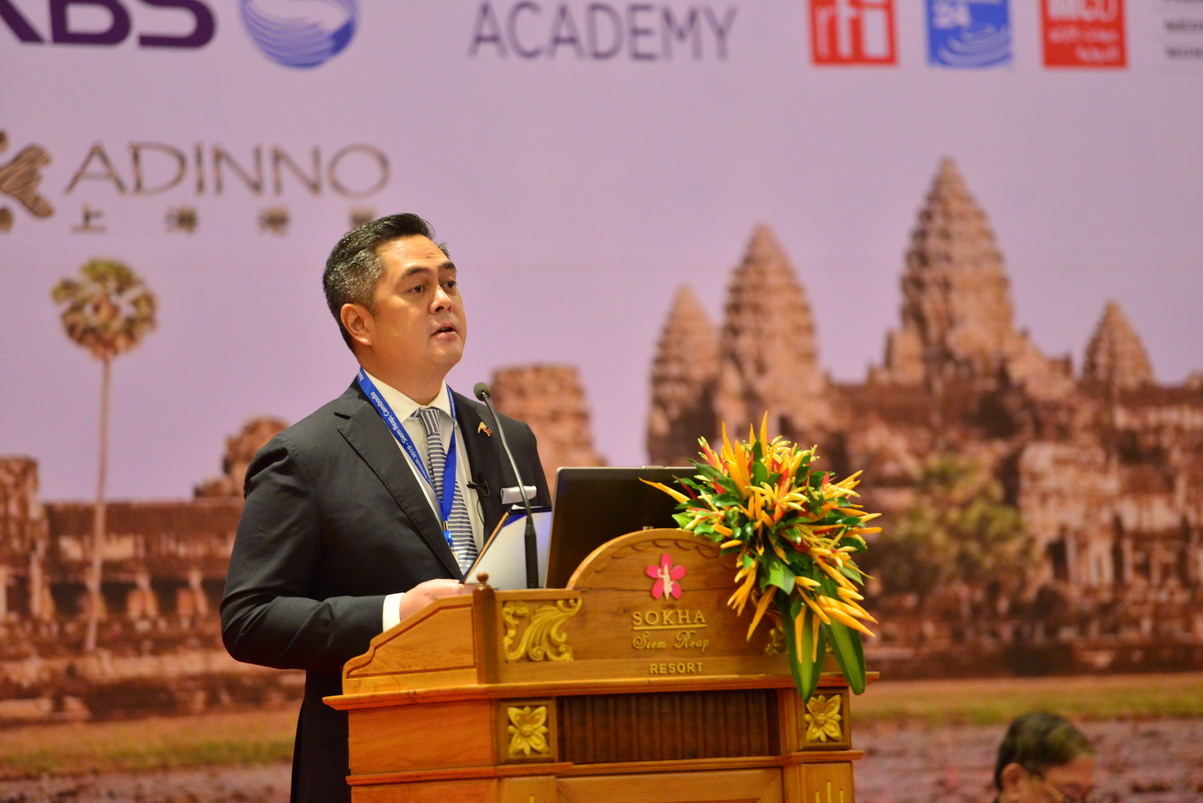
Philippine Communications Secretary Jose Ruperto Martin Andanar said broadcasters adapting to new technologies should keep in mind that what is important is “ the story, the narrative, the content of the report that we write and speak”.
“Let me repeat: content is primordial — be it for news or for entertainment”, Secretary Andanar told participants of the 16th Asia Media Summit held in Cambodia.
In his presentation during the plenary session on “How We can Adapt to the Digital Revolution”, the Information Secretary said content for news is based on the truth, on facts that are verified, on data that is confirmed.
He added that entertainment, on the other hand, is based on the creativity of the imagination.
“Drama, comedy, or a mixture of both, revolve around every conceivable facet of life. Nonetheless, a moral ground must be at its base, as a foundation of values, either traditional or contemporary”, he pointed out.
Mr Andanar also stressed that technologies may influence how one lives, works and communicates, but it is still the human person that can make a difference in his life.
“ New technologies will always be advancing, well beyond our capabilities to decipher, the increased complex operations of the zeros and the ones in our computers. The state-of-the-art instruments we use for communication and information dissemination may be transforming the manner of transmittal, but it is only you and I, all of us, who can undertake the transformation of our lives”, he said.
He called on broadcasters who may be apprehensive about the magnitude of the scientific progress to be firm and use the power of their individual and collective minds to control the instruments they deploy to achieve the ideals of peace and understanding, among the nations of our region and the world.